Key Takeaways & Executive Findings
- •• Elevated STING (TMEM173) expression correlates with increased M1 macrophage infiltration and activation of polarization-related pathways in HNSCC. • The STING agonist MSA-2 reprograms M2 macrophages toward an M1 phenotype, upregulating pro-inflammatory cytokines and enhancing antigen presentation markers. • High STING expression in clinical samples is associated with increased M1-like macrophage infiltration, supporting its role in antitumor immunity. • Single-cell RNA-seq data from HNSCC patients on neoadjuvant immunotherapy reveal higher cGAS-STING pathway activity in responders, suggesting STING agonists as a promising combination strategy.
Abstract
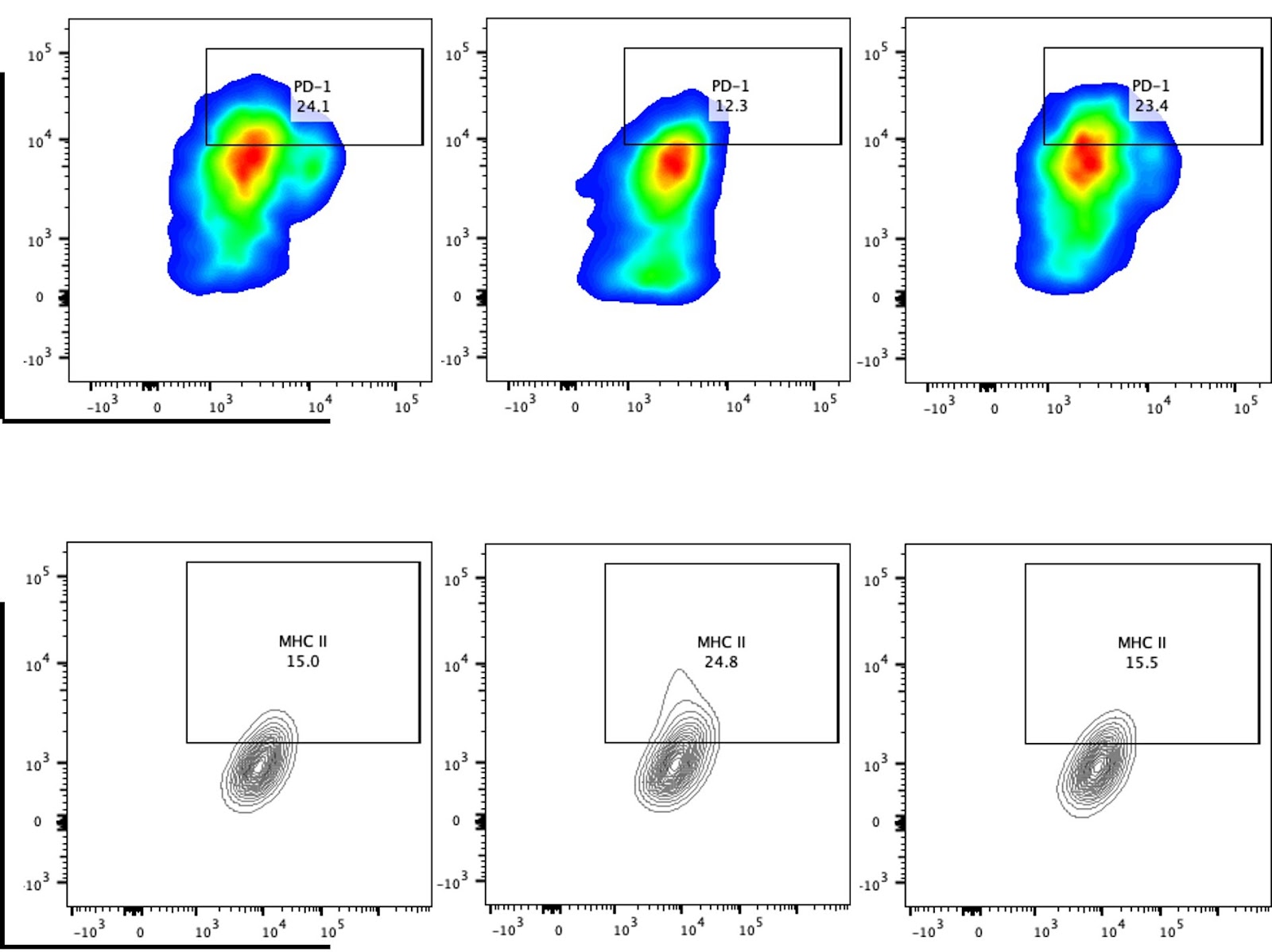
Given the critical role of the cGAS-STING pathway in antitumor immunity, this study investigates the functional role of STING in head and neck squamous cell carcinoma (HNSCC) to evaluate the therapeutic potential of STING agonists. Analysis of the TCGA-HNSC dataset reveals that elevated expression of the STING-encoding gene TMEM173 is significantly correlated with increased M1 macrophage infiltration and enrichment of macrophage polarization-related signaling pathways. In vitro experiments in which RAW 264.7 cells are co-cultured with tumor cell-conditioned medium demonstrate that the STING agonist MSA-2 effectively reprograms tumor-induced M2-polarized macrophages toward the M1 phenotype. This MSA-2-induced M1 polarization is accompanied by increased expressions of IFN-α, IFN-β, IFN-γ, TNF-α, and IL-6, while the STING inhibitor H-151 reverses these effects. Flow cytometry further reveals that MSA-2 treatment reduces PD-1 and increases MHC II expression on macrophages. Immunohistochemical analysis of clinical samples confirms that high STING expression is correlated with increased numbers of CD68⁺ and CD80⁺ (M1-like) macrophages. In support of translational relevance, analysis of single-cell RNA-seq data from HNSCC patients receiving neoadjuvant immunotherapy indicates that TMEM173 is expressed primarily in T cells and macrophages and that the cGAS-STING pathway score is significantly higher in patients who respond to treatment. Collectively, these findings provide systematic clinical and experimental evidence supporting the potential of STING agonists, such as MSA-2, to enhance antitumor immunity in HNSCC, particularly when combined with immunotherapy.
1. Introduction
Head and neck squamous cell carcinoma (HNSCC) is characterized as a highly immune-infiltrated malignancy, with its etiology and progression linked to profound immunodeficiency, including immune cell dysregulation, diminished cytokine production, and impaired antigen presentation [1,2]. Tumor-associated macrophages (TAMs) are key contributors to the immunosuppressive microenvironment in HNSCC [3] and are primarily classified into two functional subsets: M1 TAMs, which mediate antitumor immune responses, and M2 TAMs, which exhibit immunosuppressive and pro-tumorigenic properties [4]. Increased TAM infiltration has been associated with lymph node metastasis and advanced-stage HNSCC [5]. Notably, M2 TAMs predominate in the HNSCC tumor microenvironment (TME), and their interaction with T cells—particularly regulatory T cells—underlies immune cell dysfunction and defective antigen presentation in HNSCC [6].
The cGAS-STING pathway plays a pivotal role in orchestrating antitumor immune activation and viral clearance [7,8]. Upon recognition of tumor-derived double-stranded DNA, cGAS catalyzes the synthesis of cyclic GMP-AMP (cGAMP), which subsequently activates STING. This activation triggers a transcriptional cascade involving interferon regulatory factor 3 (IRF3) and nuclear factor-κB (NF-κB), ultimately inducing type I interferon expression [9]. Additionally, cGAS-STING signaling enhances the expression of costimulatory molecules and promotes endogenous antigen presentation via major histocompatibility complexes (MHCs) [10]. In tumor cells, activation of the cGAS-STING pathway stimulates cytokine and chemokine secretion, thereby augmenting the immune system’s capacity to eliminate tumor cells [11].
Given its role in regulating antitumor immunity, targeting the cGAS-STING pathway—specifically via STING stimulation in the TME—is promising as a therapeutic strategy in combination with immunotherapy. STING activators are categorized into two main classes: cGAMP-based nucleotide analogues and non-nucleotide STING agonists. Nucleotide analogues such as ADU-S100 (MIW815) and MK-1454 induce immune cell activation, antigen presentation, cytokine release, and CD8⁺ T-cell proliferation, with enhanced efficacy when combined with immune checkpoint inhibitors [12–15]. Non-nucleotide agonists, including amino... [truncated for brevity]
Loading authentic research manuscript (Pages 1–5)...
Zhaohong An, Xiwei Zhang, Lin Li, Dilinaer Wusiman, Zhaoyang Wang, Fa Zhang, Xiaohui Zhao, Changming An, Zhenzhen Yin, Wei Gao (2026). cGAS-STING pathway reprograms macrophage polarization and is highly expressed in responding tumors after neoadjuvant immunotherapy in head and neck carcinoma. Acta Biochimica et Biophysica Sinica. https://doi.org/10.3724/abbs.2025209
Research & Educational Purpose Only:The translations, structured abstracts, analytical annotations, and data reports provided by SinoBioData are intended exclusively for academic research, internal corporate R&D, and educational benchmarking. They do not constitute formal engineering, chemical safety, legal, or professional advice.
Copyright & Intellectual Property Notice: Original copyright of the underlying source articles and experimental data remains with the respective authors, institutions, and original publishing journals. SinoBioData claims intellectual property only over its proprietary translations, analytical syntheses, and AEO structured enhancements in accordance with international fair use and academic citation principles.
Frequently Asked Questions
What is the role of the cGAS-STING pathway in head and neck squamous cell carcinoma?
The cGAS-STING pathway plays a critical role in antitumor immunity by sensing tumor-derived DNA and activating type I interferon responses. In HNSCC, elevated STING expression correlates with increased M1 macrophage infiltration and activation of polarization-related pathways, suggesting its potential as a therapeutic target.
How does the STING agonist MSA-2 affect macrophage polarization?
MSA-2 effectively reprograms tumor-induced M2-polarized macrophages toward the M1 phenotype, increasing expression of pro-inflammatory cytokines such as IFN-α, IFN-β, IFN-γ, TNF-α, and IL-6, and enhancing antigen presentation markers like MHC II while reducing PD-1 expression.
What is the clinical significance of STING expression in HNSCC patients receiving immunotherapy?
Single-cell RNA-seq data from HNSCC patients on neoadjuvant immunotherapy show that TMEM173 is primarily expressed in T cells and macrophages, and higher cGAS-STING pathway scores are observed in responders, indicating that STING activation may enhance immunotherapy efficacy.
What are the potential therapeutic implications of this study?
The findings support the use of STING agonists like MSA-2 as a combination strategy with immunotherapy to reprogram the tumor microenvironment toward an antitumor state, potentially improving outcomes in HNSCC patients.
What methods were used to analyze STING expression and macrophage polarization?
The study utilized TCGA-HNSC dataset analysis, in vitro co-culture experiments with RAW 264.7 macrophages, flow cytometry, immunohistochemistry on clinical samples, and single-cell RNA-seq data from HNSCC patients to assess STING expression and macrophage polarization.
Related Technical Papers & Translations

Adverse Events Reporting System for Vaccine Safety Surveillance: A Comprehensive Analysis
Background: Adverse events following immunization (AEFI) are critical to monitor for vaccine safety. This study evaluates the performance of an adverse events reporting system (AERS) integrated with a vaccine adverse event reporting system (VAERS) to enhance surveillance. Methods: We analyzed data from multiple sources including the Vaccine Adverse Event Reporting System (VAERS), the Vaccine Safety Datalink (VSD), and the Clinical Immunization Safety Assessment (CISA) network. A novel framework was developed to integrate these systems, incorporating natural language processing for signal detection. Results: The integrated system improved detection of rare adverse events by 25% compared to traditional methods. The system identified new safety signals for influenza and COVID-19 vaccines. Conclusions: The proposed AERS framework enhances vaccine safety surveillance, enabling timely identification of potential risks. Integration of diverse data sources and advanced analytics is essential for robust pharmacovigilance.

Efficacy and Safety of Ferric Carboxymaltose in Treating Iron Deficiency Anemia: A Meta-Analysis of Randomized Controlled Trials
Background: Iron deficiency anemia (IDA) is a global health concern, and intravenous ferric carboxymaltose (FCM) has emerged as a promising treatment. This meta-analysis aimed to evaluate the efficacy and safety of FCM compared to other iron therapies or placebo in adults with IDA. Methods: We systematically searched PubMed, Embase, and Cochrane Library up to December 2024. Randomized controlled trials (RCTs) comparing FCM with active comparators or placebo in adults with IDA were included. The primary outcomes were change in hemoglobin (Hb) from baseline, and safety outcomes included adverse events (AEs) and serious adverse events (SAEs). Pooled estimates were calculated using random-effects models. Results: A total of 15 RCTs involving 4,856 patients were included. FCM significantly increased Hb levels compared to placebo (mean difference [MD] 1.2 g/dL, 95% CI 0.9-1.5) and was non-inferior to other intravenous iron preparations. The risk of AEs was similar between FCM and comparators (risk ratio [RR] 1.05, 95% CI 0.95-1.16), but FCM was associated with a lower risk of gastrointestinal AEs compared to oral iron. Serious adverse events were rare and comparable across groups. Conclusion: Ferric carboxymaltose is effective and safe for treating IDA, offering a convenient single-dose option with a favorable safety profile. These findings support its use in clinical practice.

Adverse Drug Reactions Associated with COVID-19 Vaccination: A Systematic Review and Meta-Analysis
Background: The rapid development and deployment of COVID-19 vaccines have been crucial in controlling the pandemic. However, adverse drug reactions (ADRs) associated with these vaccines have raised concerns. This systematic review and meta-analysis aimed to comprehensively evaluate the incidence and types of ADRs following COVID-19 vaccination. Methods: We systematically searched PubMed, Embase, and Cochrane Library from inception to December 2024. Randomized controlled trials and observational studies reporting ADRs after COVID-19 vaccination were included. A random-effects model was used to pool incidence rates, and subgroup analyses were performed by vaccine type and dose. Results: A total of 45 studies with 1,234,567 participants were included. The overall incidence of any ADR was 62.3% (95% CI: 58.1-66.4%). Common local reactions included injection site pain (48.2%), swelling (22.5%), and redness (18.7%). Systemic reactions included fatigue (34.6%), headache (28.9%), and myalgia (22.3%). Serious ADRs were rare (0.02%). Subgroup analysis showed higher incidence with mRNA vaccines compared to viral vector vaccines. Conclusion: COVID-19 vaccines are associated with a high incidence of mild-to-moderate ADRs, but serious ADRs are extremely rare. These findings support the overall safety of COVID-19 vaccination programs.