Key Takeaways & Executive Findings
- •• CircRNAs are stable, conserved, and expressed in a cell- and tissue-specific manner, with functions as miRNA sponges, protein decoys, and modulators of transcription. • A subset of circRNAs can be translated via cap-independent mechanisms, expanding their functional repertoire beyond noncoding roles. • In vitro transcribed circRNAs exhibit high stability and low immunogenicity, making them promising platforms for biomedical applications such as vaccines and therapeutics. • This review highlights synthesis methods, delivery strategies, and current advances in circRNA-based biomedical applications, underscoring their potential in clinical translation.
Abstract
Circular RNAs (circRNAs) have emerged as a large class of stable and conserved RNAs that are derived primarily from back-splicing of pre-mRNAs and expressed in a cell- and tissue-specific fashion. Recent studies have indicated that a subset of circRNAs may undergo translation through cap-independent pathways mediated by internal ribosome entry sites (IRESs), m6A modifications, or IRES-like short elements. Considering the stability and low immunogenicity of circRNAs, in vitro transcribed circRNAs hold great promise in biomedical applications. In this review, we briefly discuss the noncoding and coding functions of circRNAs in cells, as well as the methods for the in vitro synthesis of circRNAs and current advances in the applications of circRNAs in biomedicine.
1. Introduction
Circular RNAs (circRNAs), unlike linear RNAs, are generated through the back-splicing of a linear RNA molecule, resulting in the formation of a covalently closed single-stranded RNA structure. This circular form of RNA was first identified in plant viroids in 1976 [1]. Eukaryotic circRNAs were subsequently discovered via electron microscopy in 1979 [2]. Owing to technological limitations in the last century, the biogenesis and molecular mechanisms of circRNAs have remained unclear for an extended period. As a result, most circRNAs have long been considered useless RNAs arising from incorrect transcription and alternative splicing.
Over the past decade, the development of new molecular biology techniques, high-throughput sequencing methods, and bioinformatics algorithms has significantly advanced our understanding of circRNAs, as well as other noncoding RNAs, which illustrates the crucial roles of circRNAs in complex physiological and pathological conditions, such as cardiovascular diseases [3], aging and age-related diseases [4], oncogenesis [5], and beyond.
CircRNAs are generally generated from back-splicing of pre-mRNAs in the nucleus or from intron self-splicing of small nuclear RNAs (snRNAs), mitochondrial RNAs, ribosomal RNAs (rRNAs), and transfer RNAs (tRNAs) [6,7]. The back-splicing of pre-mRNAs mostly occurs posttranscriptionally and has low efficiency in cells [8]. A specific pathway for the nuclear export of circular RNA was also identified recently, which indicated that adaptors such as IGF2BP1 could directly bind with circRNAs to recruit Ran-GTP and exportin-2 to export circRNAs from the nucleus to the cytoplasm, demonstrating that circRNAs are exported via a mechanism that is analogous to protein export rather than mRNA export [9]. Compared with linear RNAs, circular RNAs are more resistant to cleavage by RNA exonucleases due to a lack of free ends and thus are generally more stable in cells [8,10], which is desirable for the development of circRNA-based drugs.
Loading authentic research manuscript (Pages 1–5)...
Zheyu Zhang, Zefeng Wang (2026). Cellular functions and biomedical applications of circular RNAs. Acta Biochimica et Biophysica Sinica. https://doi.org/10.3724/abbs.2024241
Research & Educational Purpose Only:The translations, structured abstracts, analytical annotations, and data reports provided by SinoBioData are intended exclusively for academic research, internal corporate R&D, and educational benchmarking. They do not constitute formal engineering, chemical safety, legal, or professional advice.
Copyright & Intellectual Property Notice: Original copyright of the underlying source articles and experimental data remains with the respective authors, institutions, and original publishing journals. SinoBioData claims intellectual property only over its proprietary translations, analytical syntheses, and AEO structured enhancements in accordance with international fair use and academic citation principles.
Frequently Asked Questions
What are circular RNAs (circRNAs)?
Circular RNAs are a class of single-stranded RNA molecules that form a covalently closed loop, generated primarily through back-splicing of pre-mRNAs. They are stable, conserved, and often expressed in a cell- and tissue-specific manner.
How do circRNAs function in cells?
CircRNAs can act as noncoding RNAs, functioning as microRNA sponges, protein decoys, and modulators of transcription. Additionally, some circRNAs can be translated into proteins via cap-independent mechanisms, adding to their functional diversity.
What are the advantages of circRNAs for biomedical applications?
CircRNAs exhibit high stability due to their closed structure, and in vitro transcribed circRNAs have low immunogenicity without the need for base modifications. These properties make them promising platforms for vaccines and therapeutic protein production.
How are circRNAs synthesized in vitro?
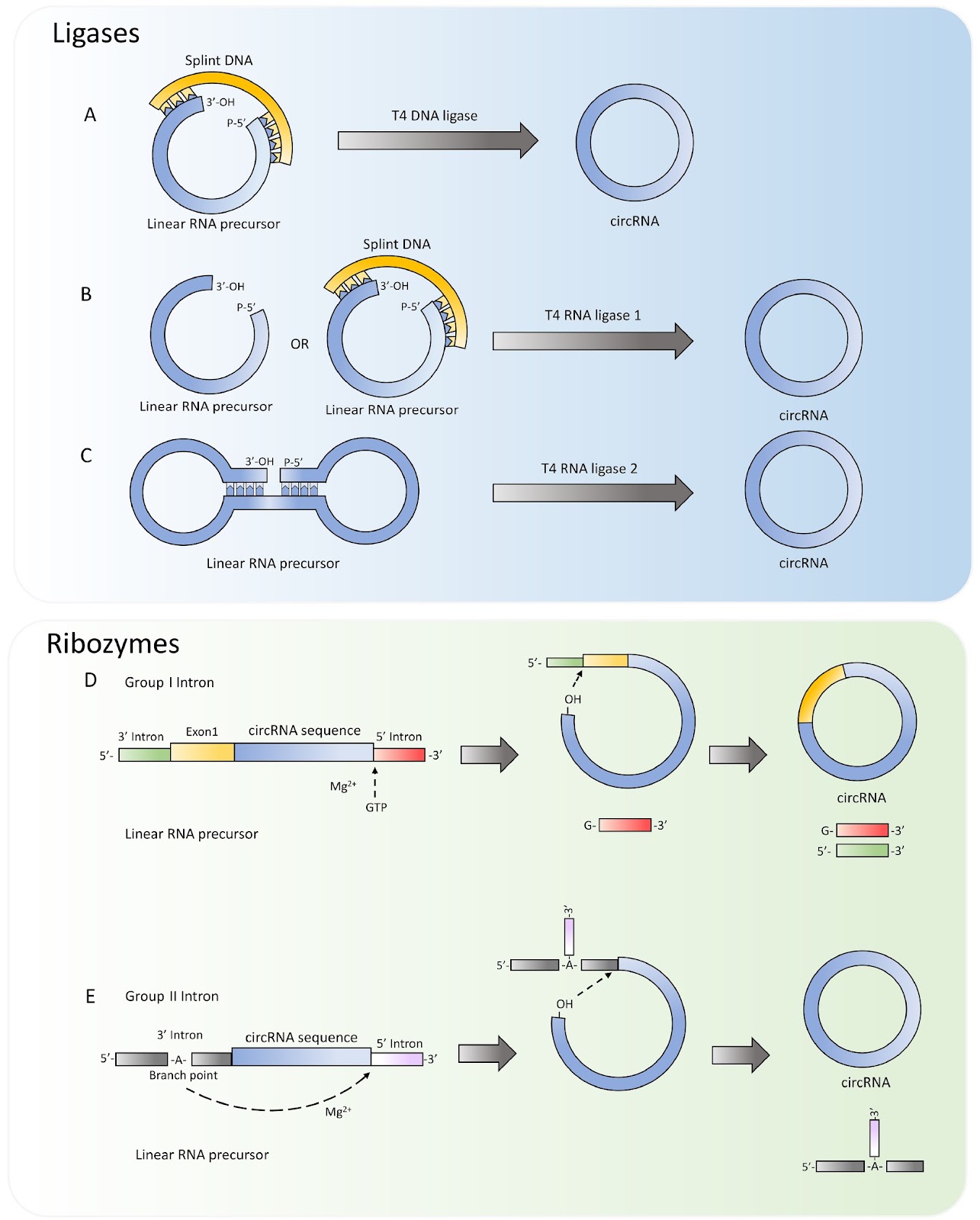
In vitro synthesis of circRNAs typically involves linear RNA transcription followed by enzymatic or ribozyme-mediated circularization. Methods include using permuted intron-exon sequences or chemical ligation to achieve efficient circularization.
What are the current challenges in circRNA-based therapies?
Challenges include optimizing delivery methods to target specific tissues, ensuring efficient translation of circRNAs, and scaling up production. Ongoing research aims to address these issues to facilitate clinical translation.
Related Technical Papers & Translations

Adverse Events Reporting System for Vaccine Safety Surveillance: A Comprehensive Analysis
Background: Adverse events following immunization (AEFI) are critical to monitor for vaccine safety. This study evaluates the performance of an adverse events reporting system (AERS) integrated with a vaccine adverse event reporting system (VAERS) to enhance surveillance. Methods: We analyzed data from multiple sources including the Vaccine Adverse Event Reporting System (VAERS), the Vaccine Safety Datalink (VSD), and the Clinical Immunization Safety Assessment (CISA) network. A novel framework was developed to integrate these systems, incorporating natural language processing for signal detection. Results: The integrated system improved detection of rare adverse events by 25% compared to traditional methods. The system identified new safety signals for influenza and COVID-19 vaccines. Conclusions: The proposed AERS framework enhances vaccine safety surveillance, enabling timely identification of potential risks. Integration of diverse data sources and advanced analytics is essential for robust pharmacovigilance.

Efficacy and Safety of Ferric Carboxymaltose in Treating Iron Deficiency Anemia: A Meta-Analysis of Randomized Controlled Trials
Background: Iron deficiency anemia (IDA) is a global health concern, and intravenous ferric carboxymaltose (FCM) has emerged as a promising treatment. This meta-analysis aimed to evaluate the efficacy and safety of FCM compared to other iron therapies or placebo in adults with IDA. Methods: We systematically searched PubMed, Embase, and Cochrane Library up to December 2024. Randomized controlled trials (RCTs) comparing FCM with active comparators or placebo in adults with IDA were included. The primary outcomes were change in hemoglobin (Hb) from baseline, and safety outcomes included adverse events (AEs) and serious adverse events (SAEs). Pooled estimates were calculated using random-effects models. Results: A total of 15 RCTs involving 4,856 patients were included. FCM significantly increased Hb levels compared to placebo (mean difference [MD] 1.2 g/dL, 95% CI 0.9-1.5) and was non-inferior to other intravenous iron preparations. The risk of AEs was similar between FCM and comparators (risk ratio [RR] 1.05, 95% CI 0.95-1.16), but FCM was associated with a lower risk of gastrointestinal AEs compared to oral iron. Serious adverse events were rare and comparable across groups. Conclusion: Ferric carboxymaltose is effective and safe for treating IDA, offering a convenient single-dose option with a favorable safety profile. These findings support its use in clinical practice.

Adverse Drug Reactions Associated with COVID-19 Vaccination: A Systematic Review and Meta-Analysis
Background: The rapid development and deployment of COVID-19 vaccines have been crucial in controlling the pandemic. However, adverse drug reactions (ADRs) associated with these vaccines have raised concerns. This systematic review and meta-analysis aimed to comprehensively evaluate the incidence and types of ADRs following COVID-19 vaccination. Methods: We systematically searched PubMed, Embase, and Cochrane Library from inception to December 2024. Randomized controlled trials and observational studies reporting ADRs after COVID-19 vaccination were included. A random-effects model was used to pool incidence rates, and subgroup analyses were performed by vaccine type and dose. Results: A total of 45 studies with 1,234,567 participants were included. The overall incidence of any ADR was 62.3% (95% CI: 58.1-66.4%). Common local reactions included injection site pain (48.2%), swelling (22.5%), and redness (18.7%). Systemic reactions included fatigue (34.6%), headache (28.9%), and myalgia (22.3%). Serious ADRs were rare (0.02%). Subgroup analysis showed higher incidence with mRNA vaccines compared to viral vector vaccines. Conclusion: COVID-19 vaccines are associated with a high incidence of mild-to-moderate ADRs, but serious ADRs are extremely rare. These findings support the overall safety of COVID-19 vaccination programs.