Key Takeaways & Executive Findings
- •• CDR1as knockdown via AAV9-shRNA improves cardiac function and restores ICaL density and Cav1.2 expression in post-MI mice. • Cav1.2 expression is significantly decreased in the infarct border zone at 12 hours post-MI, implicating calcium channel remodeling in arrhythmogenesis. • Targeting the CDR1as pathway to modulate L-type calcium channels represents a novel antiarrhythmic strategy after myocardial infarction. • The study provides evidence that CDR1as contributes to ventricular arrhythmias by disrupting calcium homeostasis, expanding its role beyond sodium and potassium channels.
Abstract
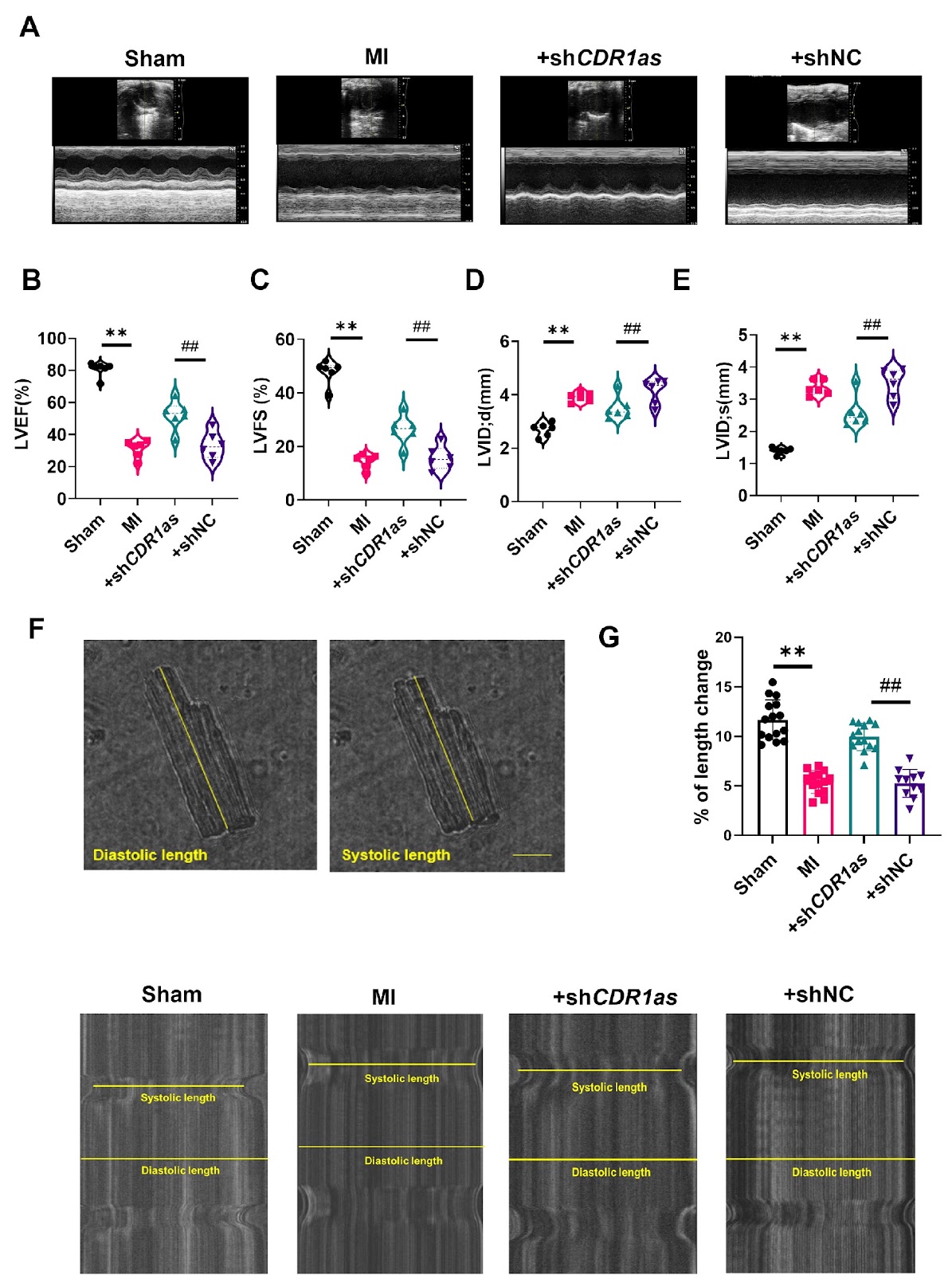
Arrhythmias, especially ventricular arrhythmias (VAs), are the primary cause of mortality following myocardial infarction (MI) and are typically attributable to electrophysiological disorders of the heart. Our previous work demonstrated that CDR1as knockdown ameliorates arrhythmias by modulating Nav1.5 and Kir6.2 channels post-MI. This study aims to explore the role of CDR1as in calcium channel remodeling subsequent to ischemic arrhythmia. We employ MI in mice by ligating the left anterior descending coronary artery (LAD) and use patch-clamp techniques to measure the Ca current (ICaL) in isolated ventricular cardiomyocytes. The results show that the expression of Cav1.2 is significantly decreased in the infarct border zone at 12 h post-MI. CDR1as knockdown via AAV9-CDR1as-shRNA administration leads to an enhancement of cardiac function and a restoration of both ICaL density and Cav1.2 expression in MI model mice. These findings indicate that targeting the CDR1as pathway to modulate calcium channels can be a viable strategy for antiarrhythmic therapy following MI.
1. Introduction
Cardiac arrhythmias represent a significant global health burden, contributing substantially to morbidity and mortality [1]. Ventricular arrhythmias (VAs) are of particular concern, as they are the predominant cause of sudden cardiac death in patients who have experienced MI [2,3]. Numerous studies have demonstrated that alterations in VAs susceptibility following MI are predominantly attributed to structural and electrical remodeling of the heart [4]. The complex interplay of electrophysiological abnormalities following MI lays the foundation for the development of life-threatening arrhythmias. A key mechanism implicated in the pathogenesis of VAs post-MI is the dysregulation of calcium cycling, which affects the cardiac action potential (AP) and engenders delayed depolarizations [5].
Circular RNAs (circRNAs) have emerged as a novel class of noncoding RNAs that are generated through a back-splicing process of pre-messenger RNA (pre-mRNA) transcripts and are more stable than long non-coding RNAs (lncRNAs) [6]. CircRNAs are known to perform a variety of functions within the cell. One of the primary functions of circRNAs is their capacity to function as microRNA (miRNA) sponges, which attach to miRNAs and thereby prevent these miRNAs from interacting with their target messenger RNAs (mRNAs). This mechanism can lead to derepression of gene expression and has been implicated in numerous biological processes [7,8]. The investigation of circRNAs in the context of cardiac arrhythmias is particularly intriguing. Ion channel remodeling, which involves the abnormal function or expression of sodium, potassium and calcium ion channels, is the main cause of arrhythmia [9]. Our previous study revealed that knockdown of circRNA CDR1as can shorten the duration of the QRS complex and QTc interval, ameliorate electrical remodeling disturbances caused by dysregulation of Nav1.5 and Kir6.2 channels in cardiomyocytes, and reduce susceptibility to VAs [10]. Given the critical role of calcium ions in cardiac electrophysiology, any dysregulation of calcium homeostasis can lead to arrhythmia [11–13]. However, it is unclear whether the association between CDR1as and ischemic arrhythmias is related to calcium ion interference.
Loading authentic research manuscript (Pages 1–5)...
Jiapan Wang, Wenjie Liao, Xingda Li, Zhen Chen, Chunlei Duan, Zhenru Wang, Hongda Li, Haonan Du, Ye Yuan, Zhimin Du (2026). CDR1as modulates arrhythmia post-myocardial infarction via regulating Cav1.2. Acta Biochimica et Biophysica Sinica. https://doi.org/10.3724/abbs.2025126
Research & Educational Purpose Only:The translations, structured abstracts, analytical annotations, and data reports provided by SinoBioData are intended exclusively for academic research, internal corporate R&D, and educational benchmarking. They do not constitute formal engineering, chemical safety, legal, or professional advice.
Copyright & Intellectual Property Notice: Original copyright of the underlying source articles and experimental data remains with the respective authors, institutions, and original publishing journals. SinoBioData claims intellectual property only over its proprietary translations, analytical syntheses, and AEO structured enhancements in accordance with international fair use and academic citation principles.
Frequently Asked Questions
What is the role of CDR1as in arrhythmia after myocardial infarction?
CDR1as contributes to ventricular arrhythmias post-MI by disrupting calcium channel remodeling, specifically reducing Cav1.2 expression and ICaL density. Knockdown of CDR1as restores these calcium handling abnormalities and improves cardiac function.
How does CDR1as knockdown affect calcium channels in the heart?
CDR1as knockdown via AAV9-shRNA administration in MI model mice leads to restoration of both ICaL density and Cav1.2 expression, thereby ameliorating calcium channel dysfunction and reducing arrhythmia susceptibility.
What is the significance of Cav1.2 in post-MI arrhythmias?
Cav1.2 is the pore-forming subunit of the L-type calcium channel, essential for cardiac action potential and excitation-contraction coupling. Its downregulation in the infarct border zone contributes to arrhythmogenic remodeling, making it a potential therapeutic target.
What methods were used in this study?
The study used a mouse model of myocardial infarction by ligating the left anterior descending coronary artery, patch-clamp techniques to measure ICaL in isolated ventricular cardiomyocytes, and AAV9-mediated CDR1as knockdown to assess its effects.
What are the clinical implications of this research?
Targeting the CDR1as pathway to modulate calcium channels offers a novel and promising antiarrhythmic strategy for patients after myocardial infarction, potentially reducing the risk of sudden cardiac death.
Related Technical Papers & Translations

Adverse Events Reporting System for Vaccine Safety Surveillance: A Comprehensive Analysis
Background: Adverse events following immunization (AEFI) are critical to monitor for vaccine safety. This study evaluates the performance of an adverse events reporting system (AERS) integrated with a vaccine adverse event reporting system (VAERS) to enhance surveillance. Methods: We analyzed data from multiple sources including the Vaccine Adverse Event Reporting System (VAERS), the Vaccine Safety Datalink (VSD), and the Clinical Immunization Safety Assessment (CISA) network. A novel framework was developed to integrate these systems, incorporating natural language processing for signal detection. Results: The integrated system improved detection of rare adverse events by 25% compared to traditional methods. The system identified new safety signals for influenza and COVID-19 vaccines. Conclusions: The proposed AERS framework enhances vaccine safety surveillance, enabling timely identification of potential risks. Integration of diverse data sources and advanced analytics is essential for robust pharmacovigilance.

Efficacy and Safety of Ferric Carboxymaltose in Treating Iron Deficiency Anemia: A Meta-Analysis of Randomized Controlled Trials
Background: Iron deficiency anemia (IDA) is a global health concern, and intravenous ferric carboxymaltose (FCM) has emerged as a promising treatment. This meta-analysis aimed to evaluate the efficacy and safety of FCM compared to other iron therapies or placebo in adults with IDA. Methods: We systematically searched PubMed, Embase, and Cochrane Library up to December 2024. Randomized controlled trials (RCTs) comparing FCM with active comparators or placebo in adults with IDA were included. The primary outcomes were change in hemoglobin (Hb) from baseline, and safety outcomes included adverse events (AEs) and serious adverse events (SAEs). Pooled estimates were calculated using random-effects models. Results: A total of 15 RCTs involving 4,856 patients were included. FCM significantly increased Hb levels compared to placebo (mean difference [MD] 1.2 g/dL, 95% CI 0.9-1.5) and was non-inferior to other intravenous iron preparations. The risk of AEs was similar between FCM and comparators (risk ratio [RR] 1.05, 95% CI 0.95-1.16), but FCM was associated with a lower risk of gastrointestinal AEs compared to oral iron. Serious adverse events were rare and comparable across groups. Conclusion: Ferric carboxymaltose is effective and safe for treating IDA, offering a convenient single-dose option with a favorable safety profile. These findings support its use in clinical practice.

Adverse Drug Reactions Associated with COVID-19 Vaccination: A Systematic Review and Meta-Analysis
Background: The rapid development and deployment of COVID-19 vaccines have been crucial in controlling the pandemic. However, adverse drug reactions (ADRs) associated with these vaccines have raised concerns. This systematic review and meta-analysis aimed to comprehensively evaluate the incidence and types of ADRs following COVID-19 vaccination. Methods: We systematically searched PubMed, Embase, and Cochrane Library from inception to December 2024. Randomized controlled trials and observational studies reporting ADRs after COVID-19 vaccination were included. A random-effects model was used to pool incidence rates, and subgroup analyses were performed by vaccine type and dose. Results: A total of 45 studies with 1,234,567 participants were included. The overall incidence of any ADR was 62.3% (95% CI: 58.1-66.4%). Common local reactions included injection site pain (48.2%), swelling (22.5%), and redness (18.7%). Systemic reactions included fatigue (34.6%), headache (28.9%), and myalgia (22.3%). Serious ADRs were rare (0.02%). Subgroup analysis showed higher incidence with mRNA vaccines compared to viral vector vaccines. Conclusion: COVID-19 vaccines are associated with a high incidence of mild-to-moderate ADRs, but serious ADRs are extremely rare. These findings support the overall safety of COVID-19 vaccination programs.