Key Takeaways & Executive Findings
- •• CDDO-imidazolide, a potent Nrf2 activator, significantly reduces alveolar macrophage pyroptosis and HMGB1 release in sepsis-induced ARDS models. • The protective effect is mediated through enhancement of PINK1/Parkin-dependent mitophagy, which is dependent on Nrf2 activation. • In vivo, CDDO-imidazolide alleviates lung injury and reduces NLRP3 inflammasome and HMGB1 levels in septic mice, and these effects are reversed by the Nrf2 inhibitor ML385. • These findings highlight CDDO-imidazolide as a promising therapeutic candidate for sepsis-associated ARDS by targeting the Nrf2/mitophagy/pyroptosis axis.
Abstract
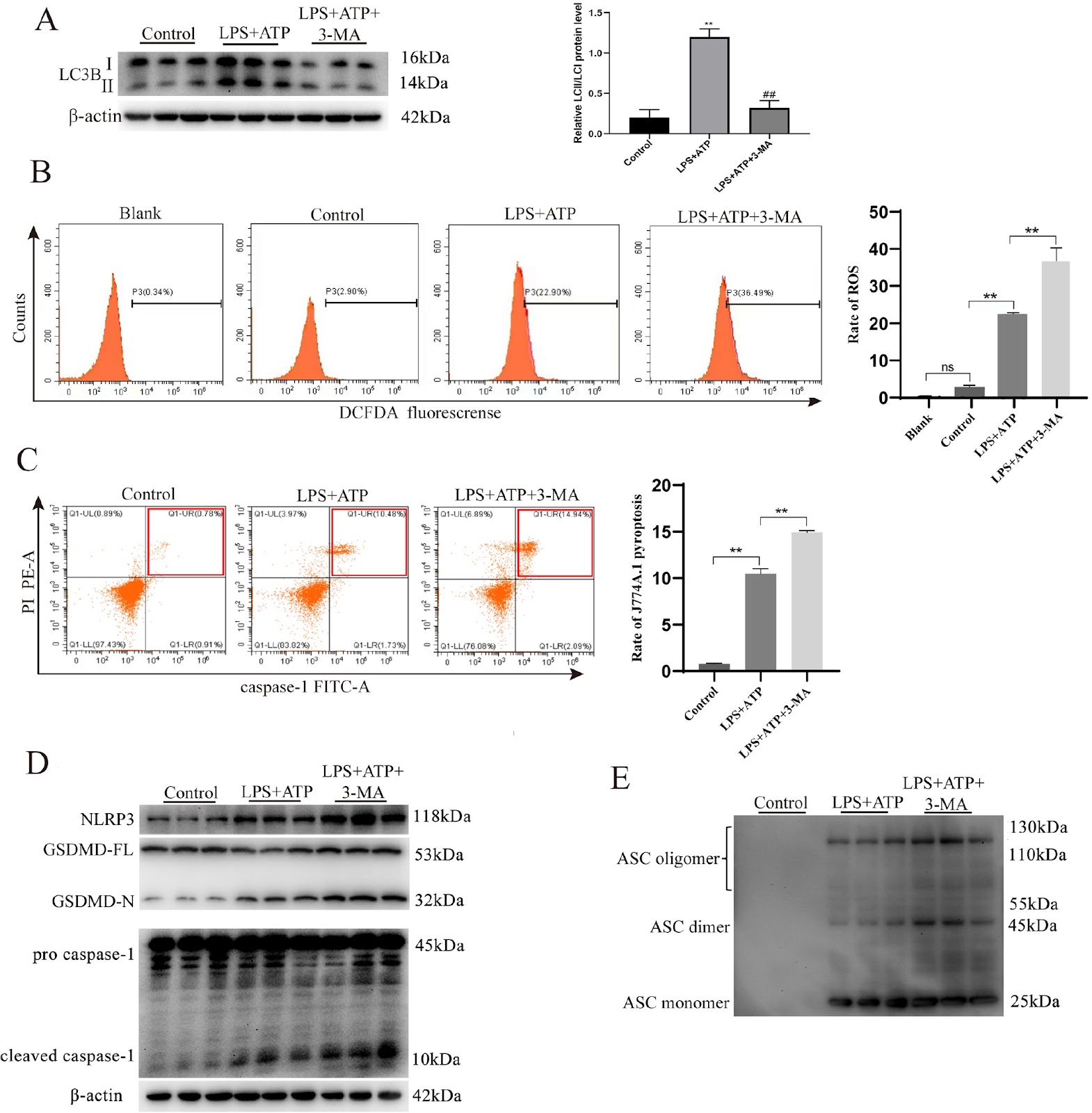
Accumulating evidence suggests that NLRP3-mediated alveolar macrophage (AM) pyroptosis and subsequent high mobility group box protein 1 (HMGB1) secretion play significant roles in the pathogenesis of acute respiratory distress syndrome (ARDS). Nrf2 has been shown to be individually involved in regulating pyroptosis. In this study, we investigate the ability of CDDO-imidazolide, a potent Nrf2 activator, to regulate AM pyroptosis and HMGB1 secretion in sepsis-associated ARDS, along with its underlying mechanism. The in vitro alveolar macrophage (AM) pyroptosis model, established by stimulating J774A.1 cells with LPS and ATP, was treated with CDDO-imidazolide or utilized Nrf2-knockout cells. The mice are intraperitoneally administered with CDDO-imidazolide before the in vivo sepsis-associated ARDS model is constructed via caecal ligation perforation and the Nrf2 inhibitor, ML385. In vitro studies reveal that the use of 3-MA to prohibit PINK1/Parkin-dependent mitophagy aggravates NLRP3-mediated pyroptosis and HMGB1 release in J774A.1 cells via LPS and ATP exposure. CDDO-imidazolide also significantly prevents NLRP3-mediated pyroptosis and HMGB1 release to increase PINK1/Parkin-dependent mitophagy, but these effects are not detected in Nrf2-knockout macrophages. Most importantly, CDDO-imidazolide significantly alleviates NLRP3 inflammasome protein expression in the lung tissues of septic mice and HMGB1 protein levels in the serum and bronchoalveolar lavage fluid (BALF), which can be reversed by ML385. Taken together, our results demonstrate that CDDO-imidazolide prominently protects the lungs by promoting Nrf2 activation and enhancing PINK1/Parkin mitophagy to inhibit AM pyroptosis and HMGB1 release. These findings provide novel insights for therapeutic strategies for sepsis-associated ARDS.
1. Introduction
Sepsis is a complex, multistep pathological process characterized by an excessive inflammatory response of host cells to both Gram-positive and Gram-negative bacteria [1]. The lungs are among the most vulnerable organs during sepsis, with over half of septic patients developing acute respiratory distress syndrome (ARDS) [2]. Accumulating evidence indicates that sepsis can induce programmed cell death in alveolar macrophages (AMs), particularly pyroptosis, which contributes to the progression of ARDS [3]. Therefore, inhibiting or reducing AM pyroptosis may serve as a potential therapeutic strategy to alleviate sepsis-induced ARDS.
Our previous series of investigations revealed that AM pyroptosis and its inflammatory mediator, high mobility group box 1 (HMGB1), induced by cardiopulmonary bypass and sepsis led to the translocation of HMGB1 from the nucleus to the cytoplasm and ultimately to the extracellular fluid, thereby initiating and amplifying the inflammatory response and causing pulmonary damage [4,5]. Thus, suppressing AM pyroptosis and HMGB1 secretion could serve as a therapeutic approach to mitigate ARDS in sepsis.
Recently, with respect to the pathogenesis of sepsis, the activation of the Nod-Like Receptor Family Pyrin Domain Containing 3 (NLRP3) inflammasome to induce pyroptosis in AMs has been identified as a causative factor [6]. Briefly, NLRP3 recruits the effector proinflammatory cysteinyl aspartate-specific proteinase-1 (caspase-1) via its adaptor, apoptosis-associated speck-like protein containing a CARD (ASC) complex, followed by the activation of caspase-1 [7]. The Gasdermin D (GSDMD) is cleaved by activated caspase-1 into the N-terminal domain of GSDMD (GSDMD-N), which ultimately leads to cell pyroptosis and the secretion of inflammatory cytokines, including IL-1β [8]. Several recent studies have demonstrated that NLRP3 inflammasome activation leads to the release of proinflammatory cytokines such as IL-1β and HMGB1, which play crucial roles in the pathogenesis of ARDS by promoting inflammation and lung tissue damage. Previous studies showed that in a murine model of ARDS, genetic deletion or pharmacological inhibition of NLRP3 significantly attenuated lung injury and improved survival rates, highlighting the importance of NLRP3 as a potential therapeutic target [9,10]. Other studies reported that NLRP3 activation was associated with increased M1 macrophage polarization and pyroptosis and alveolar-capillary barrier disruption in patients with ARDS, further supporting its role in the disease process [11–13].
Loading authentic research manuscript (Pages 1–5)...
Yajing Liu, Pengcheng Ye, Cijun Tang, Meiru Jiang, Yiru Shen, Xiangrui Wang, Lei Hou, Yupeng Zhao (2026). CDDO-imidazolide ameliorates sepsis-induced ARDS by enhancing mitophagy via the Nrf2 pathway to prohibit alveolar macrophage pyroptosis and HMGB1 release. Acta Biochimica et Biophysica Sinica. https://doi.org/10.3724/abbs.2025092
Research & Educational Purpose Only:The translations, structured abstracts, analytical annotations, and data reports provided by SinoBioData are intended exclusively for academic research, internal corporate R&D, and educational benchmarking. They do not constitute formal engineering, chemical safety, legal, or professional advice.
Copyright & Intellectual Property Notice: Original copyright of the underlying source articles and experimental data remains with the respective authors, institutions, and original publishing journals. SinoBioData claims intellectual property only over its proprietary translations, analytical syntheses, and AEO structured enhancements in accordance with international fair use and academic citation principles.
Frequently Asked Questions
What is the role of CDDO-imidazolide in sepsis-induced ARDS?
CDDO-imidazolide is a potent Nrf2 activator that ameliorates sepsis-induced ARDS by enhancing mitophagy via the Nrf2 pathway, thereby inhibiting alveolar macrophage pyroptosis and HMGB1 release.
How does CDDO-imidazolide protect against lung injury in sepsis?
CDDO-imidazolide activates Nrf2, which upregulates PINK1/Parkin-dependent mitophagy, reducing NLRP3 inflammasome activation and subsequent pyroptosis and HMGB1 secretion in alveolar macrophages, thus alleviating lung injury.
What is the significance of the Nrf2 pathway in this study?
The study demonstrates that Nrf2 activation is essential for the protective effects of CDDO-imidazolide, as Nrf2 knockout or inhibition with ML385 reverses the beneficial effects, highlighting Nrf2 as a critical therapeutic target.
What are the key findings of the in vitro experiments?
In vitro, CDDO-imidazolide prevents NLRP3-mediated pyroptosis and HMGB1 release in LPS/ATP-stimulated macrophages by enhancing mitophagy, but these effects are absent in Nrf2-knockout cells, confirming the dependence on Nrf2.
What are the potential clinical implications of this research?
The findings suggest that CDDO-imidazolide could be developed as a therapeutic agent for sepsis-associated ARDS by targeting the Nrf2/mitophagy/pyroptosis axis, offering a novel strategy to reduce inflammation and lung damage.
Related Technical Papers & Translations

Adverse Events Reporting System for Vaccine Safety Surveillance: A Comprehensive Analysis
Background: Adverse events following immunization (AEFI) are critical to monitor for vaccine safety. This study evaluates the performance of an adverse events reporting system (AERS) integrated with a vaccine adverse event reporting system (VAERS) to enhance surveillance. Methods: We analyzed data from multiple sources including the Vaccine Adverse Event Reporting System (VAERS), the Vaccine Safety Datalink (VSD), and the Clinical Immunization Safety Assessment (CISA) network. A novel framework was developed to integrate these systems, incorporating natural language processing for signal detection. Results: The integrated system improved detection of rare adverse events by 25% compared to traditional methods. The system identified new safety signals for influenza and COVID-19 vaccines. Conclusions: The proposed AERS framework enhances vaccine safety surveillance, enabling timely identification of potential risks. Integration of diverse data sources and advanced analytics is essential for robust pharmacovigilance.

Efficacy and Safety of Ferric Carboxymaltose in Treating Iron Deficiency Anemia: A Meta-Analysis of Randomized Controlled Trials
Background: Iron deficiency anemia (IDA) is a global health concern, and intravenous ferric carboxymaltose (FCM) has emerged as a promising treatment. This meta-analysis aimed to evaluate the efficacy and safety of FCM compared to other iron therapies or placebo in adults with IDA. Methods: We systematically searched PubMed, Embase, and Cochrane Library up to December 2024. Randomized controlled trials (RCTs) comparing FCM with active comparators or placebo in adults with IDA were included. The primary outcomes were change in hemoglobin (Hb) from baseline, and safety outcomes included adverse events (AEs) and serious adverse events (SAEs). Pooled estimates were calculated using random-effects models. Results: A total of 15 RCTs involving 4,856 patients were included. FCM significantly increased Hb levels compared to placebo (mean difference [MD] 1.2 g/dL, 95% CI 0.9-1.5) and was non-inferior to other intravenous iron preparations. The risk of AEs was similar between FCM and comparators (risk ratio [RR] 1.05, 95% CI 0.95-1.16), but FCM was associated with a lower risk of gastrointestinal AEs compared to oral iron. Serious adverse events were rare and comparable across groups. Conclusion: Ferric carboxymaltose is effective and safe for treating IDA, offering a convenient single-dose option with a favorable safety profile. These findings support its use in clinical practice.

Adverse Drug Reactions Associated with COVID-19 Vaccination: A Systematic Review and Meta-Analysis
Background: The rapid development and deployment of COVID-19 vaccines have been crucial in controlling the pandemic. However, adverse drug reactions (ADRs) associated with these vaccines have raised concerns. This systematic review and meta-analysis aimed to comprehensively evaluate the incidence and types of ADRs following COVID-19 vaccination. Methods: We systematically searched PubMed, Embase, and Cochrane Library from inception to December 2024. Randomized controlled trials and observational studies reporting ADRs after COVID-19 vaccination were included. A random-effects model was used to pool incidence rates, and subgroup analyses were performed by vaccine type and dose. Results: A total of 45 studies with 1,234,567 participants were included. The overall incidence of any ADR was 62.3% (95% CI: 58.1-66.4%). Common local reactions included injection site pain (48.2%), swelling (22.5%), and redness (18.7%). Systemic reactions included fatigue (34.6%), headache (28.9%), and myalgia (22.3%). Serious ADRs were rare (0.02%). Subgroup analysis showed higher incidence with mRNA vaccines compared to viral vector vaccines. Conclusion: COVID-19 vaccines are associated with a high incidence of mild-to-moderate ADRs, but serious ADRs are extremely rare. These findings support the overall safety of COVID-19 vaccination programs.