Key Takeaways & Executive Findings
- •• Cisplatin upregulates CD47 via ATM/NF-κB signaling, promoting chemoresistance. • CD47 depletion or blockade sensitizes cancer cells to cisplatin by enhancing DNA damage. • CD47 regulates DNA repair genes ERCC1, FANCA, and BRCA2 through ATM/NF-κB. • Combining CD47-targeted therapy with cisplatin offers a dual strategy to overcome immune evasion and improve efficacy.
Abstract
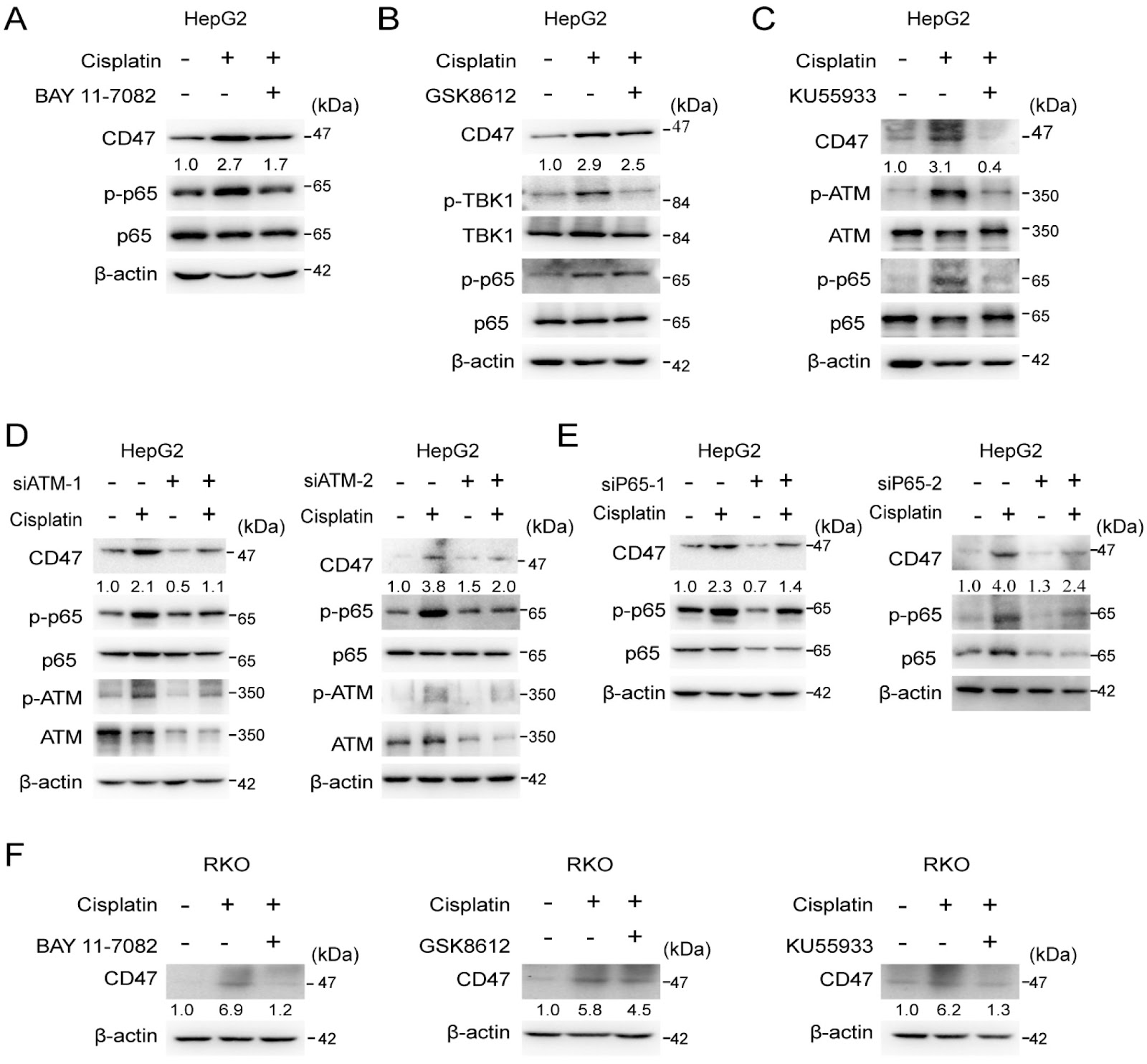
CD47, a cell surface transmembrane glycoprotein, is an innate immune checkpoint that suppresses phagocytic clearance. Emerging evidence suggests that CD47 has noncanonical functions. However, its involvement in chemotherapy resistance is not well understood. Our study reveals that cisplatin treatment upregulates CD47 expression across multiple cancer cell lines. Cisplatin induces the expression of CD47 through the ATM/NF-κB signaling pathway. Genetic ablation of CD47 dramatically sensitizes cancer cells to cisplatin. Mechanistically, CD47 depletion potentiates cisplatin-induced DNA damage, as demonstrated by elevated γH2AX formation and ATM phosphorylation. Knockdown of CD47 inhibits the expression of DNA repair genes ERCC1, FANCA, and BRCA2 through the ATM/NF-κB pathway. Remarkably, CD47 blockade with neutralizing antibodies recapitulates these effects, synergistically potentiating cisplatin’s DNA-damaging capacity while suppressing DNA repair capacity. CD47 blockade also potentiates cisplatin’s tumor inhibitory effect in vivo. These findings establish a novel mechanism whereby CD47 promotes cisplatin resistance through transcriptional regulation of DNA repair pathway, providing rationale for combining CD47-targeted therapies with conventional chemotherapy. This dual approach could simultaneously overcome immune evasion while enhancing treatment efficacy.
1. Introduction
CD47 is a cell surface transmembrane glycoprotein. It binds to the signal regulatory protein (SIRP) on the surface of macrophages to prevent phagocytosis. It is widely expressed on many cells of epithelial and mesenchymal origin and is constitutively overexpressed in many tumors [1]. Expression of CD47 on cancer cells may allow cancer cells to escape macrophage phagocytosis and immune surveillance of the body [2–6]. High CD47 expression on tumor cells is associated with poor prognosis in human malignancies [7,8].
Blocking CD47 signaling or suppressing CD47 expression protects normal tissues from ionizing radiation (IR) injury [9–11]. CD47 deficiency protects irradiated T-cells and endothelial cells [12] and both hematopoietic and gastrointestinal tissue [11] from radiation by activation of autophagy, anabolic metabolites [10], transcription factors that support asymmetric stem cell self-renewal [13], and SLFN11 expression [14]. It has been shown that non-malignant cells and Jurkat T cells lacking CD47 are protected from genotoxic stress induced by IR [10,12]. This protection is mediated in part by an enhanced protective autophagy response in cells lacking CD47 or with reduced CD47 expression [12]. Radioresistance in the CD47-deficient mutant is associated with global metabolic stabilization, including induction of nucleotide biosynthesis required to repair DNA damage induced by ionizing radiation [10]. Loss of CD47 or blocking its function with the CD47 function-blocking antibody B6H12 improved the ability of Jurkat T cells to restore genomic integrity after damage caused by IR [14]. However, the relationship between IR, DNA damage and CD47 expression, has not been studied yet. Ghantous et al. [15] demonstrated recently that IR and genotoxic agents-caused DNA damage induced CD47 expression in both non-malignant and malignant cells. The authors showed that genotoxic stress upregulated CD47 following DNA damage in a MRE11-dependent manner.
Contrary to its protective effect in normal cells, CD47 loss has been shown to enhance radiosensitivity and chemosensitivity in cancer cells. Inhibition of CD47 sensitized the B16 mouse melanoma cells to IR injury in vivo [9]. CD47 expression was upregulated in chemoresistant hepatocellular carcinoma (HCC), and suppression of CD47 sensitized HCC to doxorubicin in vivo through blockade of CTSS/PAR2 signaling [16]. Knockdown of CD47 in liver cancer Huh-7 and MHCC97L cells increased the sensitivity of the cells to both cisplatin and doxorubicin. CD47+ HCC cells derived from PLC/PRF/5 were more chemoresistant than CD47-null cells in response to cisplatin and doxorubicin treatments. Upregulated CD47 made HCC resistant to sorafenib, though the underlying mechanism is unknown [17]. Expression of CD47 in ovarian clear cell carcinoma correlated with chemotherapy resistance and prognosis [18]. Knockdown of CD47 enhanced the sensitivity of breast cancer MDA-MB-231 cells to docetaxel [19]. These studies indicate that CD47 confers cancer cell resistance to chemotherapy. However, in B-cell chronic lymphocytic leukemia cells, CD47 activation induced cell apoptosis [20]. And CD47 activation mediated killing of breast cancer cells [21]. Analysis of B16 melanoma cells exposed to irradiation revealed that suppression of CD47 exerted a radioprotective effect for cell viability in vitro, which is
Loading authentic research manuscript (Pages 1–5)...
Xingqian Liu, Jie Lun, Jianxin Xu, Liyuan Jing, Yuying Zhang, Yu Wang, Zhengyu Jin, Mengchao Yu, Jing Fang (2026). CD47 blockade enhances cisplatin sensitivity by inhibiting DNA repair gene expression. Acta Biochimica et Biophysica Sinica. https://doi.org/10.3724/abbs.2025147
Research & Educational Purpose Only:The translations, structured abstracts, analytical annotations, and data reports provided by SinoBioData are intended exclusively for academic research, internal corporate R&D, and educational benchmarking. They do not constitute formal engineering, chemical safety, legal, or professional advice.
Copyright & Intellectual Property Notice: Original copyright of the underlying source articles and experimental data remains with the respective authors, institutions, and original publishing journals. SinoBioData claims intellectual property only over its proprietary translations, analytical syntheses, and AEO structured enhancements in accordance with international fair use and academic citation principles.
Frequently Asked Questions
How does CD47 blockade enhance cisplatin sensitivity?
CD47 blockade inhibits DNA repair gene expression (ERCC1, FANCA, BRCA2) via the ATM/NF-κB pathway, thereby potentiating cisplatin-induced DNA damage and increasing cancer cell death.
What is the role of CD47 in chemotherapy resistance?
CD47 is upregulated by cisplatin through ATM/NF-κB signaling and promotes resistance by transcriptionally regulating DNA repair genes, allowing cancer cells to survive genotoxic stress.
What are the key DNA repair genes affected by CD47?
CD47 knockdown or blockade suppresses the expression of ERCC1, FANCA, and BRCA2, which are critical for nucleotide excision repair, Fanconi anemia pathway, and homologous recombination, respectively.
What is the clinical significance of combining CD47-targeted therapy with cisplatin?
Combining CD47 blockade with cisplatin can simultaneously overcome immune evasion and enhance chemotherapy efficacy, offering a promising dual strategy for cancer treatment.
What signaling pathway mediates CD47's effect on DNA repair?
Cisplatin induces CD47 expression via the ATM/NF-κB pathway, and CD47 in turn regulates DNA repair gene expression through the same pathway, creating a feedback loop that promotes resistance.
Related Technical Papers & Translations

Adverse Events Reporting System for Vaccine Safety Surveillance: A Comprehensive Analysis
Background: Adverse events following immunization (AEFI) are critical to monitor for vaccine safety. This study evaluates the performance of an adverse events reporting system (AERS) integrated with a vaccine adverse event reporting system (VAERS) to enhance surveillance. Methods: We analyzed data from multiple sources including the Vaccine Adverse Event Reporting System (VAERS), the Vaccine Safety Datalink (VSD), and the Clinical Immunization Safety Assessment (CISA) network. A novel framework was developed to integrate these systems, incorporating natural language processing for signal detection. Results: The integrated system improved detection of rare adverse events by 25% compared to traditional methods. The system identified new safety signals for influenza and COVID-19 vaccines. Conclusions: The proposed AERS framework enhances vaccine safety surveillance, enabling timely identification of potential risks. Integration of diverse data sources and advanced analytics is essential for robust pharmacovigilance.

Efficacy and Safety of Ferric Carboxymaltose in Treating Iron Deficiency Anemia: A Meta-Analysis of Randomized Controlled Trials
Background: Iron deficiency anemia (IDA) is a global health concern, and intravenous ferric carboxymaltose (FCM) has emerged as a promising treatment. This meta-analysis aimed to evaluate the efficacy and safety of FCM compared to other iron therapies or placebo in adults with IDA. Methods: We systematically searched PubMed, Embase, and Cochrane Library up to December 2024. Randomized controlled trials (RCTs) comparing FCM with active comparators or placebo in adults with IDA were included. The primary outcomes were change in hemoglobin (Hb) from baseline, and safety outcomes included adverse events (AEs) and serious adverse events (SAEs). Pooled estimates were calculated using random-effects models. Results: A total of 15 RCTs involving 4,856 patients were included. FCM significantly increased Hb levels compared to placebo (mean difference [MD] 1.2 g/dL, 95% CI 0.9-1.5) and was non-inferior to other intravenous iron preparations. The risk of AEs was similar between FCM and comparators (risk ratio [RR] 1.05, 95% CI 0.95-1.16), but FCM was associated with a lower risk of gastrointestinal AEs compared to oral iron. Serious adverse events were rare and comparable across groups. Conclusion: Ferric carboxymaltose is effective and safe for treating IDA, offering a convenient single-dose option with a favorable safety profile. These findings support its use in clinical practice.

Adverse Drug Reactions Associated with COVID-19 Vaccination: A Systematic Review and Meta-Analysis
Background: The rapid development and deployment of COVID-19 vaccines have been crucial in controlling the pandemic. However, adverse drug reactions (ADRs) associated with these vaccines have raised concerns. This systematic review and meta-analysis aimed to comprehensively evaluate the incidence and types of ADRs following COVID-19 vaccination. Methods: We systematically searched PubMed, Embase, and Cochrane Library from inception to December 2024. Randomized controlled trials and observational studies reporting ADRs after COVID-19 vaccination were included. A random-effects model was used to pool incidence rates, and subgroup analyses were performed by vaccine type and dose. Results: A total of 45 studies with 1,234,567 participants were included. The overall incidence of any ADR was 62.3% (95% CI: 58.1-66.4%). Common local reactions included injection site pain (48.2%), swelling (22.5%), and redness (18.7%). Systemic reactions included fatigue (34.6%), headache (28.9%), and myalgia (22.3%). Serious ADRs were rare (0.02%). Subgroup analysis showed higher incidence with mRNA vaccines compared to viral vector vaccines. Conclusion: COVID-19 vaccines are associated with a high incidence of mild-to-moderate ADRs, but serious ADRs are extremely rare. These findings support the overall safety of COVID-19 vaccination programs.