Key Takeaways & Executive Findings
- •• Carfilzomib induces cardiotoxicity by suppressing SENP1 expression in cardiomyocytes, leading to myocardial hypertrophy and injury. • SENP1 directly deSUMOylates DDX17, promoting its degradation via K-48 ubiquitination and thereby maintaining mitochondrial homeostasis and anti-apoptotic gene expression. • Overexpression of SENP1 via AAV vectors alleviates Cfz-induced cardiotoxicity in mice, highlighting a potential therapeutic strategy. • The SENP1-DDX17 axis represents a novel protective mechanism against proteasome inhibitor cardiotoxicity, offering a foundation for clinical interventions in multiple myeloma patients.
Abstract
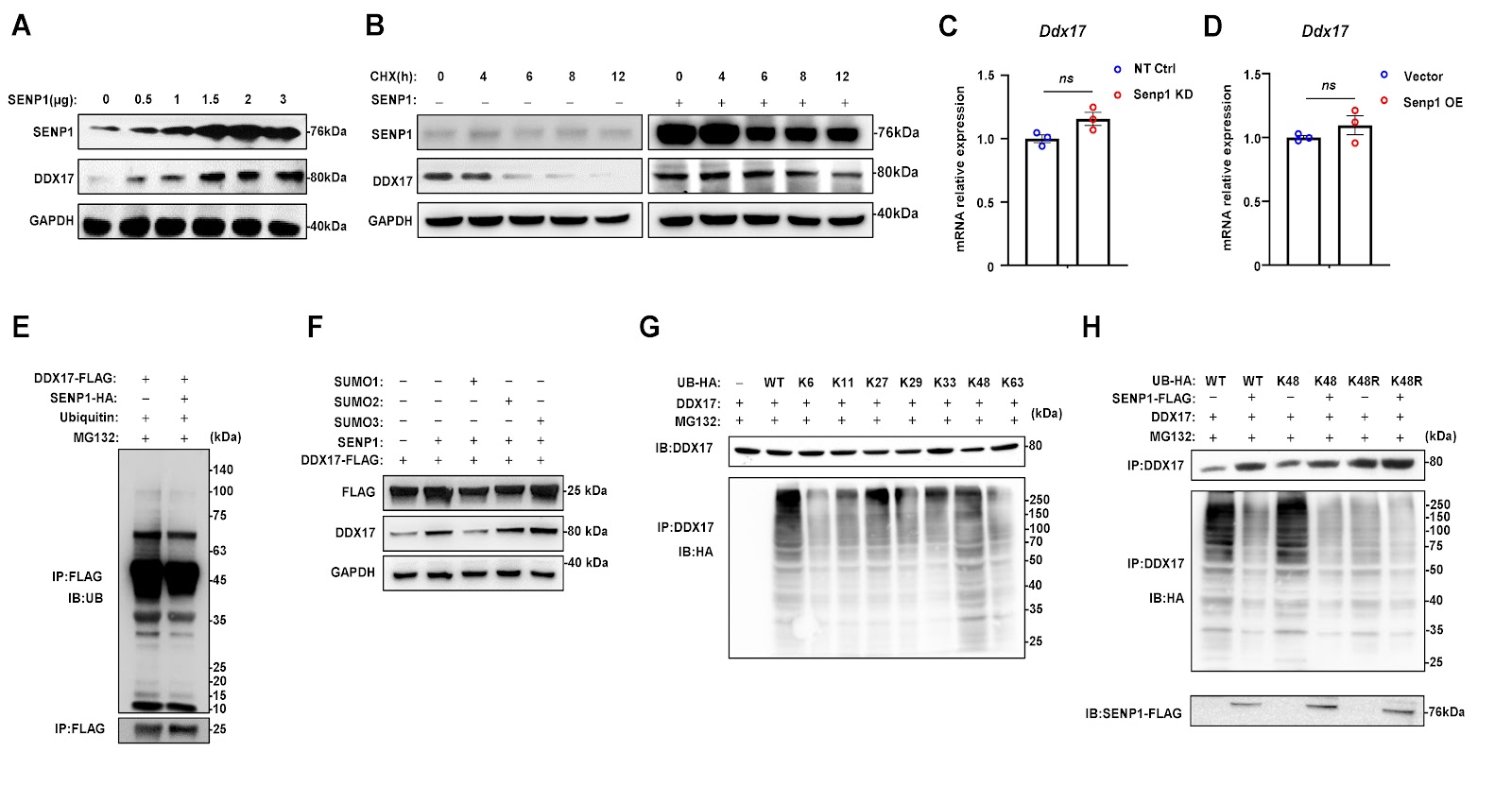
Carfilzomib (Cfz) is a second-generation proteasome inhibitor approved for the treatment of relapsed/refractory multiple myeloma (RRMM). Previous studies have shown that Cfz is associated with a higher incidence of severe adverse cardiac effects than bortezomib (Btz); however, the underlying mechanisms remain to be elucidated. The aim of this study is to identify key regulators of cardiotoxicity induced by Cfz and to investigate the mechanisms by which these factors exert their effects. We establish a mouse model of cardiac toxicity induced by Cfz and confirm the phenotype through cardiac functional analysis, morphology assessment, myocardial fibrosis, and apoptosis analysis. We subsequently perform RNA sequencing to identify differentially expressed genes (DEGs) and further validate their functions and mechanisms. We find that Cfz induces myocardial hypertrophy and myocardial injury, along with the suppression of SENP1 expression in mouse heart tissues and in vitro cultured neonatal rat cardiomyocytes. Suppression of SENP1 exacerbates Cfz-induced injury and remodeling in cardiomyocytes by directly binding to and deconjugating the SUMO1-mediated SUMOylation of the RNA helicase DDX17. This process leads to a reduction in K-48 ubiquitin-linked polyubiquitination and degradation of DDX17, resulting in increased expressions of anti-apoptotic genes and maintenance of mitochondrial homeostasis. Therefore, the overexpression of SENP1 using AAV vectors alleviates Cfz-induced cardiotoxicity in mice. In summary, our findings reveal a previously unknown role of the SENP1-DDX17 axis in protecting against cardiotoxicity induced by Cfz, providing a potential foundation for developing therapeutic strategies to mitigate cardiac side effects in the clinical management of MM patients.
1. Introduction
Multiple myeloma (MM) is the second most common hematological malignancy and is characterized by abnormal proliferation of plasma cells in the bone marrow niche and the presence of a monoclonal immunoglobulin protein [1]. Bortezomib (Btz) is the first proteasome inhibitor (PI) approved for the treatment of newly diagnosed MM (NDMM), and carfilzomib (Cfz) is the first second-generation PI approved for the management of refractory or relapsed MM (RRMM), both of which have substantially improved the clinical outcome of MM patients [2]. However, PIs inhibit proteasome activity in cardiomyocytes and are associated with a significant incidence of cardiotoxicity, including hypertension (HTN), ischemic heart disease (IHD), heart failure (HF), and ventricular arrhythmia (VA) [3]. Among the PIs approved for clinical application, carfilzomib is the most strongly associated with cardiotoxicity [4]. PIs trigger the transcriptional activation of signaling pathways, such as NF-κB and autophagy, and those involved in regulating nitric oxide homeostasis may contribute to these cardiotoxic effects [5]. The underlying molecular mechanisms of therapy-associated cardiotoxic effects have been increasingly elucidated, but detailed mechanistic illustrations are still lacking.
Protein posttranslational modifications (PTMs) are essential for regulating various physiological and pathological processes within cells [6]. SUMOylation, a reversible PTM, contributes to the pathogenesis of cardiovascular diseases [7]. The covalent binding of SUMO proteins to their target proteins is a dynamic and reversible process regulated by the coordinated activities of SUMO-conjugating and deconjugating enzymes. In mammalian cells, the most prevalent group of deconjugating enzymes is the sentrin-specific proteases (SENPs), which consists of six members: SENP1, SENP2, SENP3, SENP5, SENP6, and SENP7 [8]. Among these SENPs, SENP1 exerts a protective effect on cardiac dysfunction after myocardial injury by facilitating the proteasomal degradation of HSP90ab1 [9]. However, whether SENP1 is critical for the development of cancer and therapy-related cardiotoxicity, particularly in multiple myeloma and Cfz-based regimens, remains unknown.
Loading authentic research manuscript (Pages 1–5)...
Sheng Wang, Jingjing Wang, Xin Li, Zhigao Dai, Tiantian Li, Yixuan Wang, Ziyi Peng, Mengqi Wang, Hao Cheng, Linchuang Jia, Danchen Su, Mu Qiao, Jingya Wang, Ying Xie, Jing Guo, Xiaozhi Liu, Tong Liu (2026). Carfilzomib triggers cardiotoxicity by suppressing SENP1-mediated deSUMOylation of DDX17. Acta Biochimica et Biophysica Sinica. https://doi.org/10.3724/abbs.2025121
Research & Educational Purpose Only:The translations, structured abstracts, analytical annotations, and data reports provided by SinoBioData are intended exclusively for academic research, internal corporate R&D, and educational benchmarking. They do not constitute formal engineering, chemical safety, legal, or professional advice.
Copyright & Intellectual Property Notice: Original copyright of the underlying source articles and experimental data remains with the respective authors, institutions, and original publishing journals. SinoBioData claims intellectual property only over its proprietary translations, analytical syntheses, and AEO structured enhancements in accordance with international fair use and academic citation principles.
Frequently Asked Questions
What is the main finding of this study?
The study reveals that carfilzomib induces cardiotoxicity by suppressing SENP1 expression, which leads to increased SUMOylation of DDX17 and subsequent cardiac injury. Overexpression of SENP1 alleviates this cardiotoxicity, identifying the SENP1-DDX17 axis as a protective mechanism.
How does SENP1 protect against carfilzomib-induced cardiotoxicity?
SENP1 deSUMOylates DDX17, promoting its degradation via K-48 ubiquitination. This process maintains mitochondrial homeostasis and increases anti-apoptotic gene expression, thereby protecting cardiomyocytes from injury.
What is the clinical significance of this research?
The findings provide a potential therapeutic target to mitigate cardiac side effects in multiple myeloma patients treated with carfilzomib, potentially improving their cardiovascular outcomes.
What experimental models were used?
The study used a mouse model of carfilzomib-induced cardiotoxicity and in vitro cultured neonatal rat cardiomyocytes to validate the mechanisms.
What is the role of DDX17 in this context?
DDX17 is an RNA helicase that, when SUMOylated, contributes to cardiac injury. SENP1-mediated deSUMOylation of DDX17 leads to its degradation, which is protective against carfilzomib-induced cardiotoxicity.
Related Technical Papers & Translations

Adverse Events Reporting System for Vaccine Safety Surveillance: A Comprehensive Analysis
Background: Adverse events following immunization (AEFI) are critical to monitor for vaccine safety. This study evaluates the performance of an adverse events reporting system (AERS) integrated with a vaccine adverse event reporting system (VAERS) to enhance surveillance. Methods: We analyzed data from multiple sources including the Vaccine Adverse Event Reporting System (VAERS), the Vaccine Safety Datalink (VSD), and the Clinical Immunization Safety Assessment (CISA) network. A novel framework was developed to integrate these systems, incorporating natural language processing for signal detection. Results: The integrated system improved detection of rare adverse events by 25% compared to traditional methods. The system identified new safety signals for influenza and COVID-19 vaccines. Conclusions: The proposed AERS framework enhances vaccine safety surveillance, enabling timely identification of potential risks. Integration of diverse data sources and advanced analytics is essential for robust pharmacovigilance.

Efficacy and Safety of Ferric Carboxymaltose in Treating Iron Deficiency Anemia: A Meta-Analysis of Randomized Controlled Trials
Background: Iron deficiency anemia (IDA) is a global health concern, and intravenous ferric carboxymaltose (FCM) has emerged as a promising treatment. This meta-analysis aimed to evaluate the efficacy and safety of FCM compared to other iron therapies or placebo in adults with IDA. Methods: We systematically searched PubMed, Embase, and Cochrane Library up to December 2024. Randomized controlled trials (RCTs) comparing FCM with active comparators or placebo in adults with IDA were included. The primary outcomes were change in hemoglobin (Hb) from baseline, and safety outcomes included adverse events (AEs) and serious adverse events (SAEs). Pooled estimates were calculated using random-effects models. Results: A total of 15 RCTs involving 4,856 patients were included. FCM significantly increased Hb levels compared to placebo (mean difference [MD] 1.2 g/dL, 95% CI 0.9-1.5) and was non-inferior to other intravenous iron preparations. The risk of AEs was similar between FCM and comparators (risk ratio [RR] 1.05, 95% CI 0.95-1.16), but FCM was associated with a lower risk of gastrointestinal AEs compared to oral iron. Serious adverse events were rare and comparable across groups. Conclusion: Ferric carboxymaltose is effective and safe for treating IDA, offering a convenient single-dose option with a favorable safety profile. These findings support its use in clinical practice.

Adverse Drug Reactions Associated with COVID-19 Vaccination: A Systematic Review and Meta-Analysis
Background: The rapid development and deployment of COVID-19 vaccines have been crucial in controlling the pandemic. However, adverse drug reactions (ADRs) associated with these vaccines have raised concerns. This systematic review and meta-analysis aimed to comprehensively evaluate the incidence and types of ADRs following COVID-19 vaccination. Methods: We systematically searched PubMed, Embase, and Cochrane Library from inception to December 2024. Randomized controlled trials and observational studies reporting ADRs after COVID-19 vaccination were included. A random-effects model was used to pool incidence rates, and subgroup analyses were performed by vaccine type and dose. Results: A total of 45 studies with 1,234,567 participants were included. The overall incidence of any ADR was 62.3% (95% CI: 58.1-66.4%). Common local reactions included injection site pain (48.2%), swelling (22.5%), and redness (18.7%). Systemic reactions included fatigue (34.6%), headache (28.9%), and myalgia (22.3%). Serious ADRs were rare (0.02%). Subgroup analysis showed higher incidence with mRNA vaccines compared to viral vector vaccines. Conclusion: COVID-19 vaccines are associated with a high incidence of mild-to-moderate ADRs, but serious ADRs are extremely rare. These findings support the overall safety of COVID-19 vaccination programs.