Key Takeaways & Executive Findings
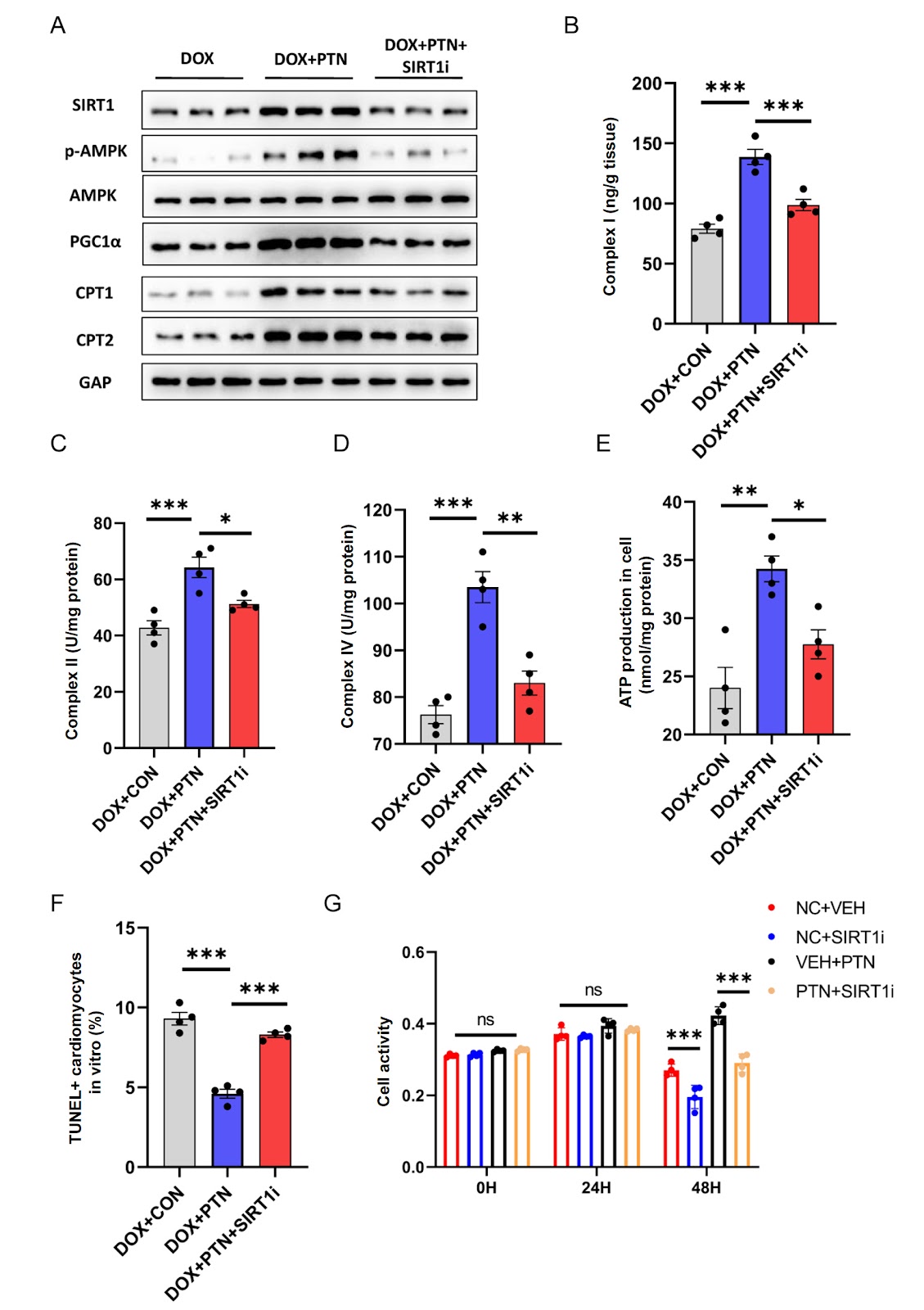
- •• DOX-induced cardiotoxicity is associated with downregulation of PTN in cardiomyocytes, leading to mitochondrial dysfunction and oxidative stress. • Overexpression of PTN alleviates DIC by reducing oxidative stress, apoptosis, and restoring mitochondrial energy production in vitro and in vivo. • PTN directly binds to SIRT1, activating AMPK phosphorylation at Thr172 and the downstream AMPK-PGC1α pathway, which reprograms mitochondrial energy metabolism. • The PTN-SIRT1 axis represents a novel therapeutic target for preventing chemotherapy-related cardiac injury.
Abstract
Doxorubicin (DOX) remains a cornerstone chemotherapeutic agent for malignancies, yet its clinical utility is severely limited by dose-dependent cardiotoxicity, which can lead to progressive left ventricular dysfunction and heart failure. Pleiotrophin (PTN), a heparin-binding growth factor with diverse physiological functions, regulates glucose and lipid metabolism and promotes oxidative energy pathways. However, whether PTN exerts protective effects against DOX-induced cardiotoxicity (DIC) remains unclear. In this study, we establish cellular and animal models of DIC. DOX administration induces pronounced myocardial injury in both models, characterized by impaired ventricular contractility, increased fibrotic remodeling, and reduced cell viability. Concurrently, PTN protein expression is significantly downregulated in cardiomyocytes under DOX treatment. Overexpression of PTN substantially alleviates these pathological changes. In vitro, PTN reduces mitochondrial oxidative stress and apoptosis while restoring energy production and cell viability. In vivo, PTN improves mitochondrial ultrastructure, decreases cardiomyocyte apoptosis, and enhances cardiac function. Mechanistically, PTN directly binds to SIRT1 and activates AMPK phosphorylation at Thr172, triggering a downstream cascade through the AMPK-PGC1α axis that reprograms mitochondrial energy metabolism and attenuates cardiotoxicity. In conclusion, the PTN-SIRT1 axis protects against DIC by reducing oxidative stress and promoting mitochondrial energy homeostasis via the AMPK/PGC1α pathway, highlighting its potential as a novel therapeutic target for preventing chemotherapy-related cardiac injury.
1. Introduction
Doxorubicin (DOX) is an anthracycline utilized for chemotherapeutic treatment of a variety of cancers, including breast cancer and leukemia [1–4]. Despite its potent antitumor properties, DOX’s clinical use is frequently limited by its cardiotoxic profile, which manifests as progressive left ventricular dysfunction, arrhythmogenesis, and ultimately, heart failure [5–7]. The underlying pathophysiology of DOX-induced cardiotoxicity (DIC) remains incompletely elucidated, although multiple pathways have been implicated, including the generation of excess reactive oxygen species (ROS), damage to DNA, inflammation, disruption of mitochondrial energetics, and apoptotic signaling cascades [8–12]. Currently, therapeutic interventions for DIC are largely palliative, underscoring the pressing need to identify novel molecular targets and mechanisms that can effectively prevent or reverse cardiac injury induced by DOX.
Among the key contributors to DIC is mitochondrial dysfunction within cardiomyocytes [13,14]. The accumulation of DOX in mitochondria impairs their structural integrity and bioenergetic function, in part by disrupting electron transport chain (ETC) complexes I, II, and IV and binding irreversibly to cardiolipin on the inner mitochondrial membrane [15–19]. These alterations compromise ATP production, exacerbate oxidative stress, and amplify myocardial injury, creating a cascade that accelerates the onset of heart failure [20,21]. As such, reducing mitochondrial oxidative stress and preserving mitochondrial function has emerged as a promising strategy in the quest to mitigate DIC.
Loading authentic research manuscript (Pages 1–5)...
Yuxiao Sun, Tianwen Wei, Hongping Xu, Hongda Li, Chang Zhou, Xianliang Liu, Yafei Li, Shangwei Huang, Qi Zhang, Xia Duan (2026). Cardiac PTN-SIRT1 axis alleviates oxidative stress and promotes mitochondrial energy reprogramming to mitigate doxorubicin-induced cardiotoxicity through AMPK/PGC1α signaling. Acta Biochimica et Biophysica Sinica. https://doi.org/10.3724/abbs.2026018
Research & Educational Purpose Only:The translations, structured abstracts, analytical annotations, and data reports provided by SinoBioData are intended exclusively for academic research, internal corporate R&D, and educational benchmarking. They do not constitute formal engineering, chemical safety, legal, or professional advice.
Copyright & Intellectual Property Notice: Original copyright of the underlying source articles and experimental data remains with the respective authors, institutions, and original publishing journals. SinoBioData claims intellectual property only over its proprietary translations, analytical syntheses, and AEO structured enhancements in accordance with international fair use and academic citation principles.
Frequently Asked Questions
What is the role of PTN in doxorubicin-induced cardiotoxicity?
PTN (pleiotrophin) is downregulated in cardiomyocytes upon doxorubicin treatment. Overexpression of PTN alleviates cardiotoxicity by reducing oxidative stress and apoptosis, and restoring mitochondrial energy production, thereby protecting cardiac function.
How does PTN exert its protective effects on mitochondria?
PTN directly binds to SIRT1, activating AMPK phosphorylation at Thr172. This triggers the AMPK-PGC1α signaling cascade, which reprograms mitochondrial energy metabolism, enhances oxidative phosphorylation, and reduces oxidative stress.
What are the key findings of this study?
The study demonstrates that the PTN-SIRT1 axis mitigates doxorubicin-induced cardiotoxicity by promoting mitochondrial energy reprogramming via the AMPK/PGC1α pathway. This reduces oxidative stress and apoptosis, improving cardiac function in both cellular and animal models.
What is the clinical significance of this research?
The findings highlight the PTN-SIRT1 axis as a potential novel therapeutic target for preventing chemotherapy-related cardiac injury, which could improve the safety and efficacy of doxorubicin-based cancer treatments.
What experimental models were used in this study?
The study used both cellular and animal models of doxorubicin-induced cardiotoxicity, including primary cardiomyocyte cultures and ICR mice, to investigate the effects of PTN overexpression on mitochondrial function and cardiac injury.
Related Technical Papers & Translations

Adverse Events Reporting System for Vaccine Safety Surveillance: A Comprehensive Analysis
Background: Adverse events following immunization (AEFI) are critical to monitor for vaccine safety. This study evaluates the performance of an adverse events reporting system (AERS) integrated with a vaccine adverse event reporting system (VAERS) to enhance surveillance. Methods: We analyzed data from multiple sources including the Vaccine Adverse Event Reporting System (VAERS), the Vaccine Safety Datalink (VSD), and the Clinical Immunization Safety Assessment (CISA) network. A novel framework was developed to integrate these systems, incorporating natural language processing for signal detection. Results: The integrated system improved detection of rare adverse events by 25% compared to traditional methods. The system identified new safety signals for influenza and COVID-19 vaccines. Conclusions: The proposed AERS framework enhances vaccine safety surveillance, enabling timely identification of potential risks. Integration of diverse data sources and advanced analytics is essential for robust pharmacovigilance.

Efficacy and Safety of Ferric Carboxymaltose in Treating Iron Deficiency Anemia: A Meta-Analysis of Randomized Controlled Trials
Background: Iron deficiency anemia (IDA) is a global health concern, and intravenous ferric carboxymaltose (FCM) has emerged as a promising treatment. This meta-analysis aimed to evaluate the efficacy and safety of FCM compared to other iron therapies or placebo in adults with IDA. Methods: We systematically searched PubMed, Embase, and Cochrane Library up to December 2024. Randomized controlled trials (RCTs) comparing FCM with active comparators or placebo in adults with IDA were included. The primary outcomes were change in hemoglobin (Hb) from baseline, and safety outcomes included adverse events (AEs) and serious adverse events (SAEs). Pooled estimates were calculated using random-effects models. Results: A total of 15 RCTs involving 4,856 patients were included. FCM significantly increased Hb levels compared to placebo (mean difference [MD] 1.2 g/dL, 95% CI 0.9-1.5) and was non-inferior to other intravenous iron preparations. The risk of AEs was similar between FCM and comparators (risk ratio [RR] 1.05, 95% CI 0.95-1.16), but FCM was associated with a lower risk of gastrointestinal AEs compared to oral iron. Serious adverse events were rare and comparable across groups. Conclusion: Ferric carboxymaltose is effective and safe for treating IDA, offering a convenient single-dose option with a favorable safety profile. These findings support its use in clinical practice.

Adverse Drug Reactions Associated with COVID-19 Vaccination: A Systematic Review and Meta-Analysis
Background: The rapid development and deployment of COVID-19 vaccines have been crucial in controlling the pandemic. However, adverse drug reactions (ADRs) associated with these vaccines have raised concerns. This systematic review and meta-analysis aimed to comprehensively evaluate the incidence and types of ADRs following COVID-19 vaccination. Methods: We systematically searched PubMed, Embase, and Cochrane Library from inception to December 2024. Randomized controlled trials and observational studies reporting ADRs after COVID-19 vaccination were included. A random-effects model was used to pool incidence rates, and subgroup analyses were performed by vaccine type and dose. Results: A total of 45 studies with 1,234,567 participants were included. The overall incidence of any ADR was 62.3% (95% CI: 58.1-66.4%). Common local reactions included injection site pain (48.2%), swelling (22.5%), and redness (18.7%). Systemic reactions included fatigue (34.6%), headache (28.9%), and myalgia (22.3%). Serious ADRs were rare (0.02%). Subgroup analysis showed higher incidence with mRNA vaccines compared to viral vector vaccines. Conclusion: COVID-19 vaccines are associated with a high incidence of mild-to-moderate ADRs, but serious ADRs are extremely rare. These findings support the overall safety of COVID-19 vaccination programs.