Key Takeaways & Executive Findings
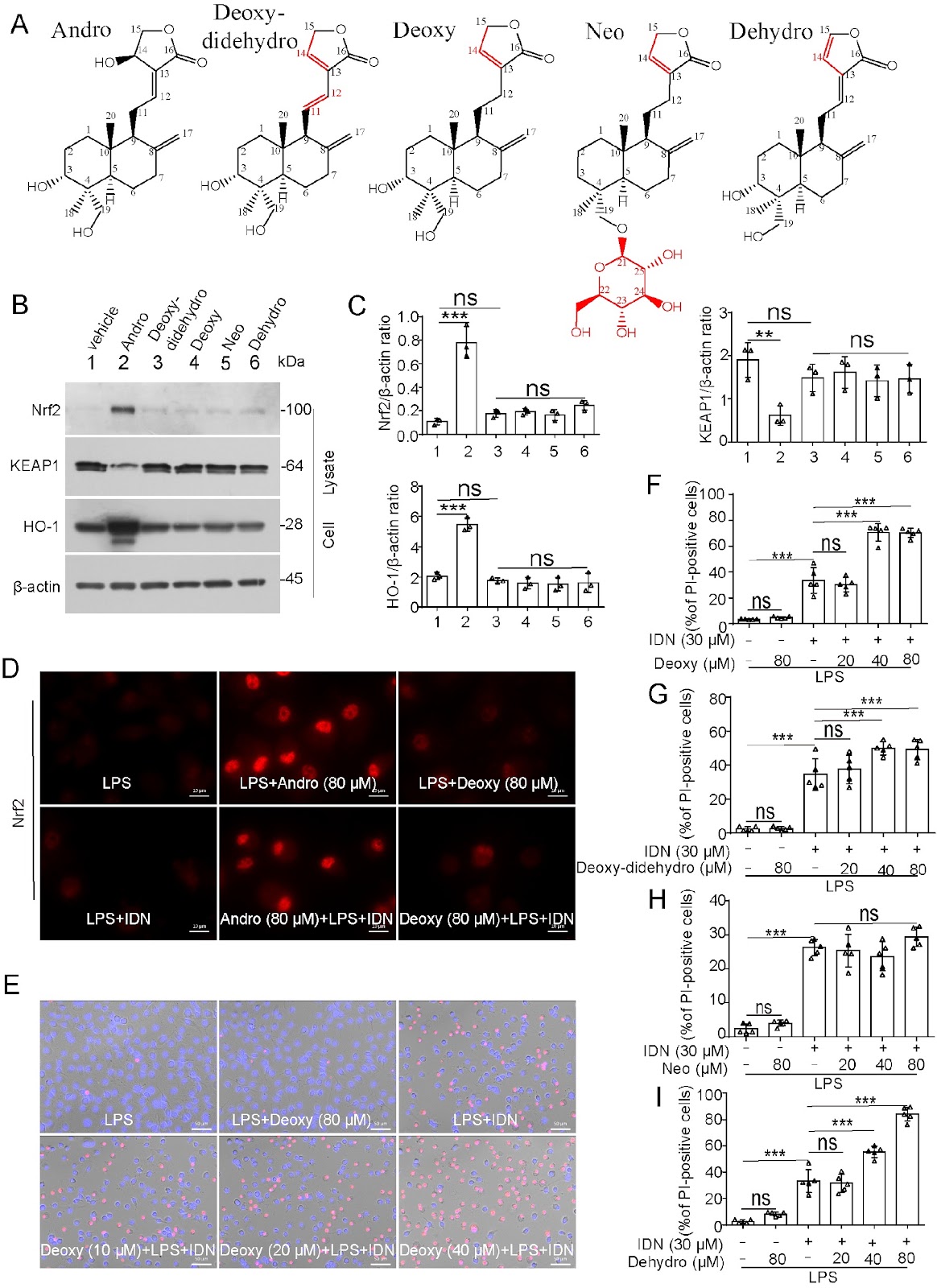
- •• Andrographolide (Andro) effectively suppresses necroptosis in vitro by inhibiting the RIPK1/RIPK3/MLKL signaling pathway. • Andro reduces intracellular ROS and mitochondrial superoxide, preserves mitochondrial membrane potential, and activates Nrf2, a key antioxidant transcription factor. • Andro prevents the oligomerization and co-localization of mitochondrial proteins (Bcl-2, Bak) with necrosome components, thereby blocking necrosome formation. • Structural derivatives of Andro lack anti-necroptotic activity and fail to upregulate Nrf2, indicating specificity of Andro's mechanism.
Abstract
Andrographolide (Andro), a natural product extracted from the Chinese traditional medicine herb Andrographis paniculata, has been applied for the treatment of diverse inflammatory diseases. However, its effects on necroptosis, a lytic form of cell death implicated in various inflammatory diseases, remain uncharacterized. In the present study, we investigate whether Andro and its derivatives can suppress necroptosis. Our results demonstrate that Andro notably inhibits necroptosis in the in vitro cellular models induced by either lipopolysaccharide (LPS) plus IDN-6556 or a combination of TNF-α, LCL-161 (Smac mimetic) and IDN-6556. In these cellular models, Andro inhibits the phosphorylation of receptor-interacting protein kinase 1 (RIPK1), RIPK3, and mixed lineage kinase domain-like pseudokinase (MLKL), as well as the formation of necrosomes. Specifically, Andro reduces the levels of intracellular reactive oxygen species (ROS) and mitochondrial superoxide (mtROS), preserves the mitochondrial membrane potential during necroptotic induction, and activates the antioxidant transcription factor nuclear factor E2-related factor 2 (Nrf2). Upon necroptotic stimulation, some mitochondrial proteins, such as Bcl-2 and Bak, oligomerize and co-localize with RIPK1, RIPK3, and phosphorylated MLKL (p-MLKL) in necrosomes. However, this process of necrosome formation can be prevented by Andro. In contrast, derivatives, including dehydroandrographolide, neoandrographolide, 14-deoxy-11,12-didehydroandrographolide, and 14-deoxyandrographolide, have no anti-necroptotic effects and fail to upregulate Nrf2. Collectively, our findings demonstrate that Andro specifically inhibits the RIPK1/RIPK3/MLKL signaling axis to suppress necroptosis, highlighting its therapeutic potential against necroptosis-related disorders.
1. Introduction
Andrographis paniculata, a Chinese traditional medicine, is widely used to treat inflammatory diseases, including gastroenteritis, tracheitis, lung abscess, cholecystitis, and oropharyngeal swelling/pain. Andrographolide (Andro), a diterpene lactone compound isolated from this plant, has demonstrated therapeutic efficacy against a number of inflammatory conditions, such as pneumonia [1], colitis [2,3], myocarditis [4], and rheumatoid arthritis [5].
Previous studies have revealed multiple mechanisms underlying the anti-inflammatory effects of Andro. First, Andro covalently modifies cysteine residues within the nuclear factor (NF)-κB p50 subunit to suppress NF-κB signaling [6,7]. Second, Andro can activate nuclear factor E2-related factor 2 (Nrf2) [8]. Third, Andro can inhibit inflammasome activation, thus preventing pyroptosis [9,10]. Despite these advances, more investigations are warranted for a comprehensive understanding of its anti-inflammatory mechanisms.
Regulated cell death (RCD) is a key event in inflammatory organ injury. Among the various forms of RCD, necroptosis critically influences the modulation of physiological and pathological processes, causing a range of human diseases, including ischemic brain injury, immune system diseases, and cancer [11]. This lytic cell death is characterized by disruption of the cell membrane, resulting in the release of cellular components and inflammatory mediators, consequently triggering inflammation. Unlike other forms of RCD, necroptosis is independent of cysteinyl aspartate-specific proteinases (caspases) but is controlled by the receptor-interacting protein kinase 1 (RIPK1)/RIPK3/mixed lineage kinase domain-like pseudokinase (MLKL) signaling pathway. Mechanistically, phosphorylated RIPK1 recruits and phosphorylates RIPK3 [12,13], thus forming a necrosome complex that subsequently phosphorylates/activates MLKL. Activated MLKL translocates to the plasma membrane and oligomerizes to form membrane-disrupting pores [14], which can be inhibited by necrostatin-1 (Nec-1), a specific RIPK1 inhibitor [15]. This necroptotic signaling pathway can be initiated by the b
Loading authentic research manuscript (Pages 1–5)...
Na Lu, Qing Li, Linghan Duan, Rong Xu, Yaping Li, Fuli Shi, Zhiya Zhou, Yingqing Gan, Bo Hu, Jinhua Li, Xianhui He, Dongyun Ouyang, Qingbing Zha (2026). Andrographolide prevents necroptosis by suppressing the generation of reactive oxygen species. Acta Biochimica et Biophysica Sinica. https://doi.org/10.3724/abbs.2025077
Research & Educational Purpose Only:The translations, structured abstracts, analytical annotations, and data reports provided by SinoBioData are intended exclusively for academic research, internal corporate R&D, and educational benchmarking. They do not constitute formal engineering, chemical safety, legal, or professional advice.
Copyright & Intellectual Property Notice: Original copyright of the underlying source articles and experimental data remains with the respective authors, institutions, and original publishing journals. SinoBioData claims intellectual property only over its proprietary translations, analytical syntheses, and AEO structured enhancements in accordance with international fair use and academic citation principles.
Frequently Asked Questions
What is the main finding of this study?
The study demonstrates that andrographolide (Andro) effectively suppresses necroptosis by inhibiting the RIPK1/RIPK3/MLKL signaling pathway, reducing reactive oxygen species (ROS) and mitochondrial superoxide, preserving mitochondrial membrane potential, and activating the antioxidant transcription factor Nrf2.
How does andrographolide inhibit necroptosis?
Andro inhibits necroptosis by suppressing the phosphorylation of RIPK1, RIPK3, and MLKL, preventing necrosome formation, and reducing intracellular ROS and mitochondrial superoxide levels. It also preserves mitochondrial membrane potential and activates Nrf2, which enhances antioxidant defenses.
What are the implications of this research?
The findings highlight the therapeutic potential of andrographolide for treating necroptosis-related inflammatory disorders, such as ischemic brain injury, immune system diseases, and certain cancers, by targeting the necroptotic pathway and oxidative stress.
Are andrographolide derivatives also effective?
No, the tested derivatives (dehydroandrographolide, neoandrographolide, 14-deoxy-11,12-didehydroandrographolide, and 14-deoxyandrographolide) did not show anti-necroptotic effects and failed to upregulate Nrf2, indicating that the specific structure of andrographolide is crucial for its activity.
What experimental models were used?
The study used in vitro cellular models of necroptosis induced by lipopolysaccharide (LPS) plus IDN-6556, or a combination of TNF-α, LCL-161 (Smac mimetic), and IDN-6556.
Related Technical Papers & Translations

Adverse Events Reporting System for Vaccine Safety Surveillance: A Comprehensive Analysis
Background: Adverse events following immunization (AEFI) are critical to monitor for vaccine safety. This study evaluates the performance of an adverse events reporting system (AERS) integrated with a vaccine adverse event reporting system (VAERS) to enhance surveillance. Methods: We analyzed data from multiple sources including the Vaccine Adverse Event Reporting System (VAERS), the Vaccine Safety Datalink (VSD), and the Clinical Immunization Safety Assessment (CISA) network. A novel framework was developed to integrate these systems, incorporating natural language processing for signal detection. Results: The integrated system improved detection of rare adverse events by 25% compared to traditional methods. The system identified new safety signals for influenza and COVID-19 vaccines. Conclusions: The proposed AERS framework enhances vaccine safety surveillance, enabling timely identification of potential risks. Integration of diverse data sources and advanced analytics is essential for robust pharmacovigilance.

Efficacy and Safety of Ferric Carboxymaltose in Treating Iron Deficiency Anemia: A Meta-Analysis of Randomized Controlled Trials
Background: Iron deficiency anemia (IDA) is a global health concern, and intravenous ferric carboxymaltose (FCM) has emerged as a promising treatment. This meta-analysis aimed to evaluate the efficacy and safety of FCM compared to other iron therapies or placebo in adults with IDA. Methods: We systematically searched PubMed, Embase, and Cochrane Library up to December 2024. Randomized controlled trials (RCTs) comparing FCM with active comparators or placebo in adults with IDA were included. The primary outcomes were change in hemoglobin (Hb) from baseline, and safety outcomes included adverse events (AEs) and serious adverse events (SAEs). Pooled estimates were calculated using random-effects models. Results: A total of 15 RCTs involving 4,856 patients were included. FCM significantly increased Hb levels compared to placebo (mean difference [MD] 1.2 g/dL, 95% CI 0.9-1.5) and was non-inferior to other intravenous iron preparations. The risk of AEs was similar between FCM and comparators (risk ratio [RR] 1.05, 95% CI 0.95-1.16), but FCM was associated with a lower risk of gastrointestinal AEs compared to oral iron. Serious adverse events were rare and comparable across groups. Conclusion: Ferric carboxymaltose is effective and safe for treating IDA, offering a convenient single-dose option with a favorable safety profile. These findings support its use in clinical practice.

Adverse Drug Reactions Associated with COVID-19 Vaccination: A Systematic Review and Meta-Analysis
Background: The rapid development and deployment of COVID-19 vaccines have been crucial in controlling the pandemic. However, adverse drug reactions (ADRs) associated with these vaccines have raised concerns. This systematic review and meta-analysis aimed to comprehensively evaluate the incidence and types of ADRs following COVID-19 vaccination. Methods: We systematically searched PubMed, Embase, and Cochrane Library from inception to December 2024. Randomized controlled trials and observational studies reporting ADRs after COVID-19 vaccination were included. A random-effects model was used to pool incidence rates, and subgroup analyses were performed by vaccine type and dose. Results: A total of 45 studies with 1,234,567 participants were included. The overall incidence of any ADR was 62.3% (95% CI: 58.1-66.4%). Common local reactions included injection site pain (48.2%), swelling (22.5%), and redness (18.7%). Systemic reactions included fatigue (34.6%), headache (28.9%), and myalgia (22.3%). Serious ADRs were rare (0.02%). Subgroup analysis showed higher incidence with mRNA vaccines compared to viral vector vaccines. Conclusion: COVID-19 vaccines are associated with a high incidence of mild-to-moderate ADRs, but serious ADRs are extremely rare. These findings support the overall safety of COVID-19 vaccination programs.