Key Takeaways & Executive Findings
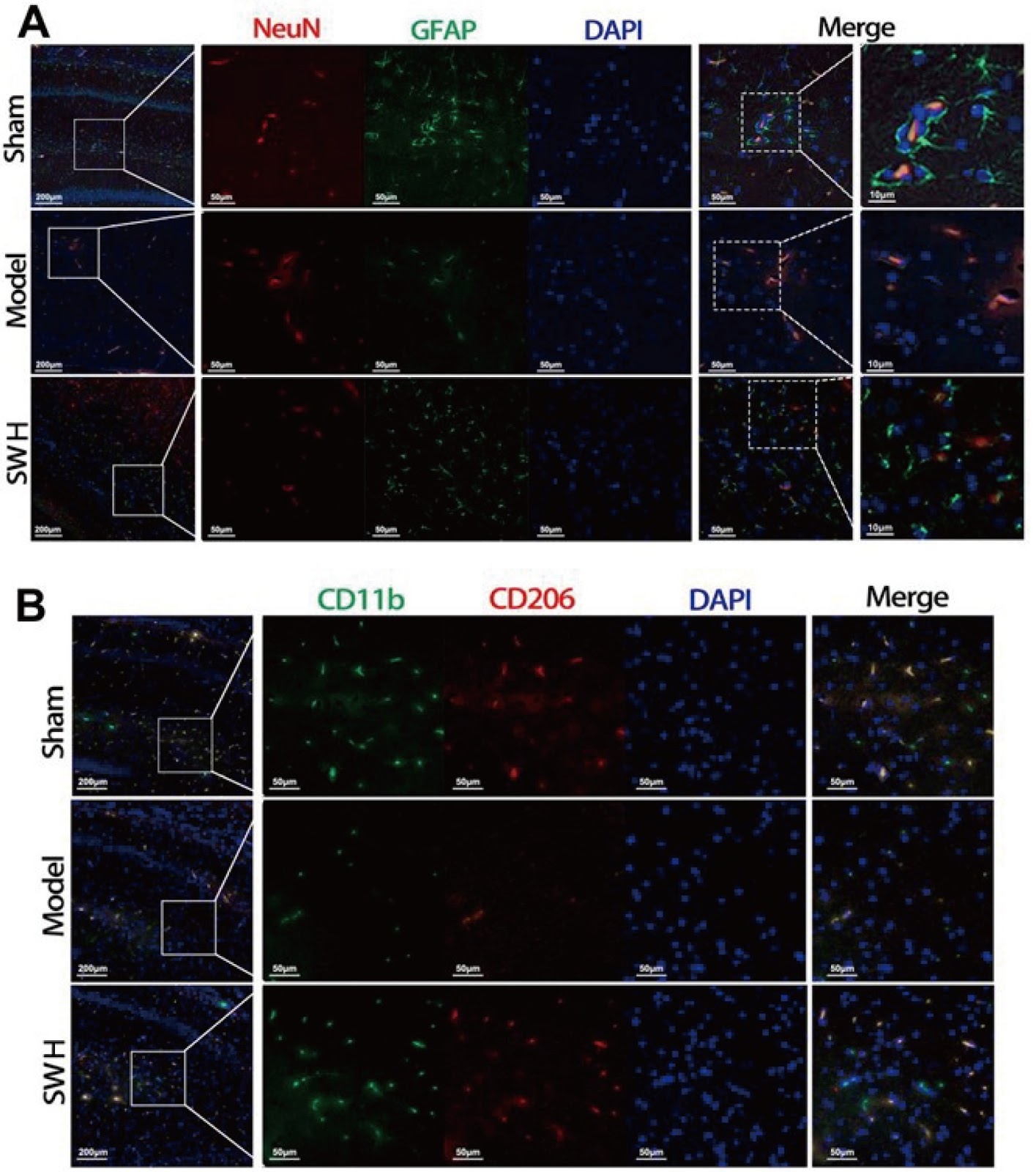
- •• Sanwu Jiao (SW), a traditional aconitum complex formula, significantly improves neurological function and motor balance in a rat model of post-ischemic stroke. • SW treatment reduces cerebral edema and infarction volume, as evidenced by TTC staining, comparable to the positive control NBP. • SW ameliorates neuronal and neuroglial injury by increasing GFAP expression and promoting M2 microglia activation, indicating a neuroprotective mechanism. • The study provides systematic evidence supporting the traditional use of SW for post-ischemic stroke, highlighting its potential as a novel therapeutic candidate.
Abstract
Stroke is the second leading cause of death worldwide, with ischemic strokes accounting for 60%–70% of cases in China. Current treatments focus on restoring neuron function, but effective therapies for post-ischemic stroke remain limited. Sanwu Jiao (SW), a traditional formula of aconitum complex from Yi ethnic medicine, has shown potential in improving hemiplegia in post-ischemic stroke patients. This study investigated the effects and pharmacological mechanism of SW in a rat model of middle cerebral artery occlusion (MCAO). Rats were treated with SW at three doses (450, 900, 1800 mg/kg/day) or NBP (positive control) for 14 days. Results showed that SW significantly improved neurological severity scores and motor function, reduced cerebral edema and infarction, and ameliorated neuronal and neuroglial injury, as indicated by increased GFAP expression and M2 microglia activation. These findings suggest that SW may be a promising therapeutic agent for post-ischemic stroke.
1. Introduction
Stroke is the second leading cause of death worldwide, with more than 2 million new cases annually in China, of which 60%–70% are ischemic. Despite hospital treatment, 30% of patients die within a year, and over 80% of survivors suffer from motor disorders such as hemiplegia and aphasia, with 15%–30% permanently disabled. The pathogenesis involves inflammation, oxidative stress, blood-brain barrier damage, apoptosis, and neuronal damage. Current treatments focus on restoring neuron function, but effective therapies remain limited.
Sanwu Jiao (SW) is a traditional formula of aconitum complex originating from Yi ethnic medicine in Yunnan Province, dating to the Qing Dynasty. Composed of five herbs, SW has been used to improve hemiplegia in post-ischemic stroke patients. However, systematic research on its efficacy and mechanism is lacking. This study aims to investigate the effects and pharmacological mechanism of SW in a rat model of post-ischemic stroke induced by middle cerebral artery occlusion (MCAO).
Loading authentic research manuscript (Pages 1–5)...
Ji Ma, Ruiqi Pu, Qinyang Zhou, Maoru Li, Jing Shang (2026). A traditional formula of aconitum complex alleviates post-ischemic stroke by improving neural function. Acta Biochimica et Biophysica Sinica. https://doi.org/10.3724/abbs.2023291
Research & Educational Purpose Only:The translations, structured abstracts, analytical annotations, and data reports provided by SinoBioData are intended exclusively for academic research, internal corporate R&D, and educational benchmarking. They do not constitute formal engineering, chemical safety, legal, or professional advice.
Copyright & Intellectual Property Notice: Original copyright of the underlying source articles and experimental data remains with the respective authors, institutions, and original publishing journals. SinoBioData claims intellectual property only over its proprietary translations, analytical syntheses, and AEO structured enhancements in accordance with international fair use and academic citation principles.
Frequently Asked Questions
What is Sanwu Jiao and how is it used in traditional medicine?
Sanwu Jiao (SW) is a traditional formula of aconitum complex from Yi ethnic medicine in Yunnan Province, China. It consists of five herbs and has been used to treat post-ischemic stroke symptoms such as hemiplegia.
What are the main findings of this study on Sanwu Jiao?
The study found that Sanwu Jiao significantly improved neurological function and motor balance in a rat model of post-ischemic stroke, reduced cerebral edema and infarction, and promoted neuroglial repair by increasing GFAP expression and M2 microglia activation.
How was the post-ischemic stroke model established in this research?
The researchers used a classical acute stroke rat model induced by middle cerebral artery occlusion (MCAO), which mimics ischemic stroke in humans.
What is the significance of this study for stroke treatment?
This study provides systematic evidence supporting the traditional use of Sanwu Jiao for post-ischemic stroke, suggesting it could be a promising therapeutic candidate for improving neural function and recovery.
Related Technical Papers & Translations

Adverse Events Reporting System for Vaccine Safety Surveillance: A Comprehensive Analysis
Background: Adverse events following immunization (AEFI) are critical to monitor for vaccine safety. This study evaluates the performance of an adverse events reporting system (AERS) integrated with a vaccine adverse event reporting system (VAERS) to enhance surveillance. Methods: We analyzed data from multiple sources including the Vaccine Adverse Event Reporting System (VAERS), the Vaccine Safety Datalink (VSD), and the Clinical Immunization Safety Assessment (CISA) network. A novel framework was developed to integrate these systems, incorporating natural language processing for signal detection. Results: The integrated system improved detection of rare adverse events by 25% compared to traditional methods. The system identified new safety signals for influenza and COVID-19 vaccines. Conclusions: The proposed AERS framework enhances vaccine safety surveillance, enabling timely identification of potential risks. Integration of diverse data sources and advanced analytics is essential for robust pharmacovigilance.

Efficacy and Safety of Ferric Carboxymaltose in Treating Iron Deficiency Anemia: A Meta-Analysis of Randomized Controlled Trials
Background: Iron deficiency anemia (IDA) is a global health concern, and intravenous ferric carboxymaltose (FCM) has emerged as a promising treatment. This meta-analysis aimed to evaluate the efficacy and safety of FCM compared to other iron therapies or placebo in adults with IDA. Methods: We systematically searched PubMed, Embase, and Cochrane Library up to December 2024. Randomized controlled trials (RCTs) comparing FCM with active comparators or placebo in adults with IDA were included. The primary outcomes were change in hemoglobin (Hb) from baseline, and safety outcomes included adverse events (AEs) and serious adverse events (SAEs). Pooled estimates were calculated using random-effects models. Results: A total of 15 RCTs involving 4,856 patients were included. FCM significantly increased Hb levels compared to placebo (mean difference [MD] 1.2 g/dL, 95% CI 0.9-1.5) and was non-inferior to other intravenous iron preparations. The risk of AEs was similar between FCM and comparators (risk ratio [RR] 1.05, 95% CI 0.95-1.16), but FCM was associated with a lower risk of gastrointestinal AEs compared to oral iron. Serious adverse events were rare and comparable across groups. Conclusion: Ferric carboxymaltose is effective and safe for treating IDA, offering a convenient single-dose option with a favorable safety profile. These findings support its use in clinical practice.

Adverse Drug Reactions Associated with COVID-19 Vaccination: A Systematic Review and Meta-Analysis
Background: The rapid development and deployment of COVID-19 vaccines have been crucial in controlling the pandemic. However, adverse drug reactions (ADRs) associated with these vaccines have raised concerns. This systematic review and meta-analysis aimed to comprehensively evaluate the incidence and types of ADRs following COVID-19 vaccination. Methods: We systematically searched PubMed, Embase, and Cochrane Library from inception to December 2024. Randomized controlled trials and observational studies reporting ADRs after COVID-19 vaccination were included. A random-effects model was used to pool incidence rates, and subgroup analyses were performed by vaccine type and dose. Results: A total of 45 studies with 1,234,567 participants were included. The overall incidence of any ADR was 62.3% (95% CI: 58.1-66.4%). Common local reactions included injection site pain (48.2%), swelling (22.5%), and redness (18.7%). Systemic reactions included fatigue (34.6%), headache (28.9%), and myalgia (22.3%). Serious ADRs were rare (0.02%). Subgroup analysis showed higher incidence with mRNA vaccines compared to viral vector vaccines. Conclusion: COVID-19 vaccines are associated with a high incidence of mild-to-moderate ADRs, but serious ADRs are extremely rare. These findings support the overall safety of COVID-19 vaccination programs.