Key Takeaways & Executive Findings
- •• rBP26 combined with CpG adjuvant induces M1 macrophage polarization and Th1-mediated cellular immune responses. • The vaccine generates high levels of rBP26-specific antibodies and activates CD8+ T cells. • Immunization with rBP26 promotes T lymphocyte proliferation, cytokine production, and long-term immune memory. • rBP26 is a promising subunit vaccine candidate for brucellosis, especially in endemic regions.
Abstract
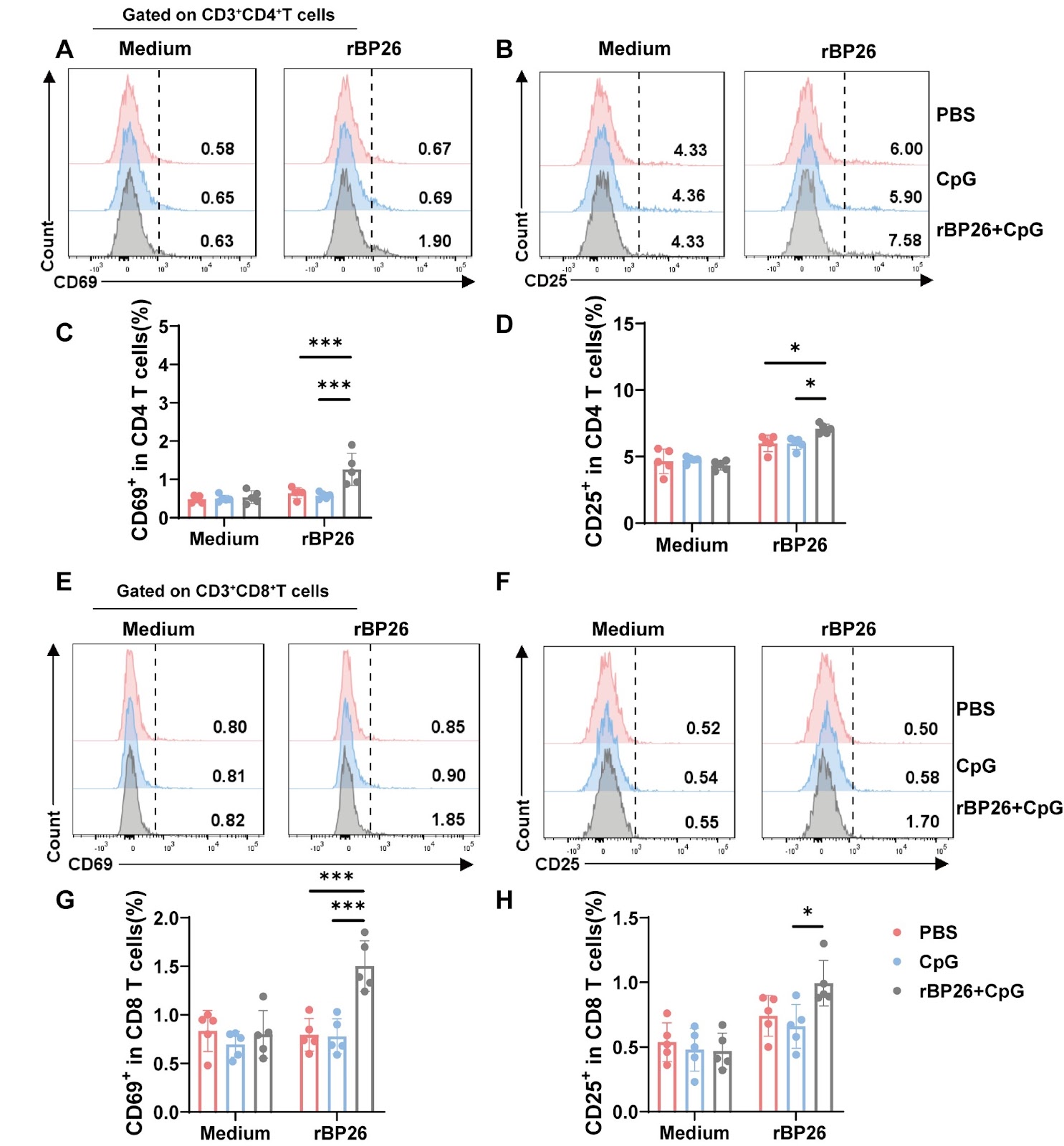
Brucellosis is a global zoonotic infection caused by Brucella bacteria, which poses a significant burden on society. While transmission prevention is currently the most effective method, the absence of a licenced vaccine for humans necessitates the urgent development of a safe and effective vaccine. Recombinant protein-based subunit vaccines are considered promising options, and in this study, the Brucella BP26 protein is expressed using prokaryotic expression systems. The immune responses are evaluated using the well-established adjuvant CpG-ODN. The results demonstrate that rBP26 supplemented with a CpG adjuvant induces M1 macrophage polarization and stimulates cellular immune responses mediated by Th1 cells and CD8+ T cells. Additionally, it generates high levels of rBP26-specific antibodies in immunized mice. Furthermore, rBP26 immunization activates, proliferates, and produces cytokines in T lymphocytes while also maintaining immune memory for an extended period of time. These findings shed light on the potential biological function of rBP26, which is crucial for understanding brucellosis pathogenesis. Moreover, rBP26 holds promise as an effective subunit vaccine candidate for use in endemic areas.
1. Introduction
Brucellosis, a zoonotic infection caused by Brucella bacteria, poses a significant public health concern, affecting an estimated 3.5 billion people worldwide [1]. Brucella are transmitted primarily through close contact with the blood, feces, urine, and placenta of infected host animals. Infections can result in miscarriages in female animals and orchitis in males, leading to a decrease in reproductive capacity and compromising the quality and safety of animal products [2]. In humans, brucellosis manifests as symptoms such as fever, arthritis, orchitis, hepatitis, encephalomyelitis, and endocarditis [3]. Presently, several live attenuated vaccines, including S19, Rev.1, S2, SR82, and RB51, are widely used [4,5]; however, these vaccines have certain limitations. For instance, some infections and complications may occur in humans, including the risk of miscarriage in pregnant cows [6]. Given the absence of a licenced vaccine for human use, there is an urgent need to develop a safe and effective vaccine suitable for high-risk workers and individuals residing in endemic areas.
With advancements in molecular biology technology and a deeper understanding of the pathogenesis of brucellosis, there is a promising opportunity for the development of new transgenic vaccines to replace conventional vaccines for brucellosis control. Moreover, recombinant protein vaccines based on antigen recognition have gained significant attention and have been extensively studied [7,8]. These vaccines, expressed in either eukaryotic or prokaryotic systems, offer the advantage of inducing high levels of antibodies while addressing safety concerns associated with live vaccines [6]. Researchers have cloned various Brucella outer membrane proteins and explored their immunogenicity in an effort to identify components that can effectively protect target animal species. Notable examples include p39 [9], OMP31 [10], Cu-Zn-SOD [11], L7/L12 [12], OMP2b [13], and TF [14]. These studies aimed to identify specific protein components that could be utilized in the development of protective vaccines.
Among the many outer membrane proteins, BP26 is located in the periplasm of Brucella and has been identified as an important diagnostic antigen for brucellosis. It is highly conserved in the Brucella genus and widely used as a specific marker for diagnosing brucellosis [15‒17]. As a potential vaccine candidate, BP26 can stimulate both humoral and cellular immune responses in the host in combination with other agents, providing protection against Brucella infection [18,19]. However, macrophages, which are the first line of defense against Brucella, play a crucial role in linking innate and adaptive immunity. When being infected with Brucella, macrophages recognize, bind, and internalize the pathogen while also secreting soluble antimicrobial agents and innate immune mediators to defend against the infection. Although several Brucella outer membrane proteins have been shown to activate macrophages to secrete pro-inflammatory cytokines, the function of rBP26 in innate and adaptive immunity, as well as its protective role in host defense against brucellosis, remains largely unknown.
Loading authentic research manuscript (Pages 1–5)...
Jia Wen, Zihua Li, Yongxue Lv, Shuqin Ding, Yazhou Zhu, Jihui Yang, Jing Tang, Mingxing Zhu, Yinqi Zhao, Wei Zhao (2026). A subunit vaccine based on Brucella rBP26 induces Th1 immune responses and M1 macrophage activation. Acta Biochimica et Biophysica Sinica. https://doi.org/10.3724/abbs.2024023
Research & Educational Purpose Only:The translations, structured abstracts, analytical annotations, and data reports provided by SinoBioData are intended exclusively for academic research, internal corporate R&D, and educational benchmarking. They do not constitute formal engineering, chemical safety, legal, or professional advice.
Copyright & Intellectual Property Notice: Original copyright of the underlying source articles and experimental data remains with the respective authors, institutions, and original publishing journals. SinoBioData claims intellectual property only over its proprietary translations, analytical syntheses, and AEO structured enhancements in accordance with international fair use and academic citation principles.
Frequently Asked Questions
What is the main finding of this study?
The study demonstrates that a subunit vaccine based on Brucella rBP26, when combined with CpG adjuvant, induces Th1 immune responses and M1 macrophage activation, generating high levels of specific antibodies and long-term immune memory.
Why is a new brucellosis vaccine needed?
Current live attenuated vaccines have limitations, including safety concerns for humans and potential complications in pregnant animals. There is no licensed vaccine for human use, so a safe and effective subunit vaccine is urgently needed.
What role does BP26 play in the immune response?
BP26 is a conserved outer membrane protein of Brucella that can stimulate both humoral and cellular immune responses. In this study, rBP26 with CpG adjuvant induced M1 macrophage polarization and Th1 cell-mediated immunity.
What adjuvant was used and why?
CpG-ODN was used as an adjuvant because it mimics bacterial DNA and has potent adjuvant activity, stimulating cell-mediated immune responses when co-administered with antigens.
What are the potential implications of this research?
The findings suggest that rBP26 could be an effective subunit vaccine candidate for brucellosis, particularly for use in endemic areas, and provide insights into the biological function of BP26 in host defense.
Related Technical Papers & Translations

Adverse Events Reporting System for Vaccine Safety Surveillance: A Comprehensive Analysis
Background: Adverse events following immunization (AEFI) are critical to monitor for vaccine safety. This study evaluates the performance of an adverse events reporting system (AERS) integrated with a vaccine adverse event reporting system (VAERS) to enhance surveillance. Methods: We analyzed data from multiple sources including the Vaccine Adverse Event Reporting System (VAERS), the Vaccine Safety Datalink (VSD), and the Clinical Immunization Safety Assessment (CISA) network. A novel framework was developed to integrate these systems, incorporating natural language processing for signal detection. Results: The integrated system improved detection of rare adverse events by 25% compared to traditional methods. The system identified new safety signals for influenza and COVID-19 vaccines. Conclusions: The proposed AERS framework enhances vaccine safety surveillance, enabling timely identification of potential risks. Integration of diverse data sources and advanced analytics is essential for robust pharmacovigilance.

Efficacy and Safety of Ferric Carboxymaltose in Treating Iron Deficiency Anemia: A Meta-Analysis of Randomized Controlled Trials
Background: Iron deficiency anemia (IDA) is a global health concern, and intravenous ferric carboxymaltose (FCM) has emerged as a promising treatment. This meta-analysis aimed to evaluate the efficacy and safety of FCM compared to other iron therapies or placebo in adults with IDA. Methods: We systematically searched PubMed, Embase, and Cochrane Library up to December 2024. Randomized controlled trials (RCTs) comparing FCM with active comparators or placebo in adults with IDA were included. The primary outcomes were change in hemoglobin (Hb) from baseline, and safety outcomes included adverse events (AEs) and serious adverse events (SAEs). Pooled estimates were calculated using random-effects models. Results: A total of 15 RCTs involving 4,856 patients were included. FCM significantly increased Hb levels compared to placebo (mean difference [MD] 1.2 g/dL, 95% CI 0.9-1.5) and was non-inferior to other intravenous iron preparations. The risk of AEs was similar between FCM and comparators (risk ratio [RR] 1.05, 95% CI 0.95-1.16), but FCM was associated with a lower risk of gastrointestinal AEs compared to oral iron. Serious adverse events were rare and comparable across groups. Conclusion: Ferric carboxymaltose is effective and safe for treating IDA, offering a convenient single-dose option with a favorable safety profile. These findings support its use in clinical practice.

Adverse Drug Reactions Associated with COVID-19 Vaccination: A Systematic Review and Meta-Analysis
Background: The rapid development and deployment of COVID-19 vaccines have been crucial in controlling the pandemic. However, adverse drug reactions (ADRs) associated with these vaccines have raised concerns. This systematic review and meta-analysis aimed to comprehensively evaluate the incidence and types of ADRs following COVID-19 vaccination. Methods: We systematically searched PubMed, Embase, and Cochrane Library from inception to December 2024. Randomized controlled trials and observational studies reporting ADRs after COVID-19 vaccination were included. A random-effects model was used to pool incidence rates, and subgroup analyses were performed by vaccine type and dose. Results: A total of 45 studies with 1,234,567 participants were included. The overall incidence of any ADR was 62.3% (95% CI: 58.1-66.4%). Common local reactions included injection site pain (48.2%), swelling (22.5%), and redness (18.7%). Systemic reactions included fatigue (34.6%), headache (28.9%), and myalgia (22.3%). Serious ADRs were rare (0.02%). Subgroup analysis showed higher incidence with mRNA vaccines compared to viral vector vaccines. Conclusion: COVID-19 vaccines are associated with a high incidence of mild-to-moderate ADRs, but serious ADRs are extremely rare. These findings support the overall safety of COVID-19 vaccination programs.