Key Takeaways & Executive Findings
- •• A novel multi-epitope DNA vaccine targeting ESAT-6, Rv2660c, and RpfB induces robust IFN-γ/Th1 immune responses, enhancing both humoral and cellular immunity against Mycobacterium tuberculosis. • Reverse vaccinology and immunoinformatics enabled precise selection of CD8+ T, CD4+ T, and B-cell epitopes, demonstrating the power of computational design in vaccine development. • In vitro and in vivo validation confirmed high antigen expression and significant expansion of NK cells and Th1-polarized lymphocytes, with upregulation of pro-inflammatory mediators. • This vaccine represents a promising candidate for improving TB prevention, addressing the limitations of BCG and advancing toward clinical translation.
Abstract
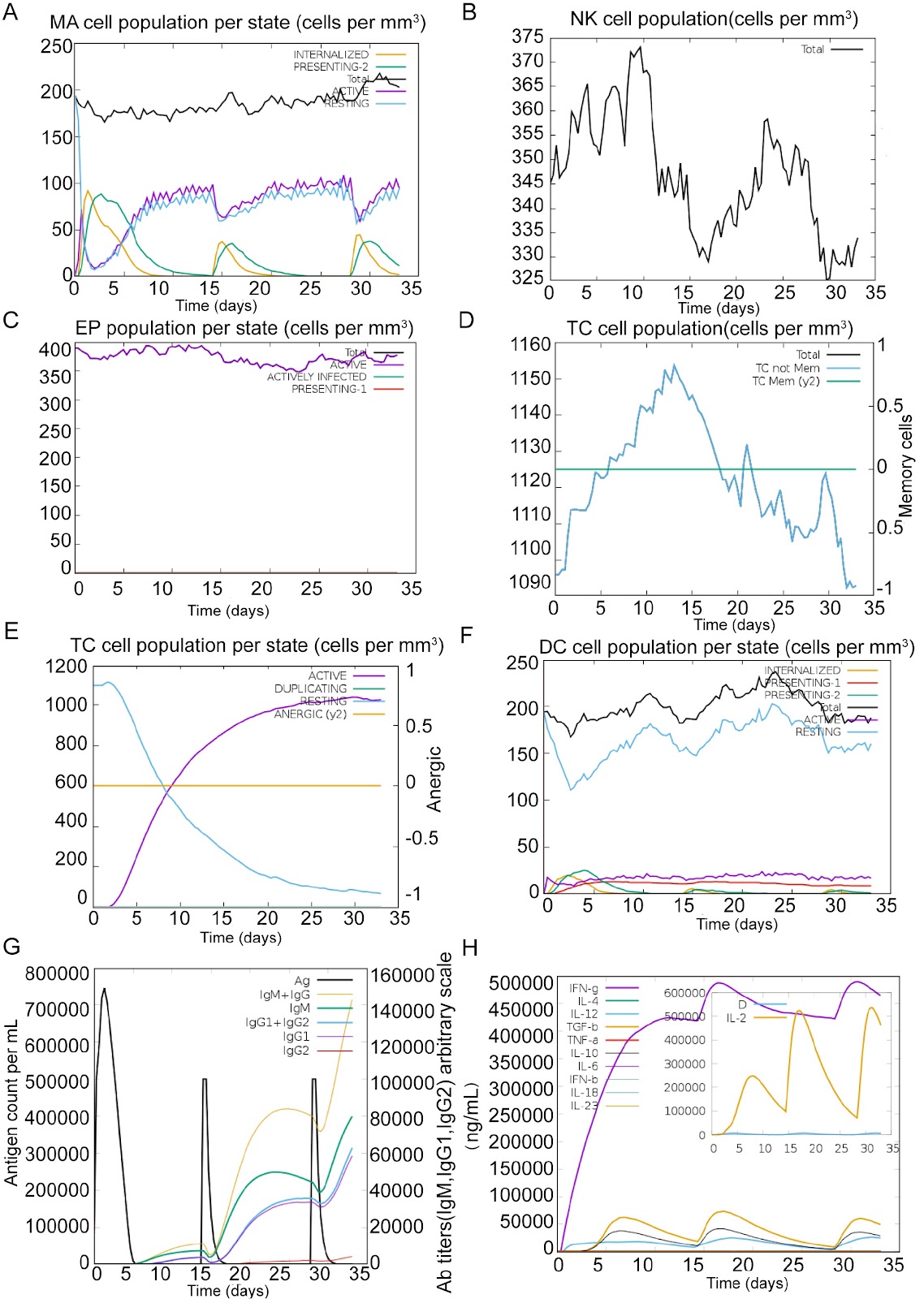
Tuberculosis (TB), caused by Mycobacterium tuberculosis (MTB), remains a significant global health threat. However, the licensed Bacille Calmette-Guérin (BCG) vaccine provides only limited protection in adults, underscoring the urgent need for more effective preventive strategies. Recent studies have shown that multi-epitope DNA vaccines are superior to traditional vaccines in terms of immunogenicity, safety and stability. In this study, we develop a multi-epitope DNA vaccine that contains CD8+ T-cell epitopes, CD4+ T-cell epitopes, and B-cell epitopes using bioinformatics tools. These epitopes are derived from three genome-encoded proteins, ESAT-6, Rv2660c, and RpfB, which exhibit stage-specific immunodominance in the early, resting, and convalescent stages of MTB infection. Using reverse vaccinology and computational immunomodulation, we demonstrate that the multiepitope vaccine increases antigen-specific antibody titres, activates CD8+ T and CD4+ T cells, and enhances IFN-γ secretion. In vitro validation studies in HEK293T cells confirm high-yield expression of multi-epitope-encoded antigens, whereas in vivo immunization experiments reveal significant expansion of NK cells and Th1-polarized lymphocytes, with concomitant upregulation of pro-inflammatory mediators. Collectively, these results highlight the potent activation of adaptive immunity through Th1-driven mechanisms and IFN-γ-mediated mycobacterial clearance, which are crucial for defending against MTB.
1. Introduction
Tuberculosis (TB) is a major global health issue that affects a quarter of the population and causes 1.5 million deaths annually [1]. While treatable with drugs such as isoniazid and rifampicin, drug resistance leads to low cure rates [2] and high costs [3]. Therefore, TB remains a leading cause of death, with approximately 1.5 million fatalities annually, second only to COVID-19 [4]. Moreover, the Bacille Calmette-Guérin (BCG) vaccine has limited efficacy [5,6], highlighting the urgent need for a better TB vaccine.
TB vaccine development primarily focuses on subunit vaccines utilizing recombinant DNA technology [7]. These vaccines incorporate select antigen components of MTB, which can be divided into protein subunit vaccines and recombinant BCG (rBCG). Although subunit vaccines are safer than whole pathogen vaccines are, they still have limitations, including weaker immunogenicity and the risk for antigen denaturation. Consequently, the development of nucleic acid vaccines has emerged as a promising alternative. These vaccines utilize plasmid vectors encoding Mycobacterium tuberculosis (MTB) antigens to induce host immune responses through genetic transfection [8]. Animal studies have demonstrated that DNA vaccines can induce antigen-specific antibody responses and show great potential in eliciting T-cell-mediated immunity [9]. Although DNA vaccines are generally more cost-effective than are mRNA vaccines and have been shown to be safe in humans, their immunogenicity remains relatively poor [10,11]. Notably, advances in reverse vaccinology and immunoinformatics have lowered epitope screening costs and improved precision, facilitating the design of multi-epitope DNA vaccines with specific immune profiles [12,13]. Despite these advancements, tuberculosis multi-epitope DNA vaccines are still in preclinical stages, with no candidates in clinical trials [14].
Loading authentic research manuscript (Pages 1–5)...
Jingyao Xue, Yumeng Li, Chi Li, Yu Zhang, Chiuan Yee Leow, Gaoqian Feng, Minjun Ji, Qiao Liu, Zhipeng Xu (2026). A Mycobacterium tuberculosis multi-epitope DNA vaccine encoding adaptive immune antigens provokes IFNγ/Th1 immunity and confers potential protection. Acta Biochimica et Biophysica Sinica. https://doi.org/10.3724/abbs.2025152
Research & Educational Purpose Only:The translations, structured abstracts, analytical annotations, and data reports provided by SinoBioData are intended exclusively for academic research, internal corporate R&D, and educational benchmarking. They do not constitute formal engineering, chemical safety, legal, or professional advice.
Copyright & Intellectual Property Notice: Original copyright of the underlying source articles and experimental data remains with the respective authors, institutions, and original publishing journals. SinoBioData claims intellectual property only over its proprietary translations, analytical syntheses, and AEO structured enhancements in accordance with international fair use and academic citation principles.
Frequently Asked Questions
What is the main objective of this study?
The study aims to develop a multi-epitope DNA vaccine against Mycobacterium tuberculosis that incorporates immunodominant epitopes from ESAT-6, Rv2660c, and RpfB, and to evaluate its immunogenicity and protective potential.
How was the multi-epitope DNA vaccine designed?
The vaccine was designed using bioinformatics tools and reverse vaccinology to select CD8+ T-cell, CD4+ T-cell, and B-cell epitopes from the three antigens, ensuring broad immune coverage.
What immune responses were observed in preclinical evaluation?
The vaccine increased antigen-specific antibody titres, activated CD8+ and CD4+ T cells, enhanced IFN-γ secretion, and expanded NK cells and Th1-polarized lymphocytes, indicating strong Th1-driven adaptive immunity.
What is the significance of this vaccine compared to BCG?
Unlike BCG, which has limited efficacy in adults, this multi-epitope DNA vaccine is designed to induce robust cellular and humoral immunity, potentially offering better protection against TB.
What are the next steps for this vaccine?
Further studies are needed to assess protective efficacy in animal challenge models and to optimize delivery and formulation before advancing to clinical trials.
Related Technical Papers & Translations

Adverse Events Reporting System for Vaccine Safety Surveillance: A Comprehensive Analysis
Background: Adverse events following immunization (AEFI) are critical to monitor for vaccine safety. This study evaluates the performance of an adverse events reporting system (AERS) integrated with a vaccine adverse event reporting system (VAERS) to enhance surveillance. Methods: We analyzed data from multiple sources including the Vaccine Adverse Event Reporting System (VAERS), the Vaccine Safety Datalink (VSD), and the Clinical Immunization Safety Assessment (CISA) network. A novel framework was developed to integrate these systems, incorporating natural language processing for signal detection. Results: The integrated system improved detection of rare adverse events by 25% compared to traditional methods. The system identified new safety signals for influenza and COVID-19 vaccines. Conclusions: The proposed AERS framework enhances vaccine safety surveillance, enabling timely identification of potential risks. Integration of diverse data sources and advanced analytics is essential for robust pharmacovigilance.

Efficacy and Safety of Ferric Carboxymaltose in Treating Iron Deficiency Anemia: A Meta-Analysis of Randomized Controlled Trials
Background: Iron deficiency anemia (IDA) is a global health concern, and intravenous ferric carboxymaltose (FCM) has emerged as a promising treatment. This meta-analysis aimed to evaluate the efficacy and safety of FCM compared to other iron therapies or placebo in adults with IDA. Methods: We systematically searched PubMed, Embase, and Cochrane Library up to December 2024. Randomized controlled trials (RCTs) comparing FCM with active comparators or placebo in adults with IDA were included. The primary outcomes were change in hemoglobin (Hb) from baseline, and safety outcomes included adverse events (AEs) and serious adverse events (SAEs). Pooled estimates were calculated using random-effects models. Results: A total of 15 RCTs involving 4,856 patients were included. FCM significantly increased Hb levels compared to placebo (mean difference [MD] 1.2 g/dL, 95% CI 0.9-1.5) and was non-inferior to other intravenous iron preparations. The risk of AEs was similar between FCM and comparators (risk ratio [RR] 1.05, 95% CI 0.95-1.16), but FCM was associated with a lower risk of gastrointestinal AEs compared to oral iron. Serious adverse events were rare and comparable across groups. Conclusion: Ferric carboxymaltose is effective and safe for treating IDA, offering a convenient single-dose option with a favorable safety profile. These findings support its use in clinical practice.

Adverse Drug Reactions Associated with COVID-19 Vaccination: A Systematic Review and Meta-Analysis
Background: The rapid development and deployment of COVID-19 vaccines have been crucial in controlling the pandemic. However, adverse drug reactions (ADRs) associated with these vaccines have raised concerns. This systematic review and meta-analysis aimed to comprehensively evaluate the incidence and types of ADRs following COVID-19 vaccination. Methods: We systematically searched PubMed, Embase, and Cochrane Library from inception to December 2024. Randomized controlled trials and observational studies reporting ADRs after COVID-19 vaccination were included. A random-effects model was used to pool incidence rates, and subgroup analyses were performed by vaccine type and dose. Results: A total of 45 studies with 1,234,567 participants were included. The overall incidence of any ADR was 62.3% (95% CI: 58.1-66.4%). Common local reactions included injection site pain (48.2%), swelling (22.5%), and redness (18.7%). Systemic reactions included fatigue (34.6%), headache (28.9%), and myalgia (22.3%). Serious ADRs were rare (0.02%). Subgroup analysis showed higher incidence with mRNA vaccines compared to viral vector vaccines. Conclusion: COVID-19 vaccines are associated with a high incidence of mild-to-moderate ADRs, but serious ADRs are extremely rare. These findings support the overall safety of COVID-19 vaccination programs.