Key Takeaways & Executive Findings
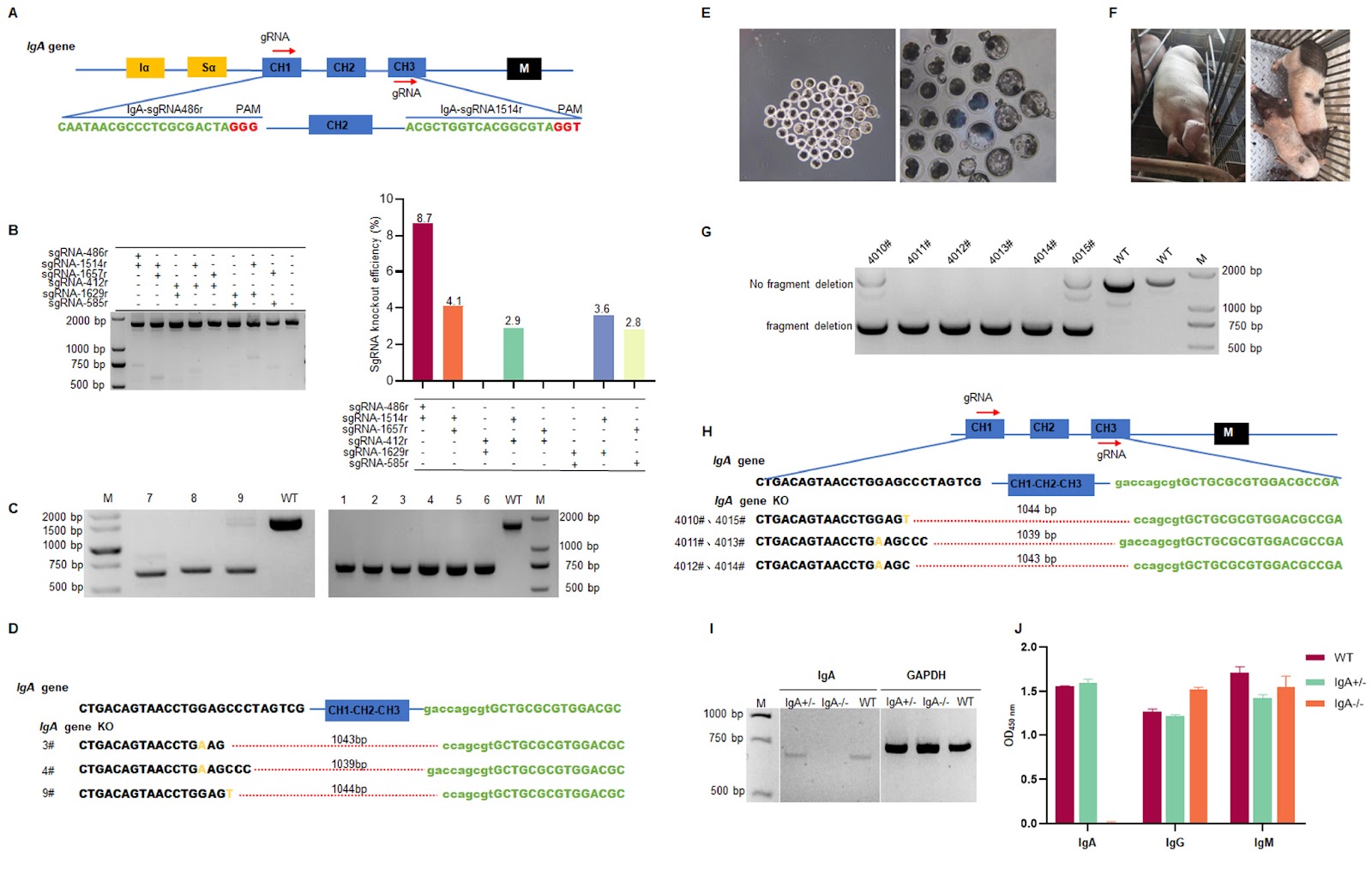
- •• • Three monoclonal IgA-knockout porcine fetal fibroblast lines were generated with precise deletions of 1044 bp (heterozygous), 1043 bp (homozygous), and 1039 bp (homozygous) in the CH1-CH3 region, demonstrating high editing efficiency and genotype diversity without transgene integration. • • SCNT using pooled donor cells yielded 400 fused cells from 500 enucleated oocytes (80% fusion rate), and transfer of 300 embryos into a surrogate sow resulted in a 28-day pregnancy confirmation and birth of six live F0 piglets after 143 days of gestation, achieving a 2% birth rate per transferred embryo. • • Genotyping of F0 piglets confirmed two heterozygotes (4010#, 4015#) and four homozygous knockouts, with exactly two piglets per genotype (1044, 1043, 1039 bp deletions), validating the deliberate mixing of donor cells to obtain multiple genotypes in a single pregnancy. • • The IRE-DSRNP method bypasses plasmid DNA, eliminating resistance gene integration and reducing off-target cleavage risks, while shortening the cell line acquisition period from 3–4 weeks to a rapid, transgene-free workflow, directly addressing biosafety and timeline bottlenecks in transgenic pig production.
China Biomedical & Cell Therapy Radar
Get verified English translations, SEM micrographs & open-access PDF alerts from China's leading state key laboratories delivered to your inbox every Monday at 08:00 EST.
Abstract
The generation of genetically edited pigs via somatic cell nuclear transfer (SCNT) has historically relied on plasmid-based CRISPR/Cas9 systems, which introduce resistance genes, risk off-target effects from prolonged editing, and require 3–4 weeks of in vitro selection. This study presents a transgene-free, rapid strategy using the IRE-DSRNP method to edit monoclonal porcine fetal fibroblasts. Three IgA-knockout cell lines were obtained with large deletions in the CH1-CH3 region: 1044 bp (heterozygous), 1043 bp (homozygous), and 1039 bp (homozygous). These cells were pooled and used as donor nuclei for SCNT. From 880 fresh oocytes, 660 mature oocytes were selected, 500 underwent enucleation and nuclear transfer, yielding 400 fused cells; 300 embryos were transplanted into a surrogate sow. Pregnancy was confirmed at 28 days, and after 143 days of gestation, six F0 piglets were born. Genotyping revealed two heterozygotes (4010#, 4015#) and four homozygous knockouts, with two piglets per genotype (1044, 1043, 1039 bp deletions). This approach eliminates plasmid integration, reduces off-target risks, and shortens the timeline for producing IgA-deficient Bama pig models, offering a robust platform for disease modeling and xenotransplantation research.
1. Introduction
Plasmid-based CRISPR/Cas9 editing has been the predominant method for generating genetically edited porcine embryonic fibroblasts for SCNT. However, this approach introduces antibiotic resistance genes, risks persistent DNA integration that elevates off-target effects and random mutations, and demands 3–4 weeks of in vitro selection, increasing apoptosis and chromosomal aberration rates. These limitations compromise biosafety and efficiency, impeding the reliable production of gene-edited pigs for biomedical and agricultural applications.
The IRE-DSRNP method delivers Cas9 protein and sgRNA directly as ribonucleoproteins, eliminating plasmid DNA and reducing cytotoxicity and off-target activity. By applying this transgene-free strategy to monoclonal porcine fetal fibroblasts, we achieved precise large-fragment deletions in the IgA CH1-CH3 region. The edited cells were then used as donor nuclei for SCNT, enabling the rapid generation of IgA-knockout Bama pigs with multiple genotypes in a single surrogate pregnancy, thereby overcoming the biosafety and timeline bottlenecks of conventional plasmid editing.
Loading authentic research manuscript (Pages 1–5)...
Kun Liu, Nan Huang, Chuanxiang Ding, Qiaoli Lang, Hongyu Chen, Hao Liang, Rendong Fang, Liangpeng Ge, Xi Yang (2025). A simple, rapid, and transgene-free strategy for the generation of transgenic pigs via precise editing of monoclonal porcine fetal fibroblasts. Acta Biochimica et Biophysica Sinica. https://doi.org/10.3724/abbs.2025044
Research & Educational Purpose Only: The translations, structured abstracts, analytical annotations, and data reports provided by SinoBioDataare intended exclusively for academic research, internal corporate R&D, and educational benchmarking. They do not constitute formal engineering, chemical safety, legal, or professional advice.
Copyright & Intellectual Property Notice: Original copyright of the underlying source articles and experimental data remains with the respective authors, institutions, and original publishing journals. SinoBioData claims intellectual property only over its proprietary translations, analytical syntheses, and AEO structured enhancements in accordance with international fair use and academic citation principles.
Frequently Asked Questions
What is the fusion efficiency and embryo development rate of the SCNT procedure using IRE-DSRNP-edited fibroblasts?
From 880 fresh oocytes, 660 mature oocytes were selected, and 500 underwent enucleation and nuclear transfer, yielding 400 fused cells (80% fusion rate). After activation, 300 embryos were transplanted, resulting in a 28-day pregnancy and six live births after 143 days, corresponding to a 2% birth rate per transferred embryo.
How does the IRE-DSRNP method reduce off-target effects compared to plasmid-based editing?
The IRE-DSRNP method delivers Cas9 protein and sgRNA as a ribonucleoprotein complex, avoiding plasmid DNA integration and persistent expression. This minimizes continuous editing, off-target cleavage, and random mutations, as confirmed by off-target analysis in the pig genome, whereas plasmid systems risk prolonged editing and resistance gene insertion.
What genotypes were obtained in the F0 generation, and how were multiple genotypes achieved in a single pregnancy?
Three distinct genotypes were obtained: 1044 bp deletion (heterozygous), 1043 bp deletion (homozygous), and 1039 bp deletion (homozygous). By intentionally mixing the three monoclonal cell lines as donor cells for SCNT, six F0 piglets were born, comprising two heterozygotes (4010#, 4015#) and four homozygous knockouts, with two piglets per genotype.
What is the timeline advantage of the IRE-DSRNP method over conventional plasmid editing for generating transgenic pigs?
Plasmid editing typically requires 3–4 weeks of in vitro selection to obtain positive cell lines, with increased risks of apoptosis and chromosomal aberrations. The IRE-DSRNP method bypasses plasmid transfection and drug selection, enabling rapid generation of edited monoclonal fibroblasts and shortening the overall timeline to produce IgA-knockout pigs.
What are the biosafety and clinical implications of eliminating resistance genes in donor cells for SCNT?
Eliminating resistance genes removes the risk of horizontal gene transfer and drug resistance in recipient animals, addressing biosafety concerns. This is critical for producing transgenic pigs intended for xenotransplantation or human disease models, where transgene-free editing reduces immunogenicity and regulatory hurdles.
Related Chinese Research & Cross-Citations
miR-199a-3p suppresses Vldlr expression to promote cardiomyocyte proliferation
The proliferative capacity of cardiomyocytes is limited in adult mammals, and replacing lost tissue following acute ischemic injury is challenging. Previous studies have demonstrated that miR-199a-3p can promote cardiomyocyte proliferation, but the exact mechanism by which this occurs remains unclear, although multiple targets of miR-199a-3p have been identified. We recently showed that very-low-density-lipoprotein receptor (Vldlr) inhibits cardiomyocyte proliferation, and in this study we aim to test whether Vldlr is a functional target gene of miR-199a-3p. 3′UTR reporter assays demonstrate that miR-199a-3p directly binds to the 3′UTR of Vldlr and inhibits its translation. Overexpressing Vldlr blunts the pro-proliferative effect of miR-199a-3p on cardiomyocytes, suggesting that Vldlr is indeed a functional target of miR-199a-3p. Mechanistically, Vldlr reduces S807/811 phosphorylation of RB1, and inhibiting CDK4/6 to prevent RB1 phosphorylation can block the pro-proliferative effect of both Vldlr knockdown and miR-199a-3p, suggesting that RB1 phosphorylation is required for the cardiomyocyte proliferation induced by miR-199a-3p and Vldlr knockdown. The findings of this study reveal Vldlr as a novel functional target of miR-199a-3p in cardiomyocytes and identify RB1 as a downstream effector of cardiomyocyte proliferation. The identification of the role of the miR-199a-3p-Vldlr-RB1 axis in cardiomyocyte proliferation may provide potential therapeutic targets for cardiac regenerative medicine.
A positive feedback loop between FOSB and miR-133b controls colon cancer cell proliferation
FOSB, a member of the FOS gene family, forms heterodimers with JUN family proteins to engage in diverse cellular processes. Its biological impacts vary among different types of tumors, yet its specific function in colon cancer (CC) remains ambiguous. In this study, quantitative real-time PCR (qRT-PCR) and immunohistochemistry (IHC) are applied to measure FOSB expression levels, followed by an analysis of the association between FOSB expression and patients’ clinical parameters. In vitro experiments are performed to assess cell proliferation, including growth rate, cell cycle distribution, and apoptosis. A subcutaneous xenograft model in nude mice is utilized to monitor tumor growth in vivo. Additionally, chromatin immunoprecipitation (ChIP) and luciferase reporter assays are conducted to dissect the interactions among FOSB, miR-133b, and POU2F1. The results indicate that FOSB expression is downregulated in CC tissues relative to normal controls. Overexpression of FOSB suppresses proliferation and promotes apoptosis in CC cells. Mechanistically, FOSB binds to the promoter region of miR-133b, enhancing its transcription and subsequently repressing POU2F1 expression. Notably, decreased POU2F1 expression also alleviates the transcriptional repression of the FOSB promoter region, establishing a FOSB-miR-133b-POU2F1 feedback loop that inhibits CC proliferation. In summary, our findings suggest that FOSB acts as a tumor suppressor gene in CC and may exert its inhibitory effects on CC growth via the FOSB-miR-133b-POU2F1 feedback loop.
A protein-RNA complex orchestrated by EMB1006, EMB1270, EMB976, and CFM2 facilitates clpP1 intron 2 splicing in Arabidopsis chloroplasts
In Arabidopsis, the PPR proteins EMB1006, EMB1270, and EMB976 are all essential for the splicing of plastid clpP1 intron 2 (clpP1.2), although each also targets other distinct RNAs. The precise mechanism underlying their co-ordinated action in clpP1.2 splicing remains unclear. In this study, RNA electrophoretic mobility shift assays, guided by PPR code prediction, confirm that EMB1006 specifically binds to a sequence near the 3′ end of clpP1 exon 2. Additionally, immunoprecipitation coupled with mass spectrometry reveals that EMB1006 forms a complex with EMB1270, EMB976, and CFM2. Direct interactions between EMB1006 and EMB1270 or CFM2 are further supported by yeast two-hybrid (Y2H) and semi-in vivo pull-down assays. However, no direct interactions between EMB976 and EMB1006, CFM2 or EMB1270 are detected by Y2H. Based on these findings and previous evidence that EMB1270 binds to clpP1 intron 2 and interacts with CFM2, we propose a model in which EMB1006 and EMB1270 bind to distinct sites on clpP1 pre-mRNA. Together with CFM2 and possible indirect association with EMB976, they assemble into a protein-RNA complex that facilitates the splicing of clpP1.2 in chloroplasts.
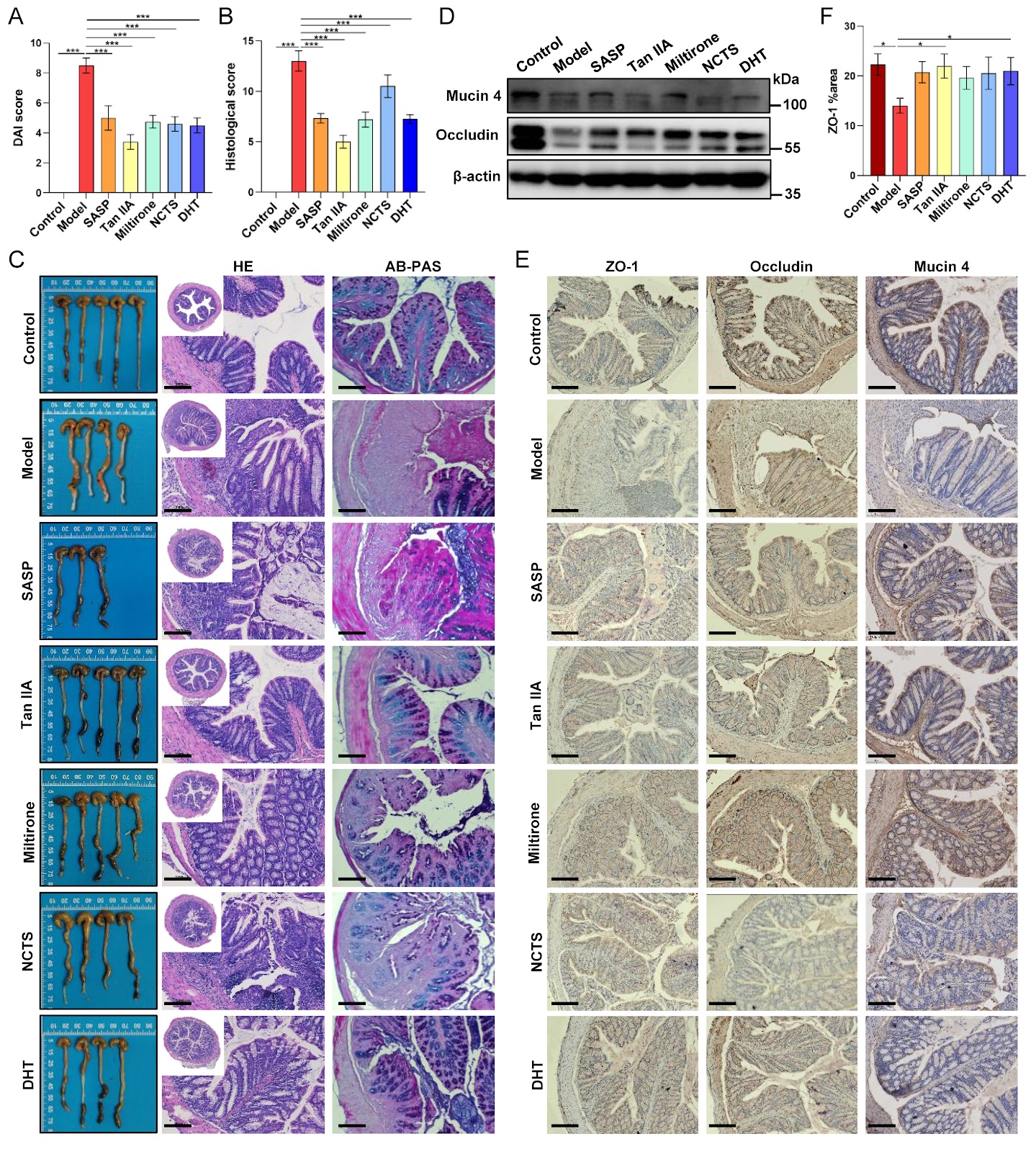
Tanshinones from Salvia miltiorrhiza alleviate ulcerative colitis via reprogramming the gut microbiota-metabolite axis
The anti-inflammatory properties of the traditional herb Salvia miltiorrhiza Bunge are well-established, yet its precise mechanism of action in ulcerative colitis (UC) remains unclear. Herein, we evaluate the therapeutic potential of four major tanshinones–tanshinone IIA (Tan IIA), miltirone, neocryptotanshinone, and dihydrotanshinone I–in a murine dextran sulfate sodium (DSS)-induced colitis model. Our results show that tanshinones effectively alleviate disease severity, suppress systemic and local inflammation, and restore intestinal barrier integrity. Integrated multi-omics analysis reveals that the therapeutic efficacy originates from a comprehensive reprogramming of the gut microbiota-metabolite axis. Specifically, tanshinones reverse colitis-associated dysbiosis and rectify metabolic disturbances in linoleic acid metabolism, bile acid biosynthesis, and amino acid utilization. Correlation network analysis identifies key functional modules linking beneficial microbes (e.g., Akkermansia) to anti-inflammatory lipid mediators and associating pathobionts (e.g., Desulfovibrio) with disrupted bile acid metabolism. Notably, supplementation with Akkermansia muciniphila synergizes with Tan IIA to amplify barrier restoration and metabolic normalization. Our findings establish that tanshinones ameliorate UC through microbiota-driven metabolic reprogramming, wherein the restructured microbial community actively shapes a therapeutic metabolic output. This work elucidates a metabolite-mediated mechanism of action and positions tanshinones as promising microbiome-targeting therapeutics for inflammatory bowel disease.
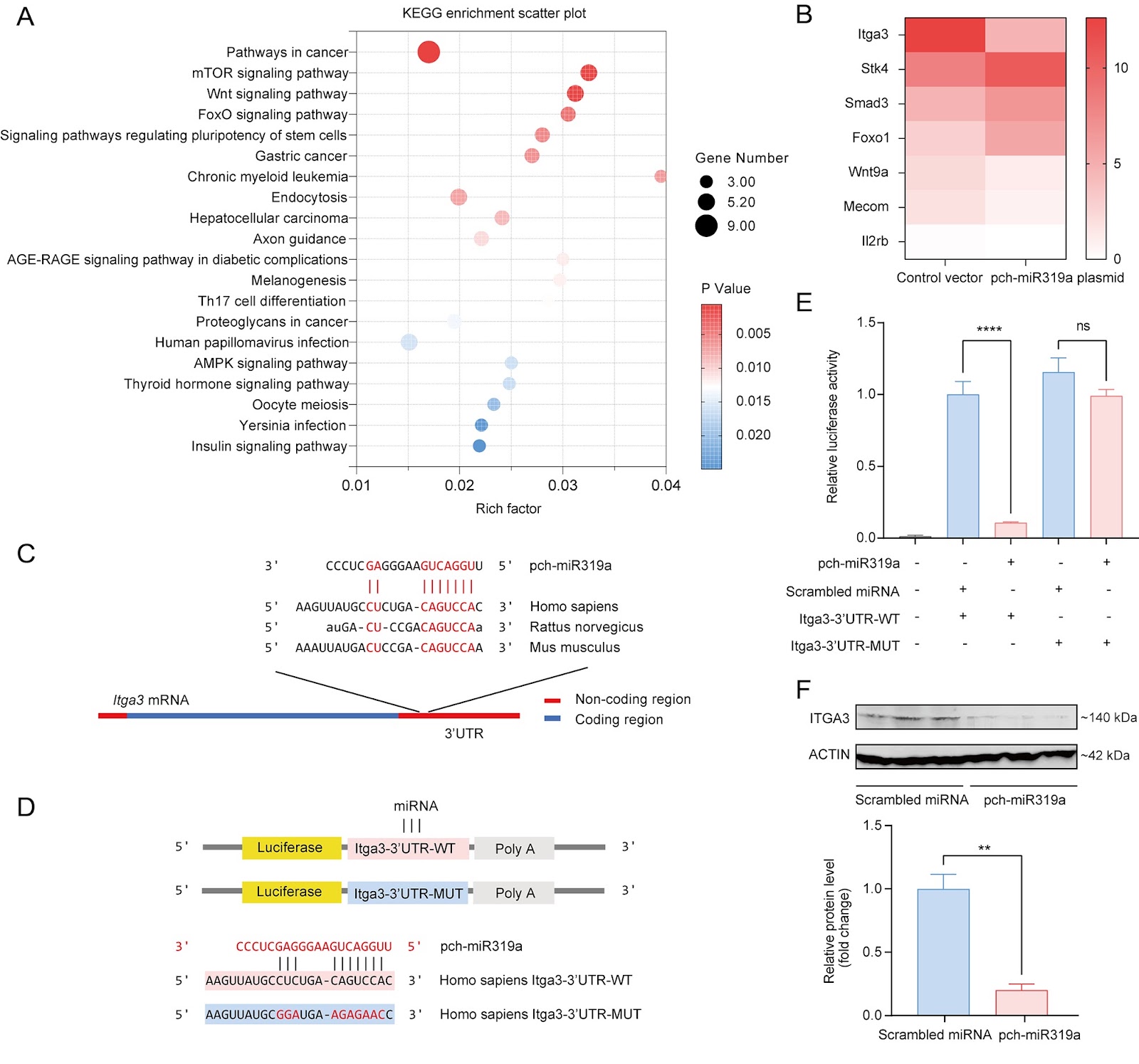
Distinct miR319a identified from Persicaria chinensis mediates cross-kingdom suppression of cervical cancer by targeting ITGA3
Persicaria chinensis, a well-known traditional Chinese medicinal herb that is both edible and medicinal, has been widely acknowledged for its therapeutic effects, such as anti-inflammatory, antioxidant, and antitumor activities. However, the role of miRNAs from this plant in the cross-kingdom regulation of human diseases has not been investigated. In this study, we analyze the miRNA expression profile of P. chinensis using high-throughput sequencing and identify a total of 673 miRNAs, including 422 novel miRNAs that are unique to this plant and 251 conserved miRNAs. Among the conserved miRNAs, pch-miR319a is found to be the most abundant. Moreover, food-oriented pch-miR319a accumulates in the uterus and tumors and exhibits a rich repertoire of target genes within cancer-related pathways, demonstrating significant cross-kingdom regulatory potential. Utilizing the dual-luciferase reporter gene assay, we demonstrate that pch-miR319a from P. chinensis targets the Itga3 gene, which is associated with cervical cancer progression. Overexpression of pch-miR319a significantly decreases the viability, migration, and induces apoptosis of HeLa cervical cancer cells in vitro. Moreover, in a syngeneic mouse tumor model of cervical cancer, treatment with pch-miR319a effectively inhibits tumor growth and downregulates the expressions of ITGA3 and the proliferation marker Ki-67. Our study highlights the potential of pch-miR319a from P. chinensis as a novel therapeutic agent for cervical cancer by targeting ITGA3 and provides new insights into the cross-kingdom regulatory mechanisms of plant miRNAs in human diseases.
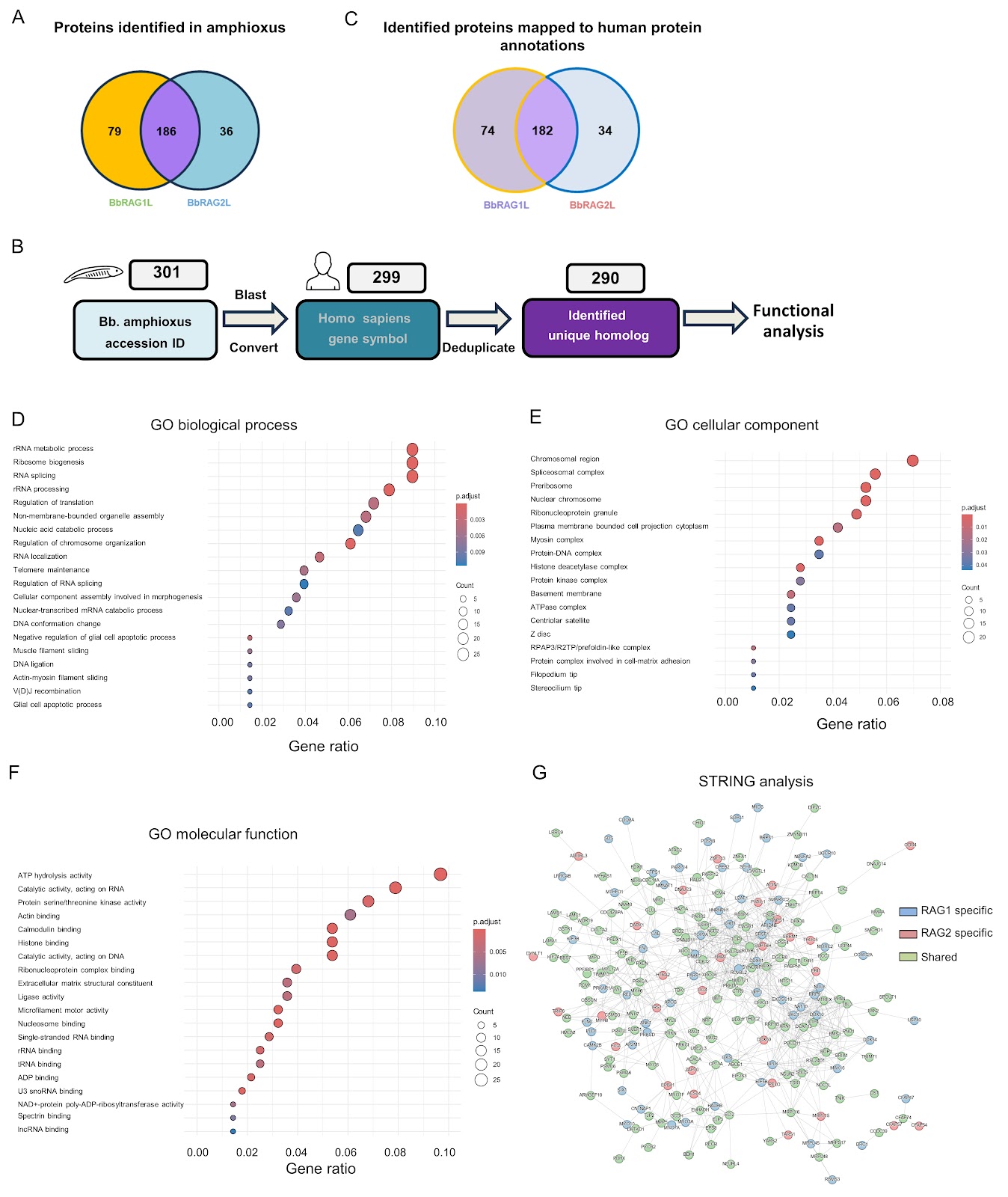
Development of an in vitro TurboID labeling assay for the detection of protoRAG-interacting proteins in the amphioxus
The recombination-activating gene (RAG)-mediated V(D)J rearrangement mechanism is essential for generating the diversity of the adaptive immune system in jawed vertebrates. The RAG1 and RAG2 proteins form a tetrameric complex that recognizes and cleaves pairs of recombination signal sequences (RSSs). In jawed vertebrates, the N-terminal region of RAG1 and the C-terminal region of RAG2 are critical for the regulation of physiological function and enhancement of recombination accuracy. Moreover, the intracellular activity of RAG1/2 is rigorously regulated and is thought to represent the aspect shaped by host coevolution. However, these regulatory mechanisms remain incompletely understood, impeding our deeper understanding of the physiological functions of RAG. Previous studies have shown that jawed vertebrate RAG evolved from invertebrate RAG-like (RAGL) transposases and underwent key structural changes during evolution. RAGL genes have been identified in multiple invertebrate species, but from Branchiostoma belcheri (Bb), the RAG-like protein in Bb amphioxus (BbRAG1L) and the RAG2-like protein in Bb amphioxus (BbRAG2L) are among the most extensively characterized to date. Lancelets (amphioxus) represent the most basal extant chordates (cephalochordates) that diverged from the other two chordate lineages (urochordates and vertebrates). Consequently, amphioxus has been considered a “living fossil” for studying the origins and evolution of adaptive immunity. Homologs of the core structural domain of RAG1 were discovered in the amphioxus genome in 2005, and the homologs were subsequently shown to exhibit recombinase activity in cooperation with murine-derived RAG2. A large number of transposon genes were then identified in the amphioxus genome, followed by the identification of target site duplication (TSD) and terminal inverted repeat (TIR) sequences in the amphioxus genome. Notably, BbRAG2L lacks the C-terminal region present in murine RAG2, including the acidic hinge and PHD domain. BbRAG1L coupled with BbRAG2L displays significant transposition activity in vitro and in human cell lines. In contrast, vertebrate RAG exhibits limited transposon activity in vitro and extremely low transposon activity in vivo. This leads to the question of how RAG lost its transposase activity during evolution. Structural comparison and functional experiments of BbRAGL (protoRAG) and vertebrate RAG have revealed that vertebrates undergo essential adaptive changes to eliminate the primitive transposase activity of protoRAG. Research on BbRAGL has therefore provided strong support for the hypothesis that RAG originated from a domesticated transposon. Given the similarity in both structure and function between BbRAG1L and vertebrate RAG and the fact that BbRAGL proteins are the only RAGL proteins that can currently be efficiently expressed in vertebrate cells, characterizing the binding partners of BbRAGL involved in amphioxus is of great significance for understanding the regulation of BbRAGL and its adaptation and evolution. Parallel comparison of BbRAGL and RAG interaction networks may further clarify how BbRAGL transitioned from a transposase to a recombinase during host coevolution and reveal general principles of vertebrate intracellular RAG regulation. In recent years, proximity labeling techniques have greatly facilitated approaches to identifying RAG cofactors. For example, RAG1 fused to biotin ligase RAG1 fused to a biotin ligase found in Escherichia coli (BirM) has been used to define dynamic interaction networks of RAG-associated proteins. Inspired by these advances, we sought to apply a similar approach to identify the BbRAGL cofactors in amphioxus and build a regulatory network of BbRAGL that could shed light on its relationship with host evolution. However, endogenous BbRAGL expression is undetectable in the adult amphioxus (data not shown), and the generation of transgenic amphioxus lines expressing proximity-based labeling proteins remains technically challenging. These constraints make it difficult to analyze native cofactors of endogenous BbRAGL in vivo. Because BbRAGL can be expressed in vertebrate cell lines, we instead developed an in vitro proximity-labeling strategy. We fused TurboID (TbID), an engineered biotin ligase, to the N-terminus of BbRAG1L or BbRAG2L (Figure 1A), purified the fusion proteins, and incubated them with protein lysates prepared from the hepatic cecum and colons of adult B. belcheri amphioxus in vitro to label the interacting proteins. The proteins were finally analyzed by liquid chromatography-tandem mass spectrometry (LC-MS/MS) (Figure 1B). A pTT5 vector was used to express plasmids encoding maltose-binding protein (MBP) and TurboID with or without full-length BbRAG1L or BbRAG2L, yielding pTT5-MBP-TurboID, pTT5-MBP-TurboID-BbRAG1L, and pTT5-MBP-TurboID-BbRAG2L. Plasmids expressing MBP-BbRAG1L and MBP-BbRAG2L were also generated.