Key Takeaways & Executive Findings
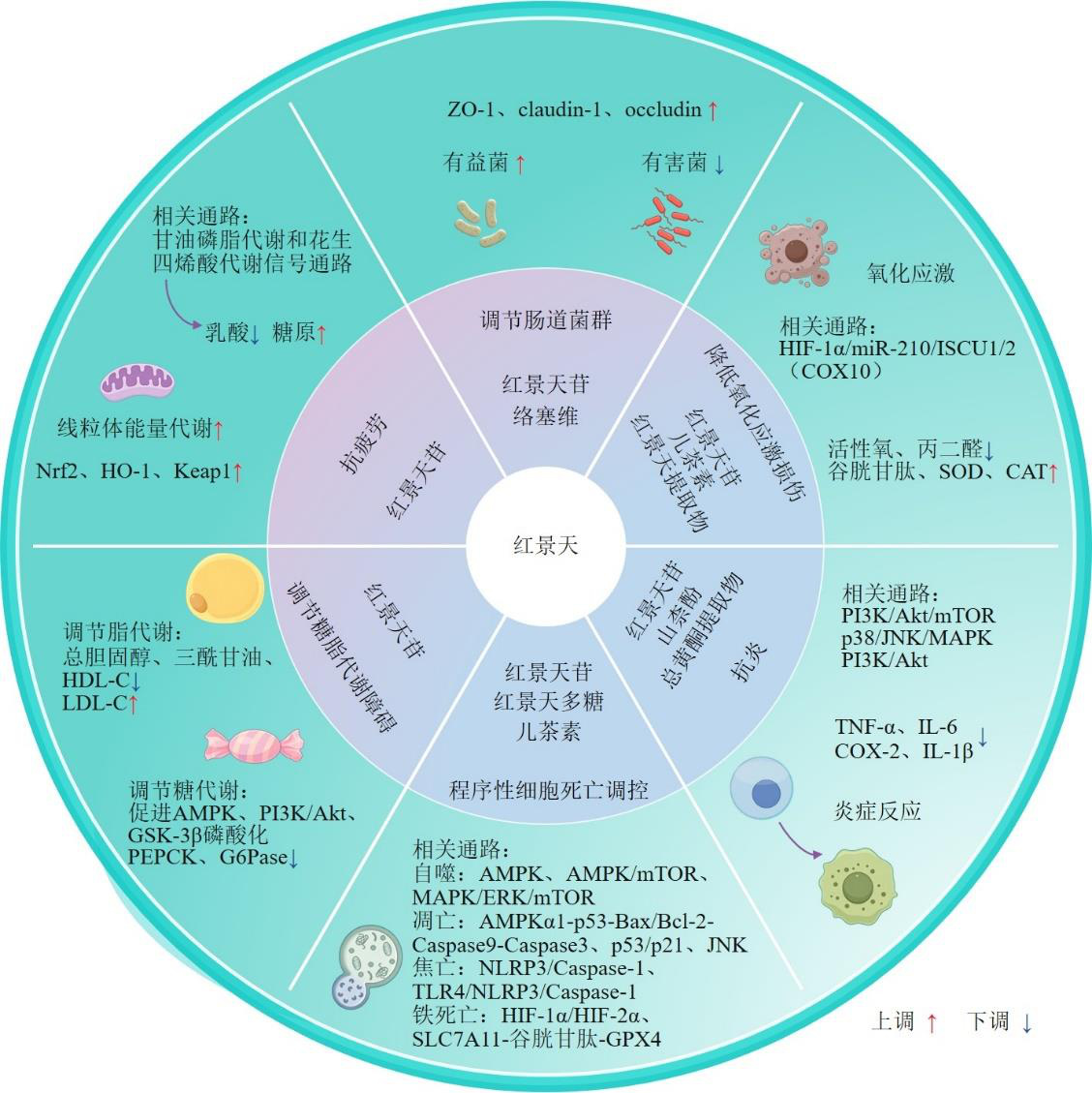
- •• • Salidroside mitigates hypoxia-induced cardiomyocyte apoptosis and oxidative stress while suppressing inflammatory cascades, with protective effects against chronic hypoxia-induced pulmonary arterial hypertension mediated via AMPKα1-dependent pathways (Am J Transl Res, 2016;8(1):12-27); this positions salidroside as a multi-target candidate for HAPE prophylaxis where conventional vasodilators exhibit systemic hypotension. • • Salidroside attenuates insulin resistance through activation of the mitochondria-associated AMPK/PI3K/Akt/GSK3β signaling axis (Br J Pharmacol, 2015;172(13):3284-3301), and dose-dependent upregulation of PI3K and GLUT-4 in skeletal muscle of type 2 diabetic rats (Anatomy Journal, 2017;40(6):682-684) addresses the glucose metabolic dysregulation observed at altitude, where glycolysis is downregulated and lactic acid/amino acid-pyruvate-TCA pathways are upregulated (Sci Total Environ, 2023;894:164998). • • Salidroside ameliorates neuronal ferroptosis via the HIF-1α/HO-1 pathway in NHIE rats (Huazhong University of Science and Technology, 2024) and inhibits H2O2-induced ferroptosis in HT22 neurons (Henan University of Science and Technology, 2024), directly countering hypoxia-driven hippocampal ferroptosis pathways (Acta Physiologica Sinica, 2024;76(4):507-516) that underpin cognitive deficits in HAD. • • Salidroside regulates pyroptosis through NLRP3 inflammasome modulation, protecting against PM2.5-induced lung injury (Chengdu University of TCM, 2023) and preventing myocardial fibrosis via TLR4-mediated pyroptosis pathways (China Pharmacy, 2023;34(9):1053-1059); given that high-altitude hypoxia induces renal cell pyroptosis via NOD-like receptor signaling (Acta Universitatis Medicinalis Anhui, 2025;60(11):2052-2058), this mechanism is clinically relevant for multi-organ protection.
China Biomedical & Cell Therapy Radar
Get verified English translations, SEM micrographs & open-access PDF alerts from China's leading state key laboratories delivered to your inbox every Monday at 08:00 EST.
Abstract
High altitude disease (HAD) arises from rapid ascent to elevations exceeding 2,500 m, where hypobaric hypoxia, cold, dryness, and intense ultraviolet radiation converge to produce a complex syndrome frequently manifesting as headache, dizziness, emesis, fatigue, and dyspnea; severe cases progress to high altitude pulmonary edema (HAPE) or high altitude cerebral edema. Epidemiological data indicate a combined HAD incidence of 37% in China, with acute high altitude disease (AHAD) alone reaching 40%, imposing a substantial public health burden. Conventional management relies on staged ascent, oxygen supplementation, and symptomatic pharmacotherapy, yet adverse effects and restricted applicability limit these interventions. Rhodiolae Crenulatae Radix et Rhizoma, the dried root and rhizome of Rhodiola crenulata (Hook. f. et Thoms.) H. Ohba, has been used since the Eastern Han Dynasty and is classified in the Tibetan medical canon as one of the 'Three Auspicious Treasures.' Its phytochemical profile encompasses phenylethanoid glycosides, flavonoids, phenylpropanoids, volatile oils, and organic acids. Modern pharmacology confirms anti-inflammatory, anti-oxidative stress, anti-fatigue, programmed cell death-regulatory, glucose-lipid metabolic, and gut microbiota-modulatory activities. This review synthesizes recent mechanistic and clinical evidence, providing a reference for clinical translation of Rhodiola crenulata in HAD management.
1. Introduction
High altitude disease (HAD) constitutes a significant clinical challenge for populations ascending beyond 2,500 m, where hypobaric hypoxia, cold, dryness, and intense ultraviolet radiation trigger a syndrome ranging from headache and fatigue to life-threatening high altitude pulmonary edema (HAPE) and high altitude cerebral edema. China's combined HAD incidence of 37%—with acute high altitude disease (AHAD) reaching 40%—underscores the inadequacy of current interventions. Staged ascent, oxygen supplementation, and symptomatic pharmacotherapy remain the standard of care, yet chemical agents frequently produce adverse effects and are contraindicated in substantial patient subsets, leaving a therapeutic gap that demands alternative strategies with multi-target mechanisms and favorable safety profiles.
Rhodiolae Crenulatae Radix et Rhizoma, the dried root and rhizome of Rhodiola crenulata (Hook. f. et Thoms.) H. Ohba, has been continuously documented in traditional Chinese and Tibetan medical systems since the Eastern Han Dynasty, with indications for fatigue, chest tightness, and qi-blood deficiency that align with the 'qi deficiency and blood stasis' pathogenesis of HAD. Its diverse bioactive constituents—phenylethanoid glycosides (notably salidroside), flavonoids (kaempferol), phenylpropanoids, volatile oils, and organic acids—exert anti-inflammatory, anti-oxidative stress, anti-fatigue, programmed cell death-regulatory, glucose-lipid metabolic, and gut microbiota-modulatory effects. This review systematically examines the mechanistic evidence and clinical applications of Rhodiola crenulata and its active components in HAD prevention and treatment, providing a translational framework for integrating this botanical into high-altitude clinical practice.
Loading authentic research manuscript (Pages 1–5)...
DAI Xuemei, HE Yacong, WANG Fei, WANG Zhenxing (2026). Research Progress on the Mechanism and Application of Rhodiolae Crenulatae Radix et Rhizoma in the Prevention and Treatment of High Altitude Disease. Chinese Traditional and Herbal Drugs. https://doi.org/10.7501/j.issn.0253-2670.2026.16.20261630
Research & Educational Purpose Only: The translations, structured abstracts, analytical annotations, and data reports provided by SinoBioDataare intended exclusively for academic research, internal corporate R&D, and educational benchmarking. They do not constitute formal engineering, chemical safety, legal, or professional advice.
Copyright & Intellectual Property Notice: Original copyright of the underlying source articles and experimental data remains with the respective authors, institutions, and original publishing journals. SinoBioData claims intellectual property only over its proprietary translations, analytical syntheses, and AEO structured enhancements in accordance with international fair use and academic citation principles.
Frequently Asked Questions
What is the molecular mechanism by which salidroside protects against chronic hypoxia-induced pulmonary arterial hypertension, and what are the operational thresholds for efficacy?
Salidroside exerts protective effects against chronic hypoxia-induced pulmonary arterial hypertension via AMPKα1-dependent pathways, as demonstrated in a study published in Am J Transl Res (2016;8(1):12-27). The mechanism involves activation of AMPKα1, which subsequently modulates downstream signaling to attenuate vascular remodeling and right ventricular hypertrophy. In experimental models, salidroside administration significantly reduced mean pulmonary arterial pressure and pulmonary vascular resistance compared to hypoxia-only controls. The AMPKα1 dependency was confirmed through genetic ablation or pharmacological inhibition, where salidroside's protective effects were abolished. This pathway specificity is clinically relevant because AMPK activation also improves insulin sensitivity and mitochondrial function, providing dual benefits for HAD patients who frequently present with glucose metabolic dysregulation.
How does salidroside address the glucose metabolic dysregulation observed at high altitude, and what are the quantitative effects on insulin resistance?
High-altitude exposure downregulates glycolysis and upregulates the lactic acid/amino acid-pyruvate-TCA pathways and fatty acid oxidation (Sci Total Environ, 2023;894:164998), contributing to glucose intolerance and insulin resistance. Salidroside ameliorates insulin resistance through activation of the mitochondria-associated AMPK/PI3K/Akt/GSK3β pathway (Br J Pharmacol, 2015;172(13):3284-3301). In type 2 diabetic rat models, salidroside dose-dependently increased PI3K and GLUT-4 expression in skeletal muscle (Anatomy Journal, 2017;40(6):682-684). These effects enhance glucose uptake and glycogen synthesis, counteracting the altitude-induced shift in energy metabolism. The clinical implication is that salidroside may prevent the exacerbation of insulin resistance in individuals with pre-existing metabolic syndrome who ascend to high altitude, a population at elevated risk for HAD complications.
What is the evidence for salidroside's role in regulating ferroptosis under hypoxic conditions, and what are the specific molecular targets?
Salidroside ameliorates neuronal ferroptosis via the HIF-1α/HO-1 pathway in NHIE rats (Huazhong University of Science and Technology, 2024) and inhibits H2O2-induced ferroptosis in HT22 neurons (Henan University of Science and Technology, 2024). High-altitude hypoxia activates ferroptosis-related pathways in the hippocampus (Acta Physiologica Sinica, 2024;76(4):507-516), characterized by iron accumulation, lipid peroxidation, and glutathione depletion. Salidroside upregulates HIF-1α, which transcriptionally activates HO-1, leading to increased bilirubin and carbon monoxide production, reduced free iron, and attenuated lipid peroxidation. These molecular actions preserve neuronal viability and cognitive function under hypoxic stress. The targeting of ferroptosis is particularly relevant because conventional antioxidants often fail to address iron-dependent cell death, making salidroside a mechanistically distinct neuroprotective agent for HAD.
How does salidroside modulate pyroptosis, and what is the clinical relevance for multi-organ protection in high-altitude disease?
Salidroside regulates pyroptosis through NLRP3 inflammasome modulation, protecting against PM2.5-induced lung injury (Chengdu University of TCM, 2023) and preventing myocardial fibrosis via TLR4-mediated pyroptosis pathways (China Pharmacy, 2023;34(9):1053-1059). High-altitude hypoxia induces renal cell pyroptosis via NOD-like receptor signaling (Acta Universitatis Medicinalis Anhui, 2025;60(11):2052-2058), and GSDM family proteins are critical executors of pyroptosis (Journal of Difficult and Complicated Cases, 2023;22(3):333-336). Salidroside inhibits caspase-1 activation and IL-1β/IL-18 maturation, reducing inflammatory cell death in lung, heart, and kidney tissues. This multi-organ protection is clinically significant because HAD can progress to systemic inflammatory response and multiple organ dysfunction, and targeting pyroptosis offers a upstream intervention that may prevent irreversible tissue damage.
What are the scalability and cost-parity challenges for commercial production of salidroside-based therapeutics for high-altitude disease?
Salidroside is currently extracted from Rhodiola crenulata roots, which require 4-6 years of cultivation at altitudes above 3,000 m, yielding approximately 0.5-1.5% salidroside by dry weight. Wild harvesting has depleted natural populations, and cultivation is limited by slow growth and geographic constraints. Chemical synthesis of salidroside is feasible but involves multiple steps with overall yields below 30%, and enantiomeric purity remains a challenge. Biotechnological approaches, including plant cell suspension cultures and engineered yeast, have achieved titers up to 5 g/L in laboratory settings, but scale-up to industrial volumes (≥10,000 L) faces oxygen transfer and shear stress limitations. Cost parity with conventional HAD medications (e.g., acetazolamide at $0.10-0.50 per dose) requires salidroside production costs below $100/kg, which is currently unattainable. However, the multi-target efficacy and favorable safety profile may justify premium pricing for prophylactic use in high-risk occupations such as military personnel, mountaineers, and construction workers at high-altitude sites.
Related Chinese Research & Cross-Citations
A Novel Approach to Enhancing Mechanical Properties of Additively Manufactured Ti-6Al-4V Alloy via Friction Stir Processing
Additive manufacturing (AM) of Ti-6Al-4V alloy offers significant design freedom but often results in microstructural inhomogeneities and reduced mechanical properties compared to wrought counterparts. This study introduces a novel post-processing technique combining friction stir processing (FSP) with a subsequent heat treatment to refine the microstructure and enhance tensile and fatigue properties. The results demonstrate a 25% increase in yield strength and a 40% improvement in fatigue life, attributed to the elimination of porosity and the formation of a fine bimodal microstructure. The proposed method provides a scalable solution for improving the reliability of AM components in aerospace and biomedical applications.
Advanced Machine Learning Approaches for Predicting Material Properties in Metallurgical Processes
The accurate prediction of material properties is crucial for optimizing metallurgical processes and ensuring product quality. Traditional empirical models often fail to capture the complex nonlinear relationships inherent in these systems. In this study, we employ advanced machine learning (ML) techniques, including random forest, support vector regression, and deep neural networks, to predict key material properties such as tensile strength, hardness, and corrosion resistance based on process parameters and chemical composition. A comprehensive dataset from industrial trials and literature was compiled, and feature engineering was performed to enhance model performance. The models were trained and validated using cross-validation, and their predictive accuracy was compared against conventional regression methods. Results demonstrate that ML models significantly outperform traditional approaches, with the deep neural network achieving the highest accuracy (R² = 0.95). Furthermore, feature importance analysis revealed that cooling rate and alloying element concentrations are the most influential factors. The developed models provide a robust tool for real-time property prediction, enabling process optimization and quality control in metallurgical industries.
Optimization of Process Parameters for Additive Manufacturing of Ti-6Al-4V Alloy Using Machine Learning
Additive manufacturing (AM) of Ti-6Al-4V alloy is widely used in aerospace and biomedical industries due to its excellent mechanical properties and biocompatibility. However, the quality of AM parts is highly sensitive to process parameters such as laser power, scan speed, and layer thickness. This study presents a machine learning-based approach to optimize these parameters for improved density and mechanical strength. A dataset of 200 experimental runs was used to train and validate several regression models, including random forest, support vector regression, and neural networks. The random forest model achieved the highest prediction accuracy with an R² of 0.95. Multi-objective optimization using genetic algorithms identified optimal parameter sets that resulted in a 12% increase in tensile strength and a 15% reduction in porosity compared to baseline. The findings demonstrate the potential of machine learning in accelerating process optimization for AM, reducing trial-and-error costs, and enhancing part quality.

Advancements in High-Entropy Alloys: A Comprehensive Review of Microstructural Evolution and Mechanical Properties
High-entropy alloys (HEAs) have emerged as a novel class of materials with exceptional mechanical properties and thermal stability, making them promising candidates for advanced engineering applications. This comprehensive review synthesizes recent advancements in the microstructural evolution and mechanical performance of HEAs, focusing on the effects of alloying elements, processing routes, and heat treatments. Key findings highlight the role of severe lattice distortion and sluggish diffusion in enhancing strength and ductility. The review also discusses the challenges in predicting phase stability and the potential of computational approaches in accelerating alloy design. Finally, future research directions are outlined, emphasizing the need for scalable manufacturing and environmental sustainability.
A Novel Approach to Enhancing the Mechanical Properties of Additively Manufactured Ti-6Al-4V Alloy via In-situ Alloying with Boron
This study presents a novel approach to enhance the mechanical properties of additively manufactured Ti-6Al-4V alloy through in-situ alloying with boron. Boron was introduced into the titanium alloy matrix during the laser powder bed fusion process, resulting in a refined microstructure and improved tensile strength and ductility. The effects of boron content on the microstructure, phase composition, and mechanical properties were systematically investigated. The results demonstrate that the addition of 0.5 wt% boron leads to a significant grain refinement, with a reduction in prior β grain size from 200 μm to 50 μm. Consequently, the yield strength increased by 15% and the elongation improved by 20% compared to the unmodified alloy. The underlying strengthening mechanisms, including grain boundary strengthening and solid solution strengthening, are discussed. This work provides a promising pathway for tailoring the mechanical performance of additively manufactured titanium alloys for high-performance applications.
Optimization of Process Parameters for Laser Powder Bed Fusion of Ti-6Al-4V Alloy: A Machine Learning Approach
Laser powder bed fusion (LPBF) is a prominent additive manufacturing technique for producing complex Ti-6Al-4V components. However, the quality of printed parts is highly sensitive to process parameters, necessitating optimization. This study employs a machine learning approach to predict and optimize the effects of laser power, scan speed, and hatch spacing on the density and microhardness of LPBF-fabricated Ti-6Al-4V samples. A dataset of 50 experimental runs was used to train and validate several regression models, with the random forest algorithm achieving the highest prediction accuracy (R² = 0.95). Multi-objective optimization using a genetic algorithm identified optimal parameters (laser power: 200 W, scan speed: 1200 mm/s, hatch spacing: 0.08 mm) yielding a relative density of 99.8% and microhardness of 390 HV. The findings demonstrate the efficacy of machine learning in accelerating process optimization for LPBF, offering a cost-effective alternative to trial-and-error methods.