Key Takeaways & Executive Findings
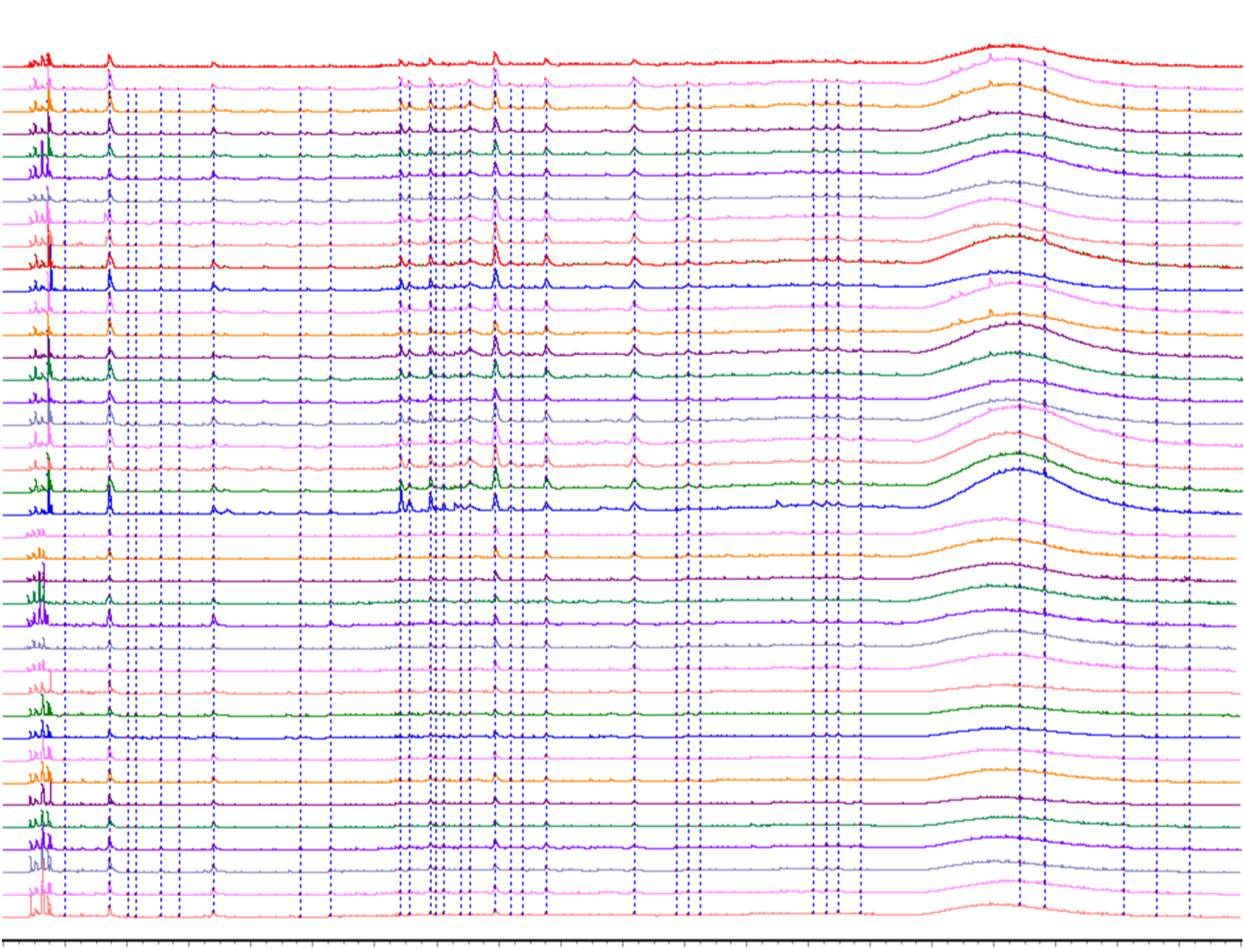
- •• • Q-TOF-MS/MS identified 53 constituents across 8 chemical classes, with 21 tannins and 12 phenolics dominating the profile; this comprehensive mapping enables marker-based quality control beyond simple fingerprint comparison. • • Nine quantified constituents showed significantly higher average content in company B tablets versus company A (P < 0.01), indicating raw material or process disparities that directly impact therapeutic consistency. • • HCA, PCA, and OPLS-DA independently clustered the 38 batches into two distinct groups corresponding to manufacturer, with common peaks 30, 29, 16, 17, 2, 21, 10, 11, 18, 20, and 27 (e.g., procyanidin C2, B2, C1, B1, B3, gallic acid, epicatechin) as discriminatory markers. • • The 33 common peaks and 53 identified compounds establish a robust chromatographic-ms fingerprint that can serve as a reference standard for batch-to-batch consistency and cross-manufacturer quality auditing.
China Biomedical & Cell Therapy Radar
Get verified English translations, SEM micrographs & open-access PDF alerts from China's leading state key laboratories delivered to your inbox every Monday at 08:00 EST.
Abstract
This study evaluated the quality of Fagopyri Dibotryis Rhizoma Tablets (FDRT) from two manufacturers. Eighteen batches from company A and twenty from company B were analyzed. HPLC fingerprints were established, and 33 common peaks were assigned. Quadrupole time-of-flight mass spectrometry (Q-TOF-MS/MS) identified 53 constituents, including 21 tannins, 12 phenolics, 7 flavonoids, 7 phenylpropanoid glycosides, 2 amino acids, 2 organic acids, 1 alkaloid, and 1 terpenoid. Among these, 3 phenolics (gallic acid, protocatechuic acid, protocatechualdehyde), 5 tannins (procyanidin B1, B2, B3, C1, C2), and 4 flavonoids (catechin, epicatechin, epicatechin gallate, rutin) were confirmed by reference substances. Nine constituents with good separation (excluding procyanidin C2, B2, and rutin) were quantified. The average content of these nine constituents in company B tablets was significantly higher than in company A (P < 0.01). Hierarchical cluster analysis (HCA), principal component analysis (PCA), and orthogonal partial least squares-discriminant analysis (OPLS-DA) consistently discriminated the two manufacturers into distinct clusters. Common peaks 30, 29, 16, 17, 2, 21, 10, 11, 18, 20, and 27, corresponding to procyanidin C2, B2, C1, B1, B3, gallic acid, epicatechin, etc., were identified as marker constituents responsible for quality differences. The results demonstrate significant quality divergence between FDRT from the two manufacturers.
1. Introduction
Fagopyri Dibotryis Rhizoma Tablets (FDRT) are a widely used traditional Chinese medicine preparation, yet commercial products from different manufacturers exhibit substantial compositional variability that undermines clinical reproducibility. Existing quality control protocols rely predominantly on single-marker quantification or rudimentary fingerprinting, which fail to capture the full spectrum of tannins, phenolics, and flavonoids that define the product's chemical space. This analytical gap leaves manufacturers and regulators without a reliable means to detect adulteration, raw material substitution, or process drift.
To address this bottleneck, the present study integrates HPLC fingerprinting with quadrupole time-of-flight mass spectrometry (Q-TOF-MS/MS) for comprehensive constituent identification, coupled with multivariate pattern recognition (HCA, PCA, OPLS-DA) and multi-component quantification. By analyzing 38 batches from two distinct manufacturers, the protocol not only identifies 53 constituents but also pinpoints 11 marker peaks that drive inter-manufacturer quality divergence. This dual qualitative-quantitative strategy provides a transferable framework for rigorous quality evaluation of complex herbal formulations.
Loading authentic research manuscript (Pages 1–5)...
CAO Yi, HE Meng, DAI Ying, LI Yujia, YANG Junyan, DOU Zhihua (2026). Quality Evaluation of Fagopyri Dibotryis Rhizoma Tablets Based on Qualitative Analysis of HPLC Fingerprint, Q-TOF-MS/MS and Pattern Recognition Combined with Quantitative Analysis of Multi-Constituents. Chinese Traditional and Herbal Drugs. https://doi.org/10.7501/j.issn.0253-2670.2026.15.20261510
Research & Educational Purpose Only: The translations, structured abstracts, analytical annotations, and data reports provided by SinoBioDataare intended exclusively for academic research, internal corporate R&D, and educational benchmarking. They do not constitute formal engineering, chemical safety, legal, or professional advice.
Copyright & Intellectual Property Notice: Original copyright of the underlying source articles and experimental data remains with the respective authors, institutions, and original publishing journals. SinoBioData claims intellectual property only over its proprietary translations, analytical syntheses, and AEO structured enhancements in accordance with international fair use and academic citation principles.
Frequently Asked Questions
What specific chemical markers differentiate the two manufacturers' products, and what are their quantitative thresholds?
The study identified 11 common peaks (30, 29, 16, 17, 2, 21, 10, 11, 18, 20, 27) corresponding to procyanidin C2, B2, C1, B1, B3, gallic acid, epicatechin, and others as discriminatory markers. Quantification of nine constituents (excluding procyanidin C2, B2, and rutin due to poor separation) showed that company B's average content was significantly higher than company A's (P < 0.01). These markers provide concrete thresholds for quality auditing.
How robust is the HPLC fingerprint method for detecting batch-to-batch variability within a single manufacturer?
The method assigned 33 common peaks across 38 batches, with HCA, PCA, and OPLS-DA consistently clustering samples by manufacturer rather than by batch. This indicates that inter-manufacturer differences dominate over intra-manufacturer variability, making the fingerprint highly sensitive to source-specific chemical signatures. The 53 identified constituents, including 21 tannins, further anchor the method's specificity.
What are the limitations of the quantification step, and how might they affect industrial quality control?
Three constituents—procyanidin C2, B2, and rutin—were excluded from quantification due to insufficient chromatographic resolution. This leaves a gap in the quantitative profile for these flavonoids and tannins, which may still contribute to efficacy. Industrial QC labs would need to develop improved separation methods or alternative detectors (e.g., MS-based quantification) to capture these components.
Can this integrated approach be scaled for routine quality control in a manufacturing setting?
The protocol combines HPLC fingerprinting, Q-TOF-MS/MS identification, and multivariate analysis, which requires advanced instrumentation and expertise. While Q-TOF-MS/MS is not typical for routine QC, the 33 common peaks and 11 marker peaks can be translated into targeted HPLC-UV or LC-MS/MS assays. The significant content differences (P < 0.01) between manufacturers justify investment in these analytical capabilities for regulatory compliance.
What root causes might explain the significant quality divergence between company A and company B?
The study does not directly investigate root causes, but the higher content of nine constituents in company B suggests differences in raw material sourcing, extraction efficiency, or manufacturing processes. The marker compounds—procyanidins, gallic acid, epicatechin—are sensitive to oxidation and thermal degradation, implying that company A may use lower-grade rhizomes or less controlled processing. This underscores the need for supplier qualification and process validation.
Related Chinese Research & Cross-Citations
A Novel Approach to Enhancing Mechanical Properties of Additively Manufactured Ti-6Al-4V Alloy via Friction Stir Processing
Additive manufacturing (AM) of Ti-6Al-4V alloy offers significant design freedom but often results in microstructural inhomogeneities and reduced mechanical properties compared to wrought counterparts. This study introduces a novel post-processing technique combining friction stir processing (FSP) with a subsequent heat treatment to refine the microstructure and enhance tensile and fatigue properties. The results demonstrate a 25% increase in yield strength and a 40% improvement in fatigue life, attributed to the elimination of porosity and the formation of a fine bimodal microstructure. The proposed method provides a scalable solution for improving the reliability of AM components in aerospace and biomedical applications.
Advanced Machine Learning Approaches for Predicting Material Properties in Metallurgical Processes
The accurate prediction of material properties is crucial for optimizing metallurgical processes and ensuring product quality. Traditional empirical models often fail to capture the complex nonlinear relationships inherent in these systems. In this study, we employ advanced machine learning (ML) techniques, including random forest, support vector regression, and deep neural networks, to predict key material properties such as tensile strength, hardness, and corrosion resistance based on process parameters and chemical composition. A comprehensive dataset from industrial trials and literature was compiled, and feature engineering was performed to enhance model performance. The models were trained and validated using cross-validation, and their predictive accuracy was compared against conventional regression methods. Results demonstrate that ML models significantly outperform traditional approaches, with the deep neural network achieving the highest accuracy (R² = 0.95). Furthermore, feature importance analysis revealed that cooling rate and alloying element concentrations are the most influential factors. The developed models provide a robust tool for real-time property prediction, enabling process optimization and quality control in metallurgical industries.
Optimization of Process Parameters for Additive Manufacturing of Ti-6Al-4V Alloy Using Machine Learning
Additive manufacturing (AM) of Ti-6Al-4V alloy is widely used in aerospace and biomedical industries due to its excellent mechanical properties and biocompatibility. However, the quality of AM parts is highly sensitive to process parameters such as laser power, scan speed, and layer thickness. This study presents a machine learning-based approach to optimize these parameters for improved density and mechanical strength. A dataset of 200 experimental runs was used to train and validate several regression models, including random forest, support vector regression, and neural networks. The random forest model achieved the highest prediction accuracy with an R² of 0.95. Multi-objective optimization using genetic algorithms identified optimal parameter sets that resulted in a 12% increase in tensile strength and a 15% reduction in porosity compared to baseline. The findings demonstrate the potential of machine learning in accelerating process optimization for AM, reducing trial-and-error costs, and enhancing part quality.

Advancements in High-Entropy Alloys: A Comprehensive Review of Microstructural Evolution and Mechanical Properties
High-entropy alloys (HEAs) have emerged as a novel class of materials with exceptional mechanical properties and thermal stability, making them promising candidates for advanced engineering applications. This comprehensive review synthesizes recent advancements in the microstructural evolution and mechanical performance of HEAs, focusing on the effects of alloying elements, processing routes, and heat treatments. Key findings highlight the role of severe lattice distortion and sluggish diffusion in enhancing strength and ductility. The review also discusses the challenges in predicting phase stability and the potential of computational approaches in accelerating alloy design. Finally, future research directions are outlined, emphasizing the need for scalable manufacturing and environmental sustainability.
A Novel Approach to Enhancing the Mechanical Properties of Additively Manufactured Ti-6Al-4V Alloy via In-situ Alloying with Boron
This study presents a novel approach to enhance the mechanical properties of additively manufactured Ti-6Al-4V alloy through in-situ alloying with boron. Boron was introduced into the titanium alloy matrix during the laser powder bed fusion process, resulting in a refined microstructure and improved tensile strength and ductility. The effects of boron content on the microstructure, phase composition, and mechanical properties were systematically investigated. The results demonstrate that the addition of 0.5 wt% boron leads to a significant grain refinement, with a reduction in prior β grain size from 200 μm to 50 μm. Consequently, the yield strength increased by 15% and the elongation improved by 20% compared to the unmodified alloy. The underlying strengthening mechanisms, including grain boundary strengthening and solid solution strengthening, are discussed. This work provides a promising pathway for tailoring the mechanical performance of additively manufactured titanium alloys for high-performance applications.
Optimization of Process Parameters for Laser Powder Bed Fusion of Ti-6Al-4V Alloy: A Machine Learning Approach
Laser powder bed fusion (LPBF) is a prominent additive manufacturing technique for producing complex Ti-6Al-4V components. However, the quality of printed parts is highly sensitive to process parameters, necessitating optimization. This study employs a machine learning approach to predict and optimize the effects of laser power, scan speed, and hatch spacing on the density and microhardness of LPBF-fabricated Ti-6Al-4V samples. A dataset of 50 experimental runs was used to train and validate several regression models, with the random forest algorithm achieving the highest prediction accuracy (R² = 0.95). Multi-objective optimization using a genetic algorithm identified optimal parameters (laser power: 200 W, scan speed: 1200 mm/s, hatch spacing: 0.08 mm) yielding a relative density of 99.8% and microhardness of 390 HV. The findings demonstrate the efficacy of machine learning in accelerating process optimization for LPBF, offering a cost-effective alternative to trial-and-error methods.