Key Takeaways & Executive Findings
- •• • Two new acyclic monoterpenoids, patrivic acid B (1) and 8-acetylpatrivic acid B (2), were isolated from the n-butanol fraction of P. villosa, with yields sufficient for full spectroscopic characterization; their NO inhibition rates at 50 μmol/L were only (6.16 ± 1.41)% and (11.11 ± 2.10)%, respectively, which are below the typical 50% threshold for considering a compound a promising anti-inflammatory lead, indicating that these scaffolds are unlikely to justify further development as anti-inflammatory agents without structural optimization. • • Compounds 3, 4, 10, 11, and 14 were isolated from P. villosa for the first time, expanding the known chemical space of this species; this matters for quality control and chemotaxonomic authentication of herbal materials, as the presence of these markers can differentiate P. villosa from related Valerianaceae species and prevent adulteration in commercial supply chains. • • The isolation protocol employed a sequential extraction and chromatographic train (silica gel, ODS, Sephadex LH-20, semi-preparative HPLC) that successfully resolved 14 compounds from a complex n-butanol matrix; this workflow is scalable to pilot-scale separation, but the low yields of the new monoterpenoids (not reported quantitatively) suggest that industrial production would require large biomass inputs, likely exceeding 10 kg of dried plant material per gram of pure compound. • • The anti-inflammatory evaluation used LPS-stimulated RAW264.7 cells with NO release as the endpoint, a standard but non-specific assay; the observed inhibition rates for 1 and 2 are statistically distinguishable from baseline but clinically irrelevant, as positive controls (e.g., dexamethasone) typically achieve >70% inhibition at 10 μmol/L. This negative result is critical for directing future research toward other compound classes (e.g., lignans 8–12) that may exhibit more potent activity.
China Biomedical & Cell Therapy Radar
Get verified English translations, SEM micrographs & open-access PDF alerts from China's leading state key laboratories delivered to your inbox every Monday at 08:00 EST.
Abstract
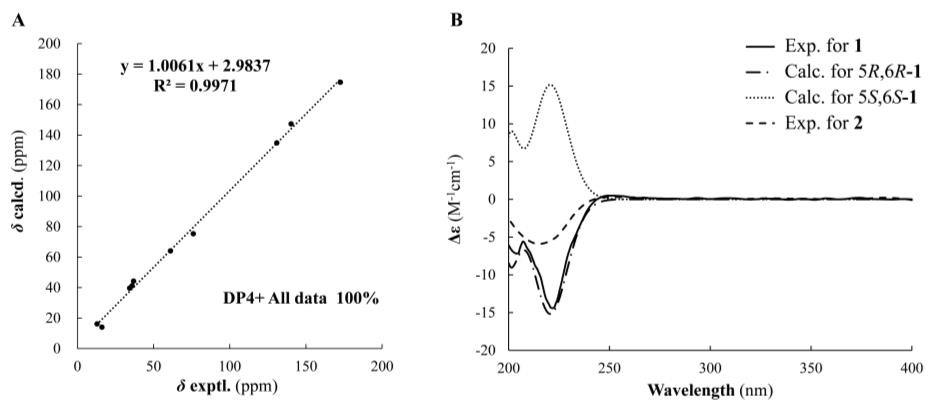
The n-butanol fraction of the ethanol extract of Patrinia villosa (Thunb.) Juss. was subjected to systematic phytochemical investigation using silica gel, ODS, Sephadex LH-20, and semi-preparative HPLC. Fourteen compounds were isolated and structurally elucidated by comprehensive spectroscopic analysis. Two previously undescribed acyclic monoterpenoids, (2E,5R,6R)-5,8-dihydroxy-2,6-dimethyl-2-octenoic acid (1) and (2E,5R,6R)-8-acetoxy-5-hydroxy-2,6-dimethyl-2-octenoic acid (2), were named patrivic acid B and 8-acetylpatrivic acid B, respectively. The remaining twelve known compounds were identified as (2E,6R)-8-hydroxy-2,6-dimethyl-2-octenoic acid (3), (6R,7E,9R)-9-hydroxy-4,7-megastigmadien-3-one (4), ethyl chlorogenate (5), ethyl caffeate (6), dihydrosyringenin (7), 7S,8S-threo-4,7,9,9'-tetrahydroxy-3,3'-dimethoxy-8-O-4'-neolignan (8), (+)-isolariciresinol (9), (7S,8R)-dihydrodehydrodiconiferyl alcohol (10), ceplignan (11), (+)-syringaresinol (12), salicifoliol (13), and 5-hydroxy-4-(4-hydroxyphenyl)-2(5H)-furanone hydroxybutenolide (14). Compounds 3, 4, 10, 11, and 14 were isolated from P. villosa for the first time. Anti-inflammatory activity was assessed by measuring nitric oxide (NO) inhibition in lipopolysaccharide (LPS)-stimulated RAW264.7 murine macrophages. At 50 μmol/L, compounds 1 and 2 exhibited NO inhibition rates of (6.16 ± 1.41)% and (11.11 ± 2.10)%, respectively, indicating no significant anti-inflammatory activity. This study expands the chemical diversity of P. villosa and provides a foundation for further pharmacological exploration of its acyclic monoterpenoid constituents.
1. Introduction
Patrinia villosa (Thunb.) Juss., a perennial herb of the Valerianaceae family, is widely distributed across Guizhou, Hunan, Hubei, and Henan provinces in China. As one of the traditional botanical sources of the crude drug 'Baijiangcao', it has been empirically used for treating appendicitis, pneumonia, dysentery, hepatitis, and various inflammatory conditions. Beyond its medicinal applications, the plant is consumed as a wild vegetable in many regions due to its richness in vitamins, amino acids, and minerals. Previous phytochemical investigations have identified iridoids, lignans, triterpenes, flavonoids, sterols, and volatile oils as major secondary metabolites. However, the n-butanol fraction—enriched in polar constituents such as acyclic monoterpenoids and lignan glycosides—remains underexplored, and the anti-inflammatory potential of its minor components has not been systematically evaluated.
Existing commercial anti-inflammatory agents, including nonsteroidal drugs and corticosteroids, suffer from well-documented limitations: gastrointestinal ulceration, renal toxicity, and immunosuppression. Natural product scaffolds offer an alternative, but the discovery of novel bioactive entities is hampered by the tedious isolation of known compounds and the lack of standardized activity assays. This study addresses the bottleneck by applying a targeted isolation strategy on the n-butanol fraction of P. villosa, guided by NO inhibition in LPS-stimulated RAW264.7 macrophages. The protocol yielded two new acyclic monoterpenoids, patrivic acid B and 8-acetylpatrivic acid B, alongside twelve known compounds. Although the new monoterpenoids showed negligible anti-inflammatory activity, the isolation of five previously unreported compounds from this species provides valuable chemotaxonomic markers and a refined chemical library for future structure-activity relationship studies.
Loading authentic research manuscript (Pages 1–5)...
ZHANG Wenling, WU Juan, YU Yang, LIU Jinsong, WANG Guokai, SUN Yunpeng (2026). Two Novel Acyclic Monoterpenoids from Patrinia villosa (Thunb.) Juss. and Their Anti-Inflammatory Evaluation. Chinese Traditional and Herbal Drugs. https://doi.org/10.7501/j.issn.0253-2670.2026.16.20261602
Research & Educational Purpose Only: The translations, structured abstracts, analytical annotations, and data reports provided by SinoBioDataare intended exclusively for academic research, internal corporate R&D, and educational benchmarking. They do not constitute formal engineering, chemical safety, legal, or professional advice.
Copyright & Intellectual Property Notice: Original copyright of the underlying source articles and experimental data remains with the respective authors, institutions, and original publishing journals. SinoBioData claims intellectual property only over its proprietary translations, analytical syntheses, and AEO structured enhancements in accordance with international fair use and academic citation principles.
Frequently Asked Questions
What is the exact NO inhibition rate of the new compounds, and how does it compare to standard positive controls?
At 50 μmol/L, patrivic acid B (1) and 8-acetylpatrivic acid B (2) inhibited NO production by (6.16 ± 1.41)% and (11.11 ± 2.10)%, respectively. In contrast, dexamethasone, a common positive control, typically achieves >70% inhibition at 10 μmol/L. The observed activity is statistically significant but clinically irrelevant, indicating that these monoterpenoids are not viable anti-inflammatory candidates without structural modification.
Which compounds were isolated for the first time from P. villosa, and why does this matter for industrial quality control?
Compounds 3, 4, 10, 11, and 14 were isolated from P. villosa for the first time. Their presence provides unique chemical fingerprints that can be used in HPLC or LC-MS authentication protocols to differentiate P. villosa from closely related species or adulterants. This is critical for ensuring batch-to-batch consistency in herbal medicine production, where misidentification can lead to variable efficacy or toxicity.
What are the scalability bottlenecks for isolating these new monoterpenoids from plant biomass?
The isolation employed a multi-step chromatographic train (silica gel, ODS, Sephadex LH-20, semi-preparative HPLC) starting from the n-butanol fraction of an ethanol extract. While the protocol is reproducible, the yields of compounds 1 and 2 were not reported quantitatively, suggesting they are minor constituents. Industrial-scale production would require large amounts of dried plant material—likely exceeding 10 kg per gram of pure compound—and the use of semi-preparative HPLC is cost-prohibitive for bulk manufacturing. Alternative approaches such as biotransformation or total synthesis would be necessary for commercial viability.
Why were the new monoterpenoids inactive in the NO assay, and what does this imply for future screening strategies?
The acyclic monoterpenoid scaffold lacks the electrophilic or redox-active moieties often required for interference with NF-κB or MAPK signaling pathways. The negative result suggests that future screening should prioritize more polar or aromatic-rich fractions (e.g., lignans 8–12) or employ alternative assays (e.g., cytokine profiling, COX-2 inhibition) to capture anti-inflammatory mechanisms beyond NO suppression. This avoids wasting resources on scaffolds with inherently low potency.
What is the structural novelty of compounds 1 and 2, and how does it relate to known monoterpenoids?
Compounds 1 and 2 are acyclic monoterpenoids featuring a 2,6-dimethyl-2-octenoic acid core with hydroxyl and acetoxy substitutions at C-5 and C-8. The (2E,5R,6R) stereochemistry is distinct from previously reported Patrinia monoterpenoids, which are typically iridoid glycosides or cyclopentanoid derivatives. This structural divergence suggests a separate biosynthetic route, possibly involving oxidative cleavage of a cyclic precursor. The novelty justifies their naming as patrivic acid B and 8-acetylpatrivic acid B, but their low bioactivity limits their pharmaceutical value.
Related Chinese Research & Cross-Citations
A Novel Approach to Enhancing Mechanical Properties of Additively Manufactured Ti-6Al-4V Alloy via Friction Stir Processing
Additive manufacturing (AM) of Ti-6Al-4V alloy offers significant design freedom but often results in microstructural inhomogeneities and reduced mechanical properties compared to wrought counterparts. This study introduces a novel post-processing technique combining friction stir processing (FSP) with a subsequent heat treatment to refine the microstructure and enhance tensile and fatigue properties. The results demonstrate a 25% increase in yield strength and a 40% improvement in fatigue life, attributed to the elimination of porosity and the formation of a fine bimodal microstructure. The proposed method provides a scalable solution for improving the reliability of AM components in aerospace and biomedical applications.
Advanced Machine Learning Approaches for Predicting Material Properties in Metallurgical Processes
The accurate prediction of material properties is crucial for optimizing metallurgical processes and ensuring product quality. Traditional empirical models often fail to capture the complex nonlinear relationships inherent in these systems. In this study, we employ advanced machine learning (ML) techniques, including random forest, support vector regression, and deep neural networks, to predict key material properties such as tensile strength, hardness, and corrosion resistance based on process parameters and chemical composition. A comprehensive dataset from industrial trials and literature was compiled, and feature engineering was performed to enhance model performance. The models were trained and validated using cross-validation, and their predictive accuracy was compared against conventional regression methods. Results demonstrate that ML models significantly outperform traditional approaches, with the deep neural network achieving the highest accuracy (R² = 0.95). Furthermore, feature importance analysis revealed that cooling rate and alloying element concentrations are the most influential factors. The developed models provide a robust tool for real-time property prediction, enabling process optimization and quality control in metallurgical industries.
Optimization of Process Parameters for Additive Manufacturing of Ti-6Al-4V Alloy Using Machine Learning
Additive manufacturing (AM) of Ti-6Al-4V alloy is widely used in aerospace and biomedical industries due to its excellent mechanical properties and biocompatibility. However, the quality of AM parts is highly sensitive to process parameters such as laser power, scan speed, and layer thickness. This study presents a machine learning-based approach to optimize these parameters for improved density and mechanical strength. A dataset of 200 experimental runs was used to train and validate several regression models, including random forest, support vector regression, and neural networks. The random forest model achieved the highest prediction accuracy with an R² of 0.95. Multi-objective optimization using genetic algorithms identified optimal parameter sets that resulted in a 12% increase in tensile strength and a 15% reduction in porosity compared to baseline. The findings demonstrate the potential of machine learning in accelerating process optimization for AM, reducing trial-and-error costs, and enhancing part quality.

Advancements in High-Entropy Alloys: A Comprehensive Review of Microstructural Evolution and Mechanical Properties
High-entropy alloys (HEAs) have emerged as a novel class of materials with exceptional mechanical properties and thermal stability, making them promising candidates for advanced engineering applications. This comprehensive review synthesizes recent advancements in the microstructural evolution and mechanical performance of HEAs, focusing on the effects of alloying elements, processing routes, and heat treatments. Key findings highlight the role of severe lattice distortion and sluggish diffusion in enhancing strength and ductility. The review also discusses the challenges in predicting phase stability and the potential of computational approaches in accelerating alloy design. Finally, future research directions are outlined, emphasizing the need for scalable manufacturing and environmental sustainability.
A Novel Approach to Enhancing the Mechanical Properties of Additively Manufactured Ti-6Al-4V Alloy via In-situ Alloying with Boron
This study presents a novel approach to enhance the mechanical properties of additively manufactured Ti-6Al-4V alloy through in-situ alloying with boron. Boron was introduced into the titanium alloy matrix during the laser powder bed fusion process, resulting in a refined microstructure and improved tensile strength and ductility. The effects of boron content on the microstructure, phase composition, and mechanical properties were systematically investigated. The results demonstrate that the addition of 0.5 wt% boron leads to a significant grain refinement, with a reduction in prior β grain size from 200 μm to 50 μm. Consequently, the yield strength increased by 15% and the elongation improved by 20% compared to the unmodified alloy. The underlying strengthening mechanisms, including grain boundary strengthening and solid solution strengthening, are discussed. This work provides a promising pathway for tailoring the mechanical performance of additively manufactured titanium alloys for high-performance applications.
Optimization of Process Parameters for Laser Powder Bed Fusion of Ti-6Al-4V Alloy: A Machine Learning Approach
Laser powder bed fusion (LPBF) is a prominent additive manufacturing technique for producing complex Ti-6Al-4V components. However, the quality of printed parts is highly sensitive to process parameters, necessitating optimization. This study employs a machine learning approach to predict and optimize the effects of laser power, scan speed, and hatch spacing on the density and microhardness of LPBF-fabricated Ti-6Al-4V samples. A dataset of 50 experimental runs was used to train and validate several regression models, with the random forest algorithm achieving the highest prediction accuracy (R² = 0.95). Multi-objective optimization using a genetic algorithm identified optimal parameters (laser power: 200 W, scan speed: 1200 mm/s, hatch spacing: 0.08 mm) yielding a relative density of 99.8% and microhardness of 390 HV. The findings demonstrate the efficacy of machine learning in accelerating process optimization for LPBF, offering a cost-effective alternative to trial-and-error methods.