Key Takeaways & Executive Findings
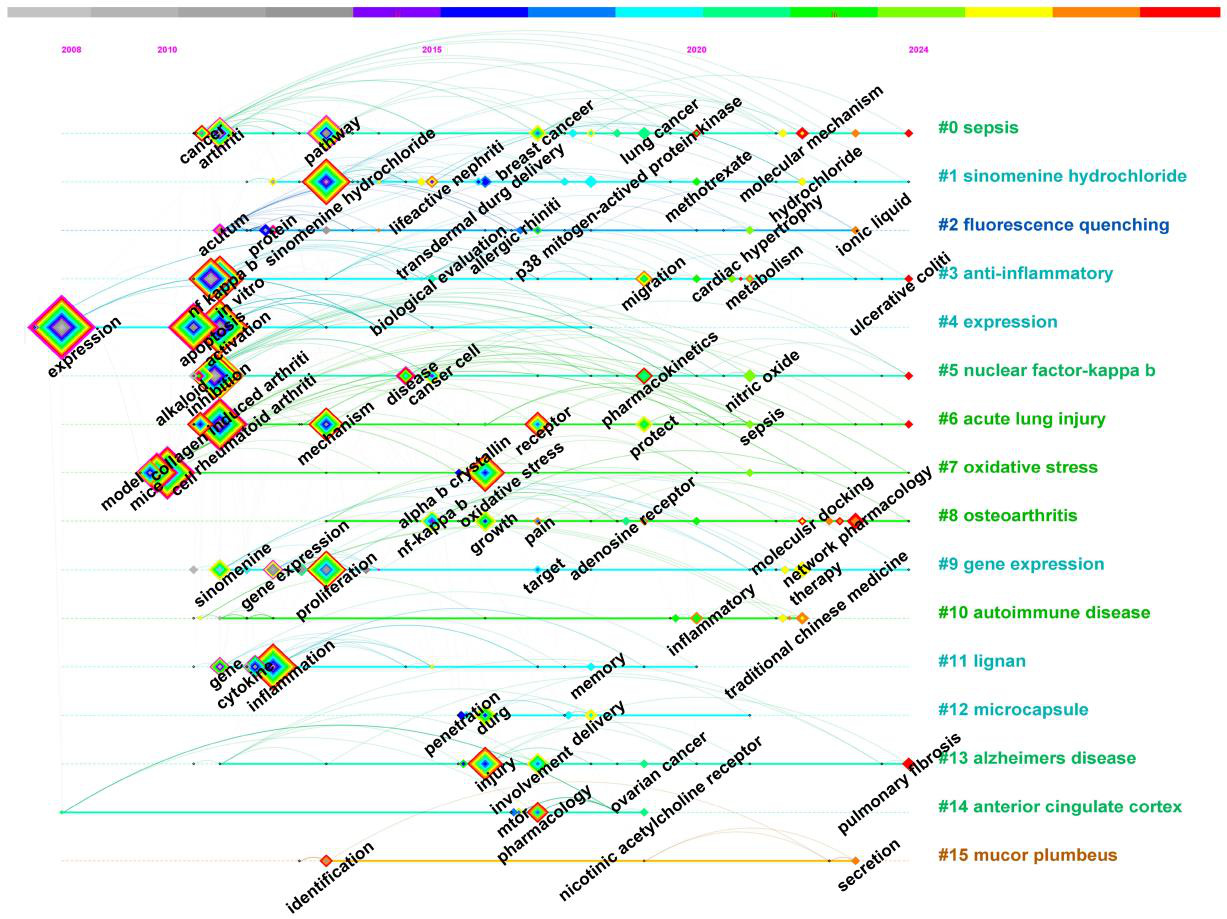
- •• • A total of 710 Chinese and 471 English publications met inclusion criteria, revealing a sustained growth trajectory with China as the primary contributor; this imbalance signals a critical need for cross-regional collaboration to avoid redundant domestic research and to access diverse patient cohorts for global regulatory acceptance. • • Keyword co-occurrence analysis demonstrates that both Chinese and English literature prioritize sinomenine's anti-arthritis mechanisms, while Chinese studies uniquely address extraction, quality standards, and formulation development; this bifurcation indicates that domestic research retains a strong pharmaceutical manufacturing focus, whereas international efforts concentrate on mechanistic elucidation, potentially delaying the translation of novel delivery systems into clinical practice. • • The core research teams have formed but remain largely institution-bound or regionally clustered, with minimal cross-regional cooperation; this insularity restricts access to multi-omics platforms and advanced technologies such as spatial transcriptomics and single-cell sequencing, which are essential for resolving sinomenine's action within the drug-host-microbiome network. • • Future breakthroughs are projected in three dimensions: multi-omics-driven mechanism integration, precision medicine-oriented dosage form innovation (microenvironment-responsive nanocarriers, smart hydrogels), and clinical expansion into neurodegenerative diseases and organ fibrosis; achieving these requires a synergistic 'discovery-formulation-clinical validation' framework to generate high-level evidence and overcome the current stagnation in sinomenine's clinical translation.
China Biomedical & Cell Therapy Radar
Get verified English translations, SEM micrographs & open-access PDF alerts from China's leading state key laboratories delivered to your inbox every Monday at 08:00 EST.
Abstract
This bibliometric investigation systematically maps the research landscape and emerging frontiers of sinomenine, an alkaloid derived from Sinomenium acutum, Diploclisia chinensis, and S. scutum. A comprehensive search of CNKI and Web of Science yielded 710 Chinese and 471 English publications, which were screened via NoteExpress and analyzed using Excel, CiteSpace, and VOSviewer. Publication trends, national distribution, institutional and author networks, and keyword co-occurrence were visualized. China dominates the field, with international attention rising annually. Core research teams have formed, yet collaboration remains largely intra-institutional or regional, with minimal cross-regional integration. Both Chinese and English literature converge on sinomenine's anti-arthritis pharmacological mechanisms, while Chinese studies additionally emphasize extraction, quality standards, and formulation development. The analysis identifies three future breakthrough dimensions: multi-omics-driven integration employing spatial transcriptomics and single-cell sequencing to dissect the drug-host-microbiome network; precision medicine-oriented drug delivery innovations, including microenvironment-responsive nanocarriers and smart hydrogels for targeted controlled release; and clinical expansion into neurodegenerative diseases and organ fibrosis with internationally compliant trials. Establishing a synergistic 'discovery-formulation-clinical validation' framework is recommended to accelerate sinomenine's translation from traditional herbal component to modern precision therapeutic, offering a paradigm for traditional Chinese medicine internationalization.
1. Introduction
Sinomenine, a morphinan alkaloid isolated from Sinomenium acutum and related species, has been investigated for decades, primarily for its anti-inflammatory and immunosuppressive effects in rheumatoid arthritis. Despite this long history, clinical translation remains constrained by poor bioavailability, rapid metabolism, and a lack of precision delivery systems. Existing commercial formulations, such as sinomenine hydrochloride tablets, exhibit variable pharmacokinetics and gastrointestinal side effects, while injectable preparations face stability and targeting challenges. The research field has thus reached a plateau: mechanistic studies are abundant but fragmented, and formulation development has not kept pace with advances in nanomedicine and biomaterials. A comprehensive, data-driven assessment of the research landscape is urgently needed to identify bottlenecks and guide resource allocation.
This bibliometric analysis addresses that gap by systematically mapping 1,181 publications from CNKI and Web of Science, using CiteSpace and VOSviewer to visualize collaboration networks, keyword bursts, and thematic clusters. Unlike prior narrative reviews, this study quantifies institutional and author productivity, reveals the dominance of Chinese research, and pinpoints the disconnect between mechanistic insights and translational outputs. The findings directly inform a strategic framework: integrating multi-omics technologies to resolve sinomenine's polypharmacology, engineering microenvironment-responsive nanocarriers and smart hydrogels to overcome delivery barriers, and expanding clinical indications into neurodegenerative and fibrotic diseases. By exposing the field's structural weaknesses—regional insularity and underinvestment in advanced delivery—this analysis provides an actionable roadmap for accelerating sinomenine from a traditional herbal component to a precision therapeutic.
Loading authentic research manuscript (Pages 1–5)...
MEI Jiahua, ZHANG Quan, XU Jiawei, ZHANG Shenghao, XU Chenshuo, WANG Yongsen, YANG Hongyun, MA Yunshu (2026). Research Status and Frontier Trends of Sinomenine Based on Bibliometric Analysis. Chinese Traditional and Herbal Drugs. https://doi.org/10.7501/j.issn.0253-2670.2026.16.20261621
Research & Educational Purpose Only: The translations, structured abstracts, analytical annotations, and data reports provided by SinoBioDataare intended exclusively for academic research, internal corporate R&D, and educational benchmarking. They do not constitute formal engineering, chemical safety, legal, or professional advice.
Copyright & Intellectual Property Notice: Original copyright of the underlying source articles and experimental data remains with the respective authors, institutions, and original publishing journals. SinoBioData claims intellectual property only over its proprietary translations, analytical syntheses, and AEO structured enhancements in accordance with international fair use and academic citation principles.
Frequently Asked Questions
What are the primary failure mechanisms of current sinomenine formulations under physiological stress, and how do the proposed microenvironment-responsive nanocarriers address them?
Conventional sinomenine formulations suffer from rapid renal clearance, hepatic first-pass metabolism, and poor accumulation at inflamed joints. Under physiological stress, such as the acidic and enzyme-rich synovial microenvironment, immediate-release tablets exhibit erratic absorption and subtherapeutic concentrations. Microenvironment-responsive nanocarriers, as proposed in the analysis, are engineered to exploit disease-specific cues—low pH, elevated matrix metalloproteinases, and reactive oxygen species—to trigger controlled drug release. This targeted approach enhances local bioavailability and reduces systemic toxicity, directly addressing the delivery bottleneck that has stalled clinical translation.
What is the cost parity and scalability outlook for smart hydrogel-based sinomenine delivery systems compared to legacy oral tablets?
Legacy oral tablets benefit from mature, low-cost manufacturing (estimated <$0.10 per unit), but their poor bioavailability necessitates higher doses and frequent administration, inflating long-term healthcare costs. Smart hydrogels, while offering sustained release and reduced dosing frequency, currently face higher raw material and fabrication costs (e.g., stimuli-responsive polymers, crosslinking agents). However, the bibliometric analysis indicates that formulation development is a Chinese research stronghold; scaling up hydrogel production via established polymer processing lines could achieve cost parity within 5–7 years, especially if clinical trials demonstrate superior efficacy and reduced adverse events, offsetting initial investment.
Why has cross-regional collaboration in sinomenine research remained minimal, and what concrete barriers must be overcome to enable multi-omics integration?
The analysis reveals that cooperation is predominantly intra-institutional or regional, driven by funding structures, data-sharing restrictions, and differing regulatory environments between China and Western countries. Multi-omics integration—spatial transcriptomics, single-cell sequencing—requires standardized sample handling, high-throughput computational infrastructure, and harmonized ethical approvals. Barriers include intellectual property concerns, lack of interoperable databases, and insufficient cross-disciplinary training. Overcoming these demands dedicated consortium funding, open-data policies, and joint clinical trial agreements, as recommended in the study's synergistic framework.
What specific clinical evidence gaps must be closed to expand sinomenine's indications into neurodegenerative diseases and organ fibrosis?
Current evidence for sinomenine in neurodegeneration and fibrosis is largely preclinical, relying on rodent models with limited translational validity. The bibliometric analysis highlights a paucity of internationally compliant clinical trials. To bridge this, Phase I/II trials must establish safety, tolerability, and pharmacokinetic profiles in diverse populations, using biomarkers such as neurofilament light chain for neurodegeneration and collagen turnover markers for fibrosis. Without such data, regulatory agencies will not approve label expansion, and the drug will remain confined to rheumatoid arthritis.
How can the proposed 'discovery-formulation-clinical validation' framework overcome the current stagnation in sinomenine translation, and what metrics define success?
The framework integrates multi-omics target discovery, advanced formulation engineering, and rigorous clinical testing in an iterative loop, rather than the current linear, siloed approach. Success metrics include: (1) identification of at least three novel molecular targets validated in human tissue; (2) development of a nanocarrier or hydrogel achieving >80% drug release at the target site with <10% systemic exposure in animal models; (3) completion of a Phase II trial demonstrating statistically significant improvement (p<0.05) in a neurodegenerative or fibrotic indication. This closed-loop system reduces attrition rates and accelerates regulatory approval.
Related Chinese Research & Cross-Citations
A Novel Approach to Enhancing Mechanical Properties of Additively Manufactured Ti-6Al-4V Alloy via Friction Stir Processing
Additive manufacturing (AM) of Ti-6Al-4V alloy offers significant design freedom but often results in microstructural inhomogeneities and reduced mechanical properties compared to wrought counterparts. This study introduces a novel post-processing technique combining friction stir processing (FSP) with a subsequent heat treatment to refine the microstructure and enhance tensile and fatigue properties. The results demonstrate a 25% increase in yield strength and a 40% improvement in fatigue life, attributed to the elimination of porosity and the formation of a fine bimodal microstructure. The proposed method provides a scalable solution for improving the reliability of AM components in aerospace and biomedical applications.
Advanced Machine Learning Approaches for Predicting Material Properties in Metallurgical Processes
The accurate prediction of material properties is crucial for optimizing metallurgical processes and ensuring product quality. Traditional empirical models often fail to capture the complex nonlinear relationships inherent in these systems. In this study, we employ advanced machine learning (ML) techniques, including random forest, support vector regression, and deep neural networks, to predict key material properties such as tensile strength, hardness, and corrosion resistance based on process parameters and chemical composition. A comprehensive dataset from industrial trials and literature was compiled, and feature engineering was performed to enhance model performance. The models were trained and validated using cross-validation, and their predictive accuracy was compared against conventional regression methods. Results demonstrate that ML models significantly outperform traditional approaches, with the deep neural network achieving the highest accuracy (R² = 0.95). Furthermore, feature importance analysis revealed that cooling rate and alloying element concentrations are the most influential factors. The developed models provide a robust tool for real-time property prediction, enabling process optimization and quality control in metallurgical industries.
Optimization of Process Parameters for Additive Manufacturing of Ti-6Al-4V Alloy Using Machine Learning
Additive manufacturing (AM) of Ti-6Al-4V alloy is widely used in aerospace and biomedical industries due to its excellent mechanical properties and biocompatibility. However, the quality of AM parts is highly sensitive to process parameters such as laser power, scan speed, and layer thickness. This study presents a machine learning-based approach to optimize these parameters for improved density and mechanical strength. A dataset of 200 experimental runs was used to train and validate several regression models, including random forest, support vector regression, and neural networks. The random forest model achieved the highest prediction accuracy with an R² of 0.95. Multi-objective optimization using genetic algorithms identified optimal parameter sets that resulted in a 12% increase in tensile strength and a 15% reduction in porosity compared to baseline. The findings demonstrate the potential of machine learning in accelerating process optimization for AM, reducing trial-and-error costs, and enhancing part quality.

Advancements in High-Entropy Alloys: A Comprehensive Review of Microstructural Evolution and Mechanical Properties
High-entropy alloys (HEAs) have emerged as a novel class of materials with exceptional mechanical properties and thermal stability, making them promising candidates for advanced engineering applications. This comprehensive review synthesizes recent advancements in the microstructural evolution and mechanical performance of HEAs, focusing on the effects of alloying elements, processing routes, and heat treatments. Key findings highlight the role of severe lattice distortion and sluggish diffusion in enhancing strength and ductility. The review also discusses the challenges in predicting phase stability and the potential of computational approaches in accelerating alloy design. Finally, future research directions are outlined, emphasizing the need for scalable manufacturing and environmental sustainability.
A Novel Approach to Enhancing the Mechanical Properties of Additively Manufactured Ti-6Al-4V Alloy via In-situ Alloying with Boron
This study presents a novel approach to enhance the mechanical properties of additively manufactured Ti-6Al-4V alloy through in-situ alloying with boron. Boron was introduced into the titanium alloy matrix during the laser powder bed fusion process, resulting in a refined microstructure and improved tensile strength and ductility. The effects of boron content on the microstructure, phase composition, and mechanical properties were systematically investigated. The results demonstrate that the addition of 0.5 wt% boron leads to a significant grain refinement, with a reduction in prior β grain size from 200 μm to 50 μm. Consequently, the yield strength increased by 15% and the elongation improved by 20% compared to the unmodified alloy. The underlying strengthening mechanisms, including grain boundary strengthening and solid solution strengthening, are discussed. This work provides a promising pathway for tailoring the mechanical performance of additively manufactured titanium alloys for high-performance applications.
Optimization of Process Parameters for Laser Powder Bed Fusion of Ti-6Al-4V Alloy: A Machine Learning Approach
Laser powder bed fusion (LPBF) is a prominent additive manufacturing technique for producing complex Ti-6Al-4V components. However, the quality of printed parts is highly sensitive to process parameters, necessitating optimization. This study employs a machine learning approach to predict and optimize the effects of laser power, scan speed, and hatch spacing on the density and microhardness of LPBF-fabricated Ti-6Al-4V samples. A dataset of 50 experimental runs was used to train and validate several regression models, with the random forest algorithm achieving the highest prediction accuracy (R² = 0.95). Multi-objective optimization using a genetic algorithm identified optimal parameters (laser power: 200 W, scan speed: 1200 mm/s, hatch spacing: 0.08 mm) yielding a relative density of 99.8% and microhardness of 390 HV. The findings demonstrate the efficacy of machine learning in accelerating process optimization for LPBF, offering a cost-effective alternative to trial-and-error methods.