Key Takeaways & Executive Findings
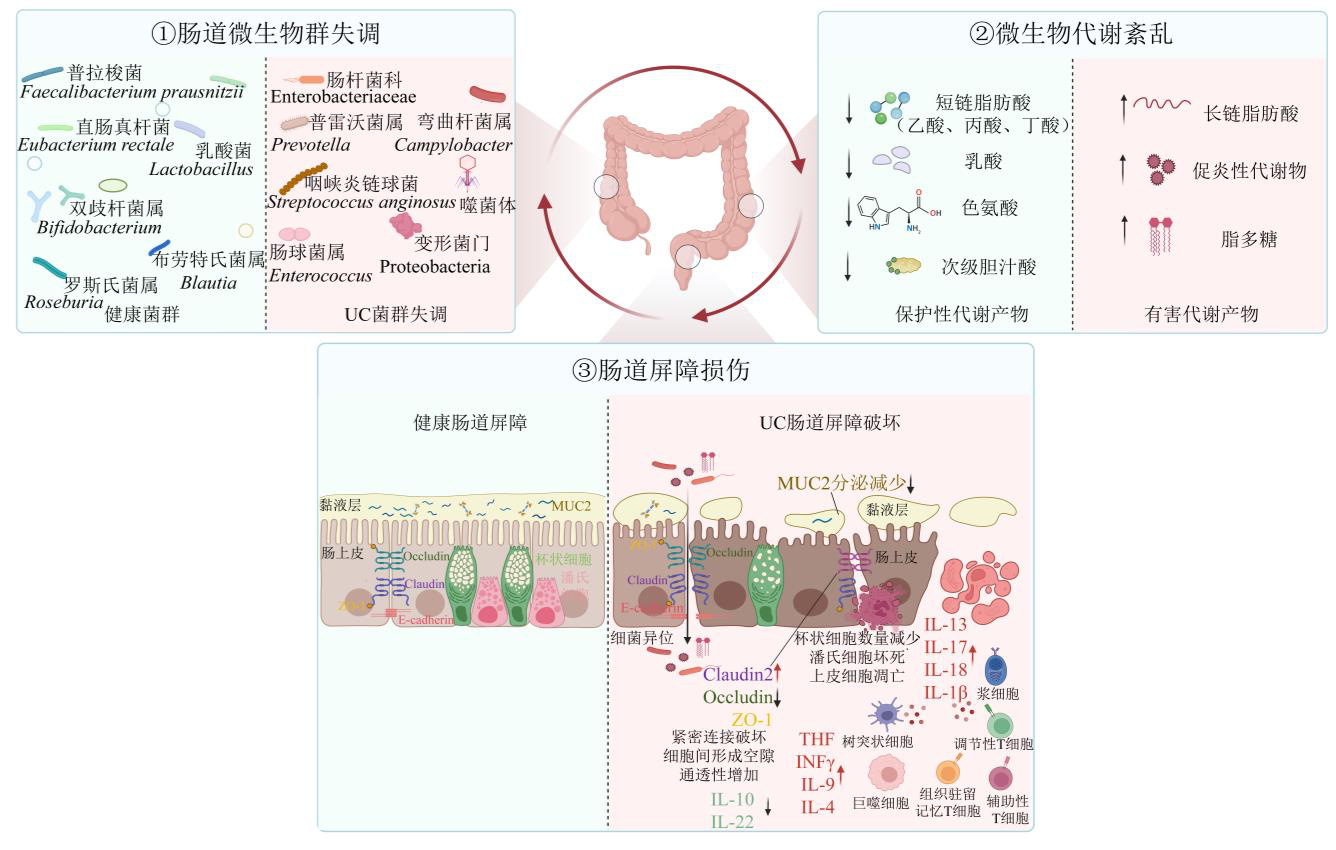
- •• • Global UC prevalence reached approximately 5 million cases in 2023, with North America and Northern Europe maintaining the highest incidence rates, while emerging industrialized nations—particularly China—exhibit the most rapid growth; this epidemiological shift underscores the urgent clinical need for cost-effective, multi-target therapeutic alternatives to biologics, which currently suffer from high non-response rates and prohibitive costs. • • The 'gut microbiota dysbiosis–barrier injury' vicious cycle is mechanistically driven by reduced microbial diversity, decreased beneficial bacteria, and increased pathogenic taxa, leading to SCFA and tryptophan metabolic disturbances, downregulation of tight junction proteins, and increased intestinal mucosal permeability; this cycle constitutes the core pathological basis for UC's chronicity and refractoriness, making it a prime target for intervention. • • TCM formulas such as Baitouweng Decoction, Lizhong Decoction, Banxia Xiexin Decoction, Gegen Qinlian Decoction, and Sishen Pill demonstrate efficacy in DSS-induced colitis models by modulating gut microbiota-SCFAs-Th17/Treg axis, activating AhR/IL-22 signaling to repair the intestinal barrier via microbiota-related tryptophan metabolism, and regulating the TLR4/NF-κB/NLRP3 signaling pathway; these multi-target mechanisms offer advantages over single-target biologics in addressing the complex pathophysiology of UC. • • The 'turbidity-toxin' theory provides a coherent TCM framework linking gut microbiota dysbiosis and cell pyroptosis to UC pathogenesis, with clinical studies showing that Huazhuo Jiedu formulas reduce serum NLRP3 inflammasome, IL-18, and IL-1β levels while improving gut microbiota and mucosal barrier function; this integration of traditional theory with modern molecular targets facilitates the development of evidence-based TCM therapies for UC.
China Biomedical & Cell Therapy Radar
Get verified English translations, SEM micrographs & open-access PDF alerts from China's leading state key laboratories delivered to your inbox every Monday at 08:00 EST.
Abstract
Ulcerative colitis (UC) is a chronic, non-specific inflammatory bowel disease with a continuously rising global incidence; an estimated 5 million cases were recorded worldwide in 2023, with emerging industrialized nations such as China showing the most pronounced increases. The core pathophysiological driver of UC's recurrent and refractory nature is a self-reinforcing vicious cycle between gut microbiota dysbiosis and intestinal barrier dysfunction. Reduced microbial diversity, depletion of beneficial taxa, and expansion of pathogenic bacteria disrupt short-chain fatty acid (SCFA) and tryptophan metabolism, impair the mucus layer, downregulate tight junction (TJ) proteins, and compromise immune barrier integrity, thereby exacerbating mucosal inflammation. Conventional therapies—aminosalicylates, glucocorticoids, immunosuppressants, and biologics—frequently fail to achieve durable remission and impose substantial economic burden. Traditional Chinese medicine (TCM), guided by the 'turbidity-toxin' theory, intervenes through multi-component, multi-target mechanisms: reshaping gut microbial composition, enhancing beneficial metabolite production, and upregulating TJ protein expression. This review systematically synthesizes the gut microbiota–barrier interaction in UC and the theoretical and modern biological mechanisms of TCM intervention, providing a theoretical reference for optimizing clinical strategies and highlighting the potential of TCM in UC management.
1. Introduction
Ulcerative colitis (UC) is a chronic, idiopathic inflammatory bowel disease characterized by continuous mucosal inflammation, predominantly affecting the rectum and extending proximally. The global disease burden has escalated sharply, with an estimated 5 million prevalent cases in 2023 and the most rapid incidence increases occurring in newly industrialized countries such as China. Current pharmacological management relies on aminosalicylates, corticosteroids, immunosuppressants, and biologics; however, a substantial proportion of patients experience inadequate response, steroid dependence, therapeutic resistance, and severe financial toxicity. These limitations stem from the complex, multifactorial pathogenesis of UC, which involves genetic susceptibility, environmental triggers, immune dysregulation, epithelial barrier defects, and aberrant cytokine production. Among these, the vicious cycle between gut microbiota dysbiosis and intestinal barrier dysfunction has emerged as a central mechanism driving disease chronicity and relapse.
The gut microbiota, the largest microecosystem in the human body, and the intestinal barrier—comprising physical, chemical, immunological, and biological components—maintain a homeostatic balance essential for intestinal health. Disruption of this balance, characterized by reduced microbial diversity, depletion of anti-inflammatory commensals, and expansion of pro-inflammatory pathobionts, leads to metabolic disturbances in bile acids and short-chain fatty acids (SCFAs). These metabolic shifts activate excessive immune responses, downregulate tight junction proteins, and increase mucosal permeability, further aggravating inflammation and reinforcing the dysbiosis–barrier injury cycle. Conventional therapies targeting single inflammatory mediators have largely failed to break this cycle. Traditional Chinese medicine (TCM), guided by the 'turbidity-toxin' theory, offers a multi-component, multi-target strategy that simultaneously reshapes gut microbial composition, promotes beneficial metabolite production, and upregulates tight junction protein expression. This review systematically examines the gut microbiota–barrier interaction in UC and the theoretical and modern biological mechanisms of TCM intervention, aiming to provide a robust theoretical foundation for optimizing clinical management strategies.
Loading authentic research manuscript (Pages 1–5)...
ZHANG Xinran, WANG Yixuan, CHEN Jiayu (2026). Research Progress on the Role of Gut Microbiota–Intestinal Barrier Interaction in Ulcerative Colitis and Traditional Chinese Medicine Intervention. Chinese Traditional and Herbal Drugs. https://doi.org/10.7501/j.issn.0253-2670.2026.16.20261633
Research & Educational Purpose Only: The translations, structured abstracts, analytical annotations, and data reports provided by SinoBioDataare intended exclusively for academic research, internal corporate R&D, and educational benchmarking. They do not constitute formal engineering, chemical safety, legal, or professional advice.
Copyright & Intellectual Property Notice: Original copyright of the underlying source articles and experimental data remains with the respective authors, institutions, and original publishing journals. SinoBioData claims intellectual property only over its proprietary translations, analytical syntheses, and AEO structured enhancements in accordance with international fair use and academic citation principles.
Frequently Asked Questions
What specific molecular mechanisms link gut microbiota dysbiosis to tight junction protein downregulation in UC, and how do TCM interventions reverse this?
Dysbiosis reduces SCFA-producing bacteria, lowering colonic butyrate levels, which impairs AMPK activation and leads to decreased expression of tight junction proteins such as occludin and ZO-1. Additionally, tryptophan metabolism shifts away from indole-3-propionic acid (IPA) production, reducing AhR/IL-22 signaling that is essential for epithelial barrier repair. TCM formulas such as Baitouweng Decoction restore IPA production and epithelial necroptosis regulation, while Gegen Qinlian Decoction activates AhR/IL-22 to upregulate tight junction proteins, as demonstrated in DSS-induced colitis models.
What are the principal failure mechanisms of current biologic therapies in UC, and how do TCM multi-target approaches address them?
Biologics targeting single cytokines (e.g., TNF-α, IL-12/23) frequently fail due to redundant inflammatory pathways, immunogenicity, and loss of response over time. TCM formulas simultaneously modulate multiple nodes: Lizhong Decoction regulates the gut microbiota-SCFAs-Th17/Treg axis; Sishen Pill inhibits TLR4/NF-κB/NLRP3 signaling; and Huazhuo Jiedu formulas reduce NLRP3 inflammasome, IL-18, and IL-1β. This multi-target action addresses pathway redundancy and reduces the likelihood of compensatory escape mechanisms, offering a more durable therapeutic strategy.
What are the scalability and quality control bottlenecks for translating TCM formulas into standardized UC therapeutics?
Key bottlenecks include batch-to-batch variability in herbal raw materials, complex multi-component pharmacokinetics, and lack of standardized biomarkers for patient stratification. For example, the active constituents of Baitouweng Decoction and Gegen Qinlian Decoction vary with geographic origin and extraction methods, affecting IPA production and AhR activation. Addressing these requires rigorous Good Manufacturing Practice (GMP) protocols, fingerprinting, and biomarker-guided clinical trials to ensure reproducible efficacy and safety.
How does the 'turbidity-toxin' theory mechanistically align with modern molecular findings in UC, and what clinical evidence supports it?
The 'turbidity-toxin' theory posits that accumulated toxic pathogens and metabolic waste disrupt the intestinal microenvironment, mirroring modern findings of dysbiosis, impaired barrier function, and cell pyroptosis. Clinical studies on Huazhuo Jiedu formulas show significant reductions in serum NLRP3 inflammasome, IL-18, and IL-1β levels, alongside improved gut microbiota diversity and mucosal barrier integrity. This alignment provides a theoretical bridge between traditional TCM diagnosis and molecular targets, facilitating the development of evidence-based TCM interventions.
What are the cost-effectiveness and clinical outcome benchmarks for TCM versus biologics in UC management?
Biologics such as anti-TNF agents cost tens of thousands of USD annually per patient and have a 30–40% primary non-response rate. TCM formulas, while requiring standardization, offer substantially lower costs and multi-target efficacy. Clinical studies on formulas like Banxia Xiexin Decoction and Lizhong Decoction demonstrate reduced disease activity index (DAI) scores and improved mucosal healing in DSS-induced colitis models, with p-values < 0.01 for key inflammatory markers. However, large-scale randomized controlled trials with long-term follow-up are needed to establish cost-effectiveness and durability of remission.
Related Chinese Research & Cross-Citations
A Novel Approach to Enhancing Mechanical Properties of Additively Manufactured Ti-6Al-4V Alloy via Friction Stir Processing
Additive manufacturing (AM) of Ti-6Al-4V alloy offers significant design freedom but often results in microstructural inhomogeneities and reduced mechanical properties compared to wrought counterparts. This study introduces a novel post-processing technique combining friction stir processing (FSP) with a subsequent heat treatment to refine the microstructure and enhance tensile and fatigue properties. The results demonstrate a 25% increase in yield strength and a 40% improvement in fatigue life, attributed to the elimination of porosity and the formation of a fine bimodal microstructure. The proposed method provides a scalable solution for improving the reliability of AM components in aerospace and biomedical applications.
Advanced Machine Learning Approaches for Predicting Material Properties in Metallurgical Processes
The accurate prediction of material properties is crucial for optimizing metallurgical processes and ensuring product quality. Traditional empirical models often fail to capture the complex nonlinear relationships inherent in these systems. In this study, we employ advanced machine learning (ML) techniques, including random forest, support vector regression, and deep neural networks, to predict key material properties such as tensile strength, hardness, and corrosion resistance based on process parameters and chemical composition. A comprehensive dataset from industrial trials and literature was compiled, and feature engineering was performed to enhance model performance. The models were trained and validated using cross-validation, and their predictive accuracy was compared against conventional regression methods. Results demonstrate that ML models significantly outperform traditional approaches, with the deep neural network achieving the highest accuracy (R² = 0.95). Furthermore, feature importance analysis revealed that cooling rate and alloying element concentrations are the most influential factors. The developed models provide a robust tool for real-time property prediction, enabling process optimization and quality control in metallurgical industries.
Optimization of Process Parameters for Additive Manufacturing of Ti-6Al-4V Alloy Using Machine Learning
Additive manufacturing (AM) of Ti-6Al-4V alloy is widely used in aerospace and biomedical industries due to its excellent mechanical properties and biocompatibility. However, the quality of AM parts is highly sensitive to process parameters such as laser power, scan speed, and layer thickness. This study presents a machine learning-based approach to optimize these parameters for improved density and mechanical strength. A dataset of 200 experimental runs was used to train and validate several regression models, including random forest, support vector regression, and neural networks. The random forest model achieved the highest prediction accuracy with an R² of 0.95. Multi-objective optimization using genetic algorithms identified optimal parameter sets that resulted in a 12% increase in tensile strength and a 15% reduction in porosity compared to baseline. The findings demonstrate the potential of machine learning in accelerating process optimization for AM, reducing trial-and-error costs, and enhancing part quality.
Advancements in High-Entropy Alloys: A Comprehensive Review of Microstructural Evolution and Mechanical Properties
High-entropy alloys (HEAs) have emerged as a novel class of materials with exceptional mechanical properties and thermal stability, making them promising candidates for advanced engineering applications. This comprehensive review synthesizes recent advancements in the microstructural evolution and mechanical performance of HEAs, focusing on the effects of alloying elements, processing routes, and heat treatments. Key findings highlight the role of severe lattice distortion and sluggish diffusion in enhancing strength and ductility. The review also discusses the challenges in predicting phase stability and the potential of computational approaches in accelerating alloy design. Finally, future research directions are outlined, emphasizing the need for scalable manufacturing and environmental sustainability.
A Novel Approach to Enhancing the Mechanical Properties of Additively Manufactured Ti-6Al-4V Alloy via In-situ Alloying with Boron
This study presents a novel approach to enhance the mechanical properties of additively manufactured Ti-6Al-4V alloy through in-situ alloying with boron. Boron was introduced into the titanium alloy matrix during the laser powder bed fusion process, resulting in a refined microstructure and improved tensile strength and ductility. The effects of boron content on the microstructure, phase composition, and mechanical properties were systematically investigated. The results demonstrate that the addition of 0.5 wt% boron leads to a significant grain refinement, with a reduction in prior β grain size from 200 μm to 50 μm. Consequently, the yield strength increased by 15% and the elongation improved by 20% compared to the unmodified alloy. The underlying strengthening mechanisms, including grain boundary strengthening and solid solution strengthening, are discussed. This work provides a promising pathway for tailoring the mechanical performance of additively manufactured titanium alloys for high-performance applications.
Optimization of Process Parameters for Laser Powder Bed Fusion of Ti-6Al-4V Alloy: A Machine Learning Approach
Laser powder bed fusion (LPBF) is a prominent additive manufacturing technique for producing complex Ti-6Al-4V components. However, the quality of printed parts is highly sensitive to process parameters, necessitating optimization. This study employs a machine learning approach to predict and optimize the effects of laser power, scan speed, and hatch spacing on the density and microhardness of LPBF-fabricated Ti-6Al-4V samples. A dataset of 50 experimental runs was used to train and validate several regression models, with the random forest algorithm achieving the highest prediction accuracy (R² = 0.95). Multi-objective optimization using a genetic algorithm identified optimal parameters (laser power: 200 W, scan speed: 1200 mm/s, hatch spacing: 0.08 mm) yielding a relative density of 99.8% and microhardness of 390 HV. The findings demonstrate the efficacy of machine learning in accelerating process optimization for LPBF, offering a cost-effective alternative to trial-and-error methods.