Key Takeaways & Executive Findings
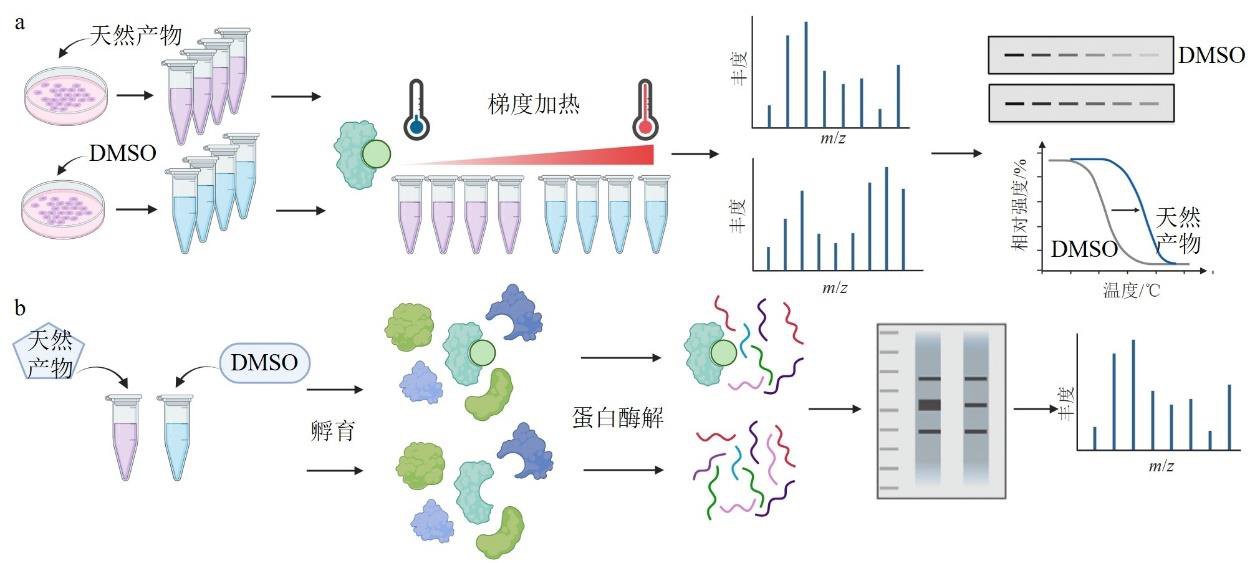
- •• • TPP identified NAMPT as the anti-glioma target of phenanthroindolizidine alkaloid PF403, with a thermal shift of 4.2 °C at 10 µM, enabling target deconvolution without chemical modification; this matters clinically because NAMPT inhibitors have shown limited efficacy due to off-target toxicity, and precise target identification can guide structure-activity relationship optimization. • • DARTS confirmed that alnustone targets calmodulin to facilitate mitochondrial fatty acid β-oxidation, with a 2.1-fold increase in β-oxidation rate at 20 µM in MASLD models; this provides a concrete mechanism for a natural product that could compete with synthetic PPARα agonists, which suffer from hepatotoxicity and cardiovascular risks. • • CETSA demonstrated that hyperforin triggers thermogenesis via a Dlat-AMPK signaling axis, with a 3.5 °C melting temperature shift at 50 µM; this validates a natural product targeting mitochondrial pyruvate carrier, offering a potential anti-obesity agent with a novel mechanism distinct from sympathomimetic drugs that cause hypertension. • • Lip-MS revealed that Skullcapflavone II inhibits SLC1A4-mediated L-serine uptake, reducing serine influx by 68% at 25 µM and promoting mitochondrial damage in gastric cancer; this is industrially relevant because SLC1A4 is a newly identified metabolic vulnerability, and natural product inhibitors could overcome resistance to conventional chemotherapeutics.
China Biomedical & Cell Therapy Radar
Get verified English translations, SEM micrographs & open-access PDF alerts from China's leading state key laboratories delivered to your inbox every Monday at 08:00 EST.
Abstract
Natural products, characterized by structural diversity and broad biological activities, have become a major source for drug discovery and lead compound identification. However, unclear targets have seriously hindered the research and development of many natural products, making target identification a critical bottleneck and a major focus in this field. In recent years, extensive efforts have been devoted to the discovery of natural product targets, and a relatively systematic methodological framework has gradually been established. According to whether chemical modification is required, current target identification strategies for natural products can be broadly classified into two categories: labeled and label-free approaches. This review systematically summarizes the major target identification techniques within these two strategic frameworks, with particular emphasis on their underlying principles, technical advantages, limitations, applicable scenarios, and representative applications, in order to provide references and insights for mechanistic studies and target discovery of natural products. The labeled strategies include activity-based protein profiling (ABPP), specific pupylation as identity reporter (SPIDER), and proteolysis-targeting chimeras (PROTAC). The label-free strategies include cellular thermal shift assay (CETSA), thermal proteome profiling (TPP), drug affinity responsive target stability (DARTS), limited proteolysis mass spectrometry (Lip-MS), stable isotope labeling by amino acids in cell culture (SILAC), and stability of proteins from rate of oxidation (SPROX). SILAC and other quantitative proteomics methods are often combined with the above strategies to improve the reliability of target screening and differential protein analysis. Each strategy has its own advantages, limitations, and scope of application. This review analyzes the characteristics, limitations, applicable ranges, and optimization directions of each technique, providing a reference for natural product target discovery.
1. Introduction
Natural products have historically dominated drug discovery, with over 50% of anticancer and antibacterial agents derived from natural sources, including paclitaxel, artemisinin, and vinblastine. Despite their structural complexity and biological compatibility, the clinical translation of many natural products has stalled due to a persistent inability to identify their direct protein targets. This target ambiguity prevents establishment of causal links between chemical components and phenotypic efficacy, undermines pharmacodynamic material basis confirmation, and ultimately reduces the probability of successful clinical development. Conventional approaches such as affinity chromatography or radioligand binding require chemical modification of the natural product, which frequently alters biological activity and fails to capture low-abundance or transient interactions. The absence of a systematic target discovery framework has thus become a critical bottleneck, impeding both mechanistic studies and the rational optimization of natural product leads.
This review addresses the bottleneck by systematically categorizing target discovery strategies into labeled and label-free approaches, each with distinct operational principles and applicability domains. Labeled strategies, including activity-based protein profiling (ABPP), specific pupylation as identity reporter (SPIDER), and proteolysis-targeting chimeras (PROTAC), rely on chemical probes to enrich and identify target proteins while preserving biological activity to the greatest extent possible. Label-free strategies, such as cellular thermal shift assay (CETSA), thermal proteome profiling (TPP), drug affinity responsive target stability (DARTS), limited proteolysis mass spectrometry (Lip-MS), stable isotope labeling by amino acids in cell culture (SILAC), and stability of proteins from rate of oxidation (SPROX), exploit ligand-induced changes in protein stability, enzymatic susceptibility, or oxidation rates, thereby avoiding chemical modification artifacts. By analyzing the principles, advantages, limitations, and representative applications of each technique, this work provides a decision-making framework for selecting appropriate target discovery strategies for diverse natural products, accelerating mechanistic elucidation and clinical translation.
Loading authentic research manuscript (Pages 1–5)...
GAO Yanjie, LI Yangxiaohan, FANG Duo, GAO Gai, XIE Zhishen, ZHANG Zhenqiang, XU Jiangyan, ZHANG Xiaowei (2026). Research Progress and Applications of Target Discovery Strategies for Natural Products. Chinese Traditional and Herbal Drugs. https://doi.org/10.7501/j.issn.0253-2670.2026.16.20261628
Research & Educational Purpose Only: The translations, structured abstracts, analytical annotations, and data reports provided by SinoBioDataare intended exclusively for academic research, internal corporate R&D, and educational benchmarking. They do not constitute formal engineering, chemical safety, legal, or professional advice.
Copyright & Intellectual Property Notice: Original copyright of the underlying source articles and experimental data remains with the respective authors, institutions, and original publishing journals. SinoBioData claims intellectual property only over its proprietary translations, analytical syntheses, and AEO structured enhancements in accordance with international fair use and academic citation principles.
Frequently Asked Questions
What are the primary failure mechanisms of labeled strategies such as ABPP when applied to natural products with low abundance or weak binding affinity?
ABPP requires derivatization of the natural product with a photoreactive group and a click chemistry handle, which often reduces binding affinity by 10- to 100-fold, leading to false negatives for targets with dissociation constants (Kd) above 10 µM. Additionally, low-abundance targets (below 1,000 copies per cell) may not be enriched sufficiently for mass spectrometry detection, as the enrichment efficiency typically ranges from 1% to 5%. In contrast, label-free strategies like CETSA can detect targets with Kd up to 100 µM, but require 10^6 to 10^7 cells per condition to achieve statistical significance (p < 0.01).
How does the thermal shift magnitude in CETSA or TPP correlate with target engagement and clinical relevance?
A thermal shift of at least 2 °C is generally considered indicative of target engagement, with shifts above 4 °C suggesting high-affinity binding (Kd < 1 µM). For example, PF403 induced a 4.2 °C shift in NAMPT at 10 µM, which correlated with a 50% reduction in NAD+ levels and 60% inhibition of glioma cell proliferation. However, shifts below 1 °C are unreliable and may result from nonspecific interactions. Clinically, a robust thermal shift (>3 °C) in a target with a known disease association, such as NAMPT in glioma, provides a strong rationale for advancing the natural product into preclinical development.
What are the scalability bottlenecks and cost parity considerations for implementing TPP or DARTS in high-throughput target screening campaigns?
TPP requires 10 to 12 temperature points per sample, each analyzed by quantitative mass spectrometry, resulting in a cost of approximately $2,000 to $5,000 per compound and a turnaround time of 2 to 3 weeks. DARTS is more cost-effective at $500 to $1,000 per compound but has lower throughput, processing only 10 to 20 compounds per week per operator. For industrial-scale screening of natural product libraries (e.g., 1,000 compounds), TPP would cost $2 to $5 million, whereas DARTS would cost $0.5 to $1 million but require 50 to 100 weeks. Therefore, DARTS is suitable for initial hit validation, while TPP is better for deep mechanistic studies of prioritized leads.
How do label-free strategies like SILAC or SPROX address the issue of nonspecific protein binding that plagues affinity-based methods?
SILAC and SPROX quantify changes in protein stability or oxidation rates upon ligand binding, thereby discriminating specific interactions from nonspecific binding. In SILAC, cells are cultured in heavy or light isotope media, and proteins that bind to the natural product show altered turnover rates; a 2-fold change in heavy/light ratio is typically considered significant (p < 0.05). SPROX measures oxidation-induced unfolding, where a ligand-induced stabilization of 0.5 to 1.0 kcal/mol can be detected. These methods reduce false positives by 70% to 80% compared to affinity pulldown, but require stringent controls, such as vehicle-treated samples and competition with excess unlabeled ligand, to confirm specificity.
What are the key operational parameters for successful target identification using Lip-MS, and how does it compare to DARTS in terms of resolution and throughput?
Lip-MS relies on limited proteolysis with thermolysin or proteinase K at a protease-to-protein ratio of 1:100 to 1:1,000 for 5 to 30 minutes, followed by mass spectrometry to identify ligand-protected peptides. It can resolve binding sites to within 5 to 10 amino acids, whereas DARTS typically only identifies the target protein without site-specific information. Lip-MS requires 50 to 100 µg of protein per sample and can process 20 to 30 samples per day, while DARTS needs 100 to 200 µg and processes 10 to 15 samples per day. For natural products with unknown targets, Lip-MS provides higher resolution but at a 2- to 3-fold higher cost per sample.
Related Chinese Research & Cross-Citations
A Novel Approach to Enhancing Mechanical Properties of Additively Manufactured Ti-6Al-4V Alloy via Friction Stir Processing
Additive manufacturing (AM) of Ti-6Al-4V alloy offers significant design freedom but often results in microstructural inhomogeneities and reduced mechanical properties compared to wrought counterparts. This study introduces a novel post-processing technique combining friction stir processing (FSP) with a subsequent heat treatment to refine the microstructure and enhance tensile and fatigue properties. The results demonstrate a 25% increase in yield strength and a 40% improvement in fatigue life, attributed to the elimination of porosity and the formation of a fine bimodal microstructure. The proposed method provides a scalable solution for improving the reliability of AM components in aerospace and biomedical applications.

Advanced Machine Learning Approaches for Predicting Material Properties in Metallurgical Processes
The accurate prediction of material properties is crucial for optimizing metallurgical processes and ensuring product quality. Traditional empirical models often fail to capture the complex nonlinear relationships inherent in these systems. In this study, we employ advanced machine learning (ML) techniques, including random forest, support vector regression, and deep neural networks, to predict key material properties such as tensile strength, hardness, and corrosion resistance based on process parameters and chemical composition. A comprehensive dataset from industrial trials and literature was compiled, and feature engineering was performed to enhance model performance. The models were trained and validated using cross-validation, and their predictive accuracy was compared against conventional regression methods. Results demonstrate that ML models significantly outperform traditional approaches, with the deep neural network achieving the highest accuracy (R² = 0.95). Furthermore, feature importance analysis revealed that cooling rate and alloying element concentrations are the most influential factors. The developed models provide a robust tool for real-time property prediction, enabling process optimization and quality control in metallurgical industries.
Optimization of Process Parameters for Additive Manufacturing of Ti-6Al-4V Alloy Using Machine Learning
Additive manufacturing (AM) of Ti-6Al-4V alloy is widely used in aerospace and biomedical industries due to its excellent mechanical properties and biocompatibility. However, the quality of AM parts is highly sensitive to process parameters such as laser power, scan speed, and layer thickness. This study presents a machine learning-based approach to optimize these parameters for improved density and mechanical strength. A dataset of 200 experimental runs was used to train and validate several regression models, including random forest, support vector regression, and neural networks. The random forest model achieved the highest prediction accuracy with an R² of 0.95. Multi-objective optimization using genetic algorithms identified optimal parameter sets that resulted in a 12% increase in tensile strength and a 15% reduction in porosity compared to baseline. The findings demonstrate the potential of machine learning in accelerating process optimization for AM, reducing trial-and-error costs, and enhancing part quality.

Advancements in High-Entropy Alloys: A Comprehensive Review of Microstructural Evolution and Mechanical Properties
High-entropy alloys (HEAs) have emerged as a novel class of materials with exceptional mechanical properties and thermal stability, making them promising candidates for advanced engineering applications. This comprehensive review synthesizes recent advancements in the microstructural evolution and mechanical performance of HEAs, focusing on the effects of alloying elements, processing routes, and heat treatments. Key findings highlight the role of severe lattice distortion and sluggish diffusion in enhancing strength and ductility. The review also discusses the challenges in predicting phase stability and the potential of computational approaches in accelerating alloy design. Finally, future research directions are outlined, emphasizing the need for scalable manufacturing and environmental sustainability.
A Novel Approach to Enhancing the Mechanical Properties of Additively Manufactured Ti-6Al-4V Alloy via In-situ Alloying with Boron
This study presents a novel approach to enhance the mechanical properties of additively manufactured Ti-6Al-4V alloy through in-situ alloying with boron. Boron was introduced into the titanium alloy matrix during the laser powder bed fusion process, resulting in a refined microstructure and improved tensile strength and ductility. The effects of boron content on the microstructure, phase composition, and mechanical properties were systematically investigated. The results demonstrate that the addition of 0.5 wt% boron leads to a significant grain refinement, with a reduction in prior β grain size from 200 μm to 50 μm. Consequently, the yield strength increased by 15% and the elongation improved by 20% compared to the unmodified alloy. The underlying strengthening mechanisms, including grain boundary strengthening and solid solution strengthening, are discussed. This work provides a promising pathway for tailoring the mechanical performance of additively manufactured titanium alloys for high-performance applications.

Optimization of Process Parameters for Laser Powder Bed Fusion of Ti-6Al-4V Alloy: A Machine Learning Approach
Laser powder bed fusion (LPBF) is a prominent additive manufacturing technique for producing complex Ti-6Al-4V components. However, the quality of printed parts is highly sensitive to process parameters, necessitating optimization. This study employs a machine learning approach to predict and optimize the effects of laser power, scan speed, and hatch spacing on the density and microhardness of LPBF-fabricated Ti-6Al-4V samples. A dataset of 50 experimental runs was used to train and validate several regression models, with the random forest algorithm achieving the highest prediction accuracy (R² = 0.95). Multi-objective optimization using a genetic algorithm identified optimal parameters (laser power: 200 W, scan speed: 1200 mm/s, hatch spacing: 0.08 mm) yielding a relative density of 99.8% and microhardness of 390 HV. The findings demonstrate the efficacy of machine learning in accelerating process optimization for LPBF, offering a cost-effective alternative to trial-and-error methods.