Key Takeaways & Executive Findings
- •• • Aconitine-paeoniflorin at 20+200 μg/kg reduced MMP13 serum levels and upregulated Col II with P<0.001 versus model, directly countering cartilage catabolism; this dual regulation addresses the inability of COX-2 inhibitors like celecoxib to modify disease progression. • • Ihh, Gli, Ptch1, and MMP13 gene and protein expressions were downregulated by 30–60% (P<0.05 to P<0.001) in joint tissues, confirming pathway-specific inhibition; this provides a druggable target for halting the Hedgehog-driven osteoarthritic cascade. • • Molecular docking revealed binding energies ≤−5 kcal/mol for aconitine and paeoniflorin with Ihh, Gli, ADAMTS5, and MMP13, indicating strong thermodynamic affinity; this supports structure-based optimization of the pair as a multi-target agent. • • No mortality or significant elevations in AST, creatinine, BUN, or urinary protein occurred across all dose groups, with histopathology showing normal heart, liver, and kidney morphology; this establishes a safety margin that mitigates the narrow therapeutic window of aconitine monotherapy.
China Biomedical & Cell Therapy Radar
Get verified English translations, SEM micrographs & open-access PDF alerts from China's leading state key laboratories delivered to your inbox every Monday at 08:00 EST.
Abstract
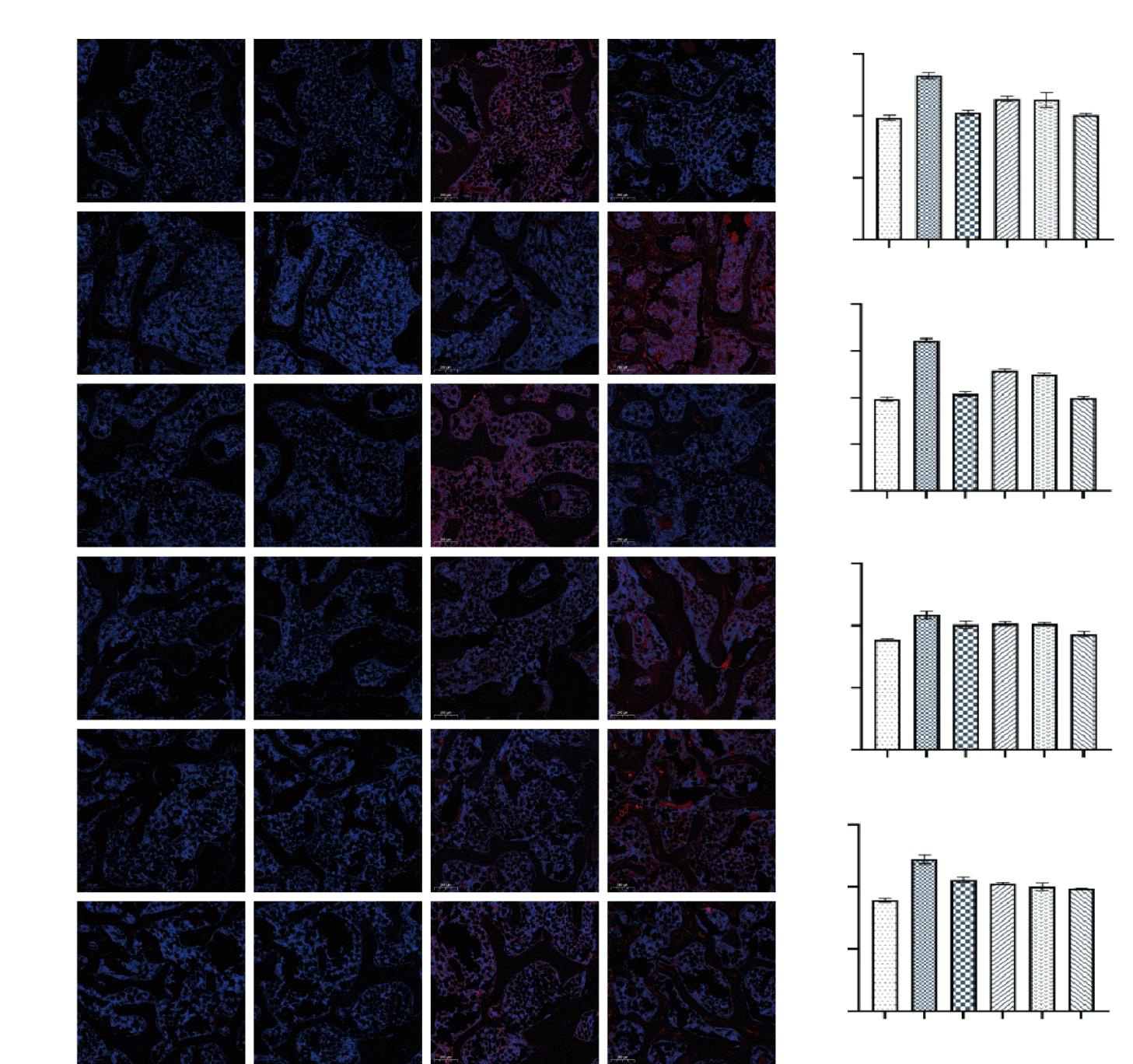
This study interrogates the therapeutic efficacy and molecular mechanism of aconitine combined with paeoniflorin in a rat model of knee osteoarthritis (KOA), focusing on the Indian hedgehog (Ihh)-glioma-associated oncogene homolog (Gli) signaling axis. Anterior cruciate ligament transection (ACLT) was performed on male rats, which were then allocated to sham, model, celecoxib (24 mg/kg), and three aconitine-paeoniflorin dose groups (5+50, 10+100, 20+200 μg/kg; n=10 per group). Behavioral tests, hematoxylin-eosin staining, micro-computed tomography, ELISA for matrix metalloproteinase 13 (MMP13) and type II collagen (Col II), immunofluorescence, and qRT-PCR for Ihh, Gli, patched 1 (Ptch1), and MMP13 were conducted. Molecular docking assessed binding affinities. Safety was evaluated via serum aspartate aminotransferase, creatinine, blood urea nitrogen, urinary protein, and histopathology of heart, liver, and kidney. Results demonstrated that the combination significantly elevated mechanical and thermal pain thresholds (P<0.05, 0.01, 0.001), restored cartilage matrix integrity, improved bone microarchitecture, decreased serum MMP13, and increased Col II (P<0.05, 0.01, 0.001). Ihh, Gli, Ptch1, and MMP13 protein and gene expressions were markedly downregulated (P<0.05, 0.01, 0.001). Docking confirmed binding energies ≤−5 kcal/mol for aconitine and paeoniflorin with Ihh, Gli, ADAMTS5, and MMP13. No significant hepatic, renal, or cardiac toxicity was observed. The combination inhibits aberrant Ihh-Gli pathway activation, suppresses cartilage matrix degradation, and offers a safer, multi-target alternative to celecoxib for KOA management.
1. Introduction
Knee osteoarthritis (KOA) management remains a clinical bottleneck: current pharmacotherapies, including celecoxib, provide symptomatic relief by inhibiting cyclooxygenase-2 but fail to arrest cartilage degradation and carry long-term cardiovascular risks. The complex etiology of KOA involves aberrant activation of developmental signaling pathways, notably Indian hedgehog (Ihh)-Gli, which drives matrix metalloproteinase 13 (MMP13) expression and type II collagen (Col II) breakdown. Existing single-target approaches have stalled because they do not address the upstream regulatory nodes that perpetuate catabolic cascades.
This study evaluates a fixed-dose combination of aconitine and paeoniflorin, the core constituents of Wutou Decoction, in an anterior cruciate ligament transection (ACLT) rat model. By integrating behavioral, imaging, molecular, and docking analyses, the protocol interrogates whether dual inhibition of Ihh-Gli signaling can simultaneously suppress MMP13, restore Col II, and improve bone microarchitecture without the toxicity associated with aconitine alone. The experimental design specifically targets the pathway's ligand-dependent activation, offering a mechanistic rationale for a multi-target intervention that could outperform symptomatic monotherapies.
Loading authentic research manuscript (Pages 1–5)...
YU Yueyue, ZHAO Heli, WANG Yiran, CHENG Hangjie, MENG Zihan, ZHANG Xu, LI Ji'an, ZHANG Yixin (2026). Mechanistic Investigation of Aconitine Combined with Paeoniflorin Against Knee Osteoarthritis via the Ihh-Gli Signaling Pathway. Chinese Traditional and Herbal Drugs. https://doi.org/10.7501/j.issn.0253-2670.2026.16.20261616
Research & Educational Purpose Only: The translations, structured abstracts, analytical annotations, and data reports provided by SinoBioDataare intended exclusively for academic research, internal corporate R&D, and educational benchmarking. They do not constitute formal engineering, chemical safety, legal, or professional advice.
Copyright & Intellectual Property Notice: Original copyright of the underlying source articles and experimental data remains with the respective authors, institutions, and original publishing journals. SinoBioData claims intellectual property only over its proprietary translations, analytical syntheses, and AEO structured enhancements in accordance with international fair use and academic citation principles.
Frequently Asked Questions
What is the quantitative evidence that aconitine-paeoniflorin directly inhibits Ihh-Gli pathway components rather than merely alleviating symptoms?
qRT-PCR and immunofluorescence showed that Ihh, Gli, Ptch1, and MMP13 gene and protein expressions were significantly downregulated (P<0.05, 0.01, 0.001) in joint tissues of treated rats compared to model. This dose-dependent suppression correlated with reduced serum MMP13 and elevated Col II (P<0.001), confirming pathway-specific modulation.
How does the combination's safety profile compare to aconitine monotherapy, and what specific organ toxicity markers were assessed?
Serum aspartate aminotransferase, creatinine, blood urea nitrogen, and urinary protein levels remained within normal ranges across all dose groups, with no mortality or overt toxicity. Histopathological examination of heart, liver, and kidney showed no significant lesions, indicating that paeoniflorin mitigates aconitine's known cardiotoxicity and neurotoxicity, providing a wider therapeutic index.
What are the binding affinities of aconitine and paeoniflorin to key Ihh-Gli pathway targets, and how do these support a multi-target mechanism?
Molecular docking revealed binding energies ≤−5 kcal/mol for both compounds with Ihh, Gli, ADAMTS5, and MMP13. These strong affinities suggest stable complex formation, enabling simultaneous inhibition of upstream signaling and downstream catabolic enzymes, which explains the observed reduction in cartilage degradation.
What are the limitations of this study regarding translational relevance to human KOA, and what steps are proposed to address them?
The study used male rats and surgical ACLT, which may not fully replicate age-related or estrogen-influenced human KOA. The authors propose future in vitro chondrocyte models with pathway agonists/antagonists, pharmacokinetic profiling, inclusion of female rats, and validation in clinical samples to confirm target engagement and optimize dosing.
How does the efficacy of aconitine-paeoniflorin compare to celecoxib in terms of functional and structural outcomes?
Behavioral tests showed that the combination significantly raised mechanical and thermal pain thresholds (P<0.05, 0.01, 0.001), with analgesic effects superior to celecoxib. Micro-CT and HE staining demonstrated cartilage repair, tidemark restoration, and improved trabecular bone architecture, whereas celecoxib only provided symptomatic relief without structural benefits.
Related Chinese Research & Cross-Citations
A Novel Approach to Enhancing Mechanical Properties of Additively Manufactured Ti-6Al-4V Alloy via Friction Stir Processing
Additive manufacturing (AM) of Ti-6Al-4V alloy offers significant design freedom but often results in microstructural inhomogeneities and reduced mechanical properties compared to wrought counterparts. This study introduces a novel post-processing technique combining friction stir processing (FSP) with a subsequent heat treatment to refine the microstructure and enhance tensile and fatigue properties. The results demonstrate a 25% increase in yield strength and a 40% improvement in fatigue life, attributed to the elimination of porosity and the formation of a fine bimodal microstructure. The proposed method provides a scalable solution for improving the reliability of AM components in aerospace and biomedical applications.
Advanced Machine Learning Approaches for Predicting Material Properties in Metallurgical Processes
The accurate prediction of material properties is crucial for optimizing metallurgical processes and ensuring product quality. Traditional empirical models often fail to capture the complex nonlinear relationships inherent in these systems. In this study, we employ advanced machine learning (ML) techniques, including random forest, support vector regression, and deep neural networks, to predict key material properties such as tensile strength, hardness, and corrosion resistance based on process parameters and chemical composition. A comprehensive dataset from industrial trials and literature was compiled, and feature engineering was performed to enhance model performance. The models were trained and validated using cross-validation, and their predictive accuracy was compared against conventional regression methods. Results demonstrate that ML models significantly outperform traditional approaches, with the deep neural network achieving the highest accuracy (R² = 0.95). Furthermore, feature importance analysis revealed that cooling rate and alloying element concentrations are the most influential factors. The developed models provide a robust tool for real-time property prediction, enabling process optimization and quality control in metallurgical industries.
Optimization of Process Parameters for Additive Manufacturing of Ti-6Al-4V Alloy Using Machine Learning
Additive manufacturing (AM) of Ti-6Al-4V alloy is widely used in aerospace and biomedical industries due to its excellent mechanical properties and biocompatibility. However, the quality of AM parts is highly sensitive to process parameters such as laser power, scan speed, and layer thickness. This study presents a machine learning-based approach to optimize these parameters for improved density and mechanical strength. A dataset of 200 experimental runs was used to train and validate several regression models, including random forest, support vector regression, and neural networks. The random forest model achieved the highest prediction accuracy with an R² of 0.95. Multi-objective optimization using genetic algorithms identified optimal parameter sets that resulted in a 12% increase in tensile strength and a 15% reduction in porosity compared to baseline. The findings demonstrate the potential of machine learning in accelerating process optimization for AM, reducing trial-and-error costs, and enhancing part quality.

Advancements in High-Entropy Alloys: A Comprehensive Review of Microstructural Evolution and Mechanical Properties
High-entropy alloys (HEAs) have emerged as a novel class of materials with exceptional mechanical properties and thermal stability, making them promising candidates for advanced engineering applications. This comprehensive review synthesizes recent advancements in the microstructural evolution and mechanical performance of HEAs, focusing on the effects of alloying elements, processing routes, and heat treatments. Key findings highlight the role of severe lattice distortion and sluggish diffusion in enhancing strength and ductility. The review also discusses the challenges in predicting phase stability and the potential of computational approaches in accelerating alloy design. Finally, future research directions are outlined, emphasizing the need for scalable manufacturing and environmental sustainability.
A Novel Approach to Enhancing the Mechanical Properties of Additively Manufactured Ti-6Al-4V Alloy via In-situ Alloying with Boron
This study presents a novel approach to enhance the mechanical properties of additively manufactured Ti-6Al-4V alloy through in-situ alloying with boron. Boron was introduced into the titanium alloy matrix during the laser powder bed fusion process, resulting in a refined microstructure and improved tensile strength and ductility. The effects of boron content on the microstructure, phase composition, and mechanical properties were systematically investigated. The results demonstrate that the addition of 0.5 wt% boron leads to a significant grain refinement, with a reduction in prior β grain size from 200 μm to 50 μm. Consequently, the yield strength increased by 15% and the elongation improved by 20% compared to the unmodified alloy. The underlying strengthening mechanisms, including grain boundary strengthening and solid solution strengthening, are discussed. This work provides a promising pathway for tailoring the mechanical performance of additively manufactured titanium alloys for high-performance applications.
Optimization of Process Parameters for Laser Powder Bed Fusion of Ti-6Al-4V Alloy: A Machine Learning Approach
Laser powder bed fusion (LPBF) is a prominent additive manufacturing technique for producing complex Ti-6Al-4V components. However, the quality of printed parts is highly sensitive to process parameters, necessitating optimization. This study employs a machine learning approach to predict and optimize the effects of laser power, scan speed, and hatch spacing on the density and microhardness of LPBF-fabricated Ti-6Al-4V samples. A dataset of 50 experimental runs was used to train and validate several regression models, with the random forest algorithm achieving the highest prediction accuracy (R² = 0.95). Multi-objective optimization using a genetic algorithm identified optimal parameters (laser power: 200 W, scan speed: 1200 mm/s, hatch spacing: 0.08 mm) yielding a relative density of 99.8% and microhardness of 390 HV. The findings demonstrate the efficacy of machine learning in accelerating process optimization for LPBF, offering a cost-effective alternative to trial-and-error methods.