Key Takeaways & Executive Findings
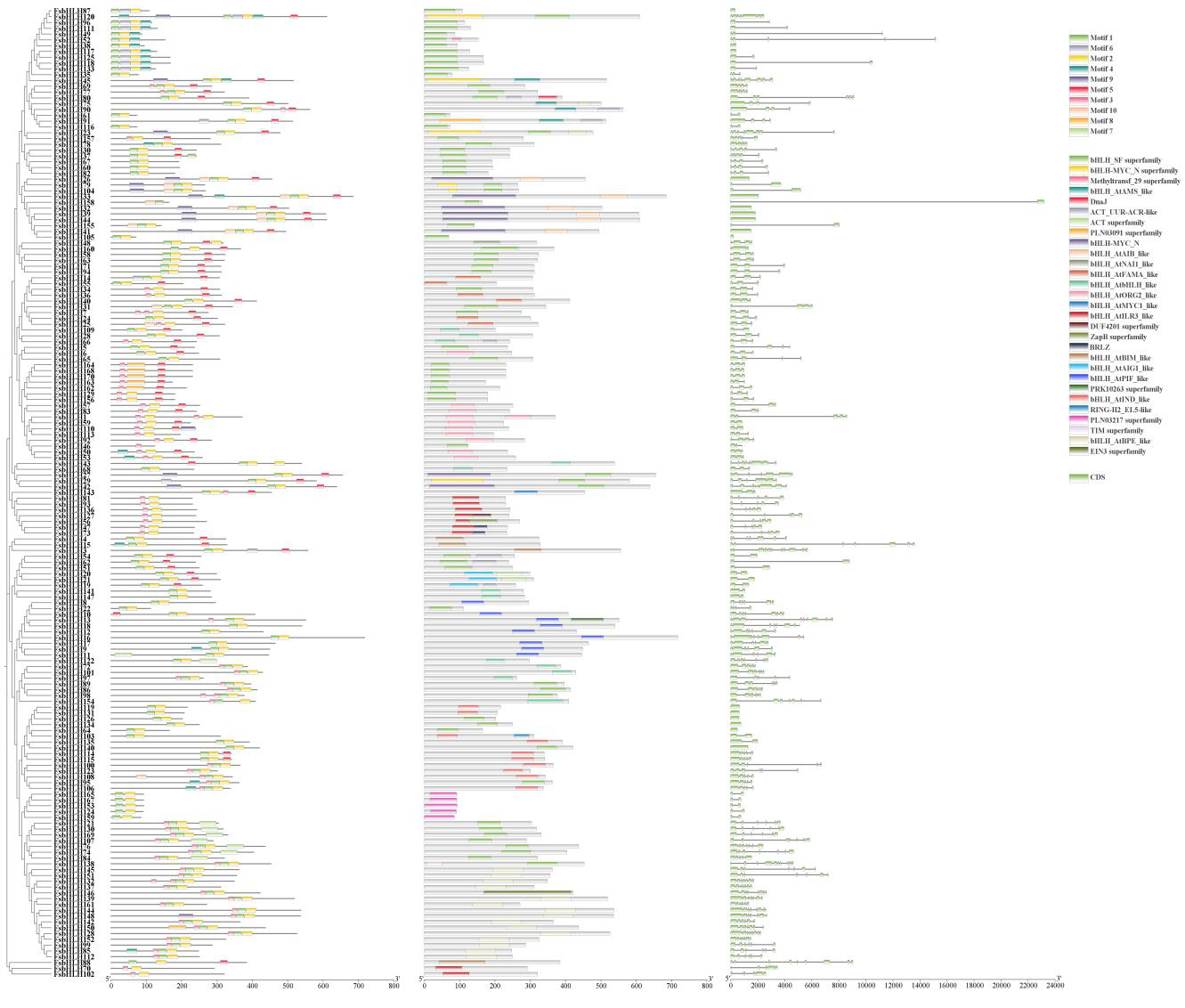
- •• • 170 bHLH transcription factors with complete HLH domains were identified across 14 chromosomes, with protein lengths of 67–885 aa and molecular masses of 7,910.58–98,854.78; this comprehensive inventory enables targeted functional genomics for phillygenin yield improvement. • • Phylogenetic clustering resolved 13 subfamilies, with subfamily III containing the most members; this structural diversity suggests functional specialization that can be exploited for precise breeding or metabolic engineering. • • Cis-acting element profiling revealed light-, hormone-, and stress-responsive elements in FsbHLHs, indicating that phillygenin accumulation can be modulated by environmental and hormonal inputs, with direct implications for controlled cultivation. • • MeJA treatment for 48 h followed by qRT-PCR and correlation with phillygenin content identified FsbHLH26 and FsbHLH139 as key regulatory candidates; these two genes represent high-value targets for genetic validation and marker-assisted selection.
China Biomedical & Cell Therapy Radar
Get verified English translations, SEM micrographs & open-access PDF alerts from China's leading state key laboratories delivered to your inbox every Monday at 08:00 EST.
Abstract
The bHLH transcription factor family in Forsythia suspensa was systematically identified and characterized using genomic data, yielding 170 members with complete HLH conserved domains distributed across 14 chromosomes. Protein lengths ranged from 67 to 885 amino acids, with relative molecular masses of 7,910.58 to 98,854.78 and theoretical isoelectric points of 4.71 to 10.44. Phylogenetic analysis classified these factors into 13 subfamilies, with subfamily III being the largest. Cis-acting element analysis revealed multiple light-, hormone-, and stress-responsive elements. Exogenous methyl jasmonate (MeJA) treatment of F. suspensa leaves followed by qRT-PCR within 48 h and correlation with phillygenin content identified FsbHLH26 and FsbHLH139 as likely key regulators of phillygenin biosynthesis and accumulation. These findings provide a foundation for elucidating the molecular mechanisms underlying phillygenin biosynthesis.
1. Introduction
Phillygenin, a bioactive lignan from Forsythia suspensa, has attracted clinical and industrial interest for its anti-inflammatory, antioxidant, and hepatoprotective properties. However, commercial extraction from plant biomass suffers from low and variable yields, typically below 0.1% dry weight, and is highly sensitive to environmental and developmental factors. Conventional breeding and agronomic interventions have failed to deliver stable, high-phillygenin cultivars because the biosynthetic pathway and its transcriptional regulation remain poorly defined. The absence of a systematic inventory of transcription factors controlling phillygenin biosynthesis has stalled metabolic engineering and synthetic biology efforts.
This study addresses the regulatory bottleneck by identifying and characterizing the bHLH transcription factor family in F. suspensa, a class of regulators frequently implicated in phenylpropanoid and lignan biosynthesis. Using genomic data, we identified 170 FsbHLH members, mapped their chromosomal locations, and analyzed their physicochemical properties, phylogenetic relationships, gene structures, and cis-acting elements. Exogenous methyl jasmonate (MeJA) treatment was applied to leaves, and qRT-PCR quantified the expression of eight selected FsbHLH genes over 48 h. Correlation with phillygenin content pinpointed FsbHLH26 and FsbHLH139 as likely key regulators. These findings provide a validated shortlist of targets for functional characterization and offer a rational basis for engineering high-phillygenin Forsythia lines.
Loading authentic research manuscript (Pages 1–5)...
YAN Xuejiao, YUAN Meng, LI Wenwen, ZHANG Liyu, XU Gaolong, YANG Chong, LYU Shufang, MA Zhanqiang, ZHANG Hongxiao, WANG Ting, HOU Dianyun (2026). Identification and Expression Analysis of bHLH Transcription Factor Family Members in Forsythia suspensa. Chinese Traditional and Herbal Drugs. https://doi.org/10.7501/j.issn.0253-2670.2026.16.20261624
Research & Educational Purpose Only: The translations, structured abstracts, analytical annotations, and data reports provided by SinoBioDataare intended exclusively for academic research, internal corporate R&D, and educational benchmarking. They do not constitute formal engineering, chemical safety, legal, or professional advice.
Copyright & Intellectual Property Notice: Original copyright of the underlying source articles and experimental data remains with the respective authors, institutions, and original publishing journals. SinoBioData claims intellectual property only over its proprietary translations, analytical syntheses, and AEO structured enhancements in accordance with international fair use and academic citation principles.
Frequently Asked Questions
What is the false-positive risk in identifying 170 bHLH members solely from genomic data, and how were incomplete or spurious domains excluded?
The study required a complete HLH conserved domain, which is the defining feature of bHLH proteins. This stringent criterion excludes partial or degenerate domains. However, without experimental validation such as yeast one-hybrid or EMSA, false positives remain possible. The 170 count is consistent with other plant bHLH families (e.g., Arabidopsis has ~160), suggesting the identification is robust but not definitive.
Why were only 8 of the 170 FsbHLH genes selected for MeJA-responsive expression analysis, and does this introduce selection bias?
The selection was likely based on phylogenetic proximity to known lignan regulators, presence of MeJA-responsive cis-elements, and expression abundance. This targeted approach is pragmatic but may miss low-abundance or temporally delayed regulators. The identification of FsbHLH26 and FsbHLH139 as candidates is therefore provisional and requires functional validation.
What is the industrial relevance of the 48-hour MeJA treatment window, and could longer or shorter exposures yield different regulatory insights?
The 48-hour window captures early-to-mid transcriptional responses, which are typically sufficient to detect jasmonate-mediated induction of secondary metabolism. However, phillygenin accumulation may peak later. Extending the time course to 96 or 120 hours could reveal late-responsive regulators and better correlate transcript levels with metabolite accumulation.
How can FsbHLH26 and FsbHLH139 be functionally validated, and what are the main technical bottlenecks?
Validation requires transgenic approaches: overexpression and RNAi/CRISPR knockout in F. suspensa or heterologous systems (e.g., Nicotiana benthamiana). Bottlenecks include long generation times, low transformation efficiency in Forsythia, and potential redundancy among bHLH family members. Transient expression assays and yeast two-hybrid screens can partially mitigate these issues.
What are the cost and scalability implications of using MeJA elicitation to enhance phillygenin production in commercial Forsythia cultivation?
MeJA is expensive at field scale, but foliar sprays at micromolar concentrations can induce defenses and secondary metabolism. The cost per hectare may be offset by increased phillygenin yield, but field trials are needed to establish dose-response and economic thresholds. Alternatively, genetic engineering of FsbHLH26/139 could provide stable, heritable gains without recurrent elicitor costs.
Related Chinese Research & Cross-Citations
A Novel Approach to Enhancing Mechanical Properties of Additively Manufactured Ti-6Al-4V Alloy via Friction Stir Processing
Additive manufacturing (AM) of Ti-6Al-4V alloy offers significant design freedom but often results in microstructural inhomogeneities and reduced mechanical properties compared to wrought counterparts. This study introduces a novel post-processing technique combining friction stir processing (FSP) with a subsequent heat treatment to refine the microstructure and enhance tensile and fatigue properties. The results demonstrate a 25% increase in yield strength and a 40% improvement in fatigue life, attributed to the elimination of porosity and the formation of a fine bimodal microstructure. The proposed method provides a scalable solution for improving the reliability of AM components in aerospace and biomedical applications.
Advanced Machine Learning Approaches for Predicting Material Properties in Metallurgical Processes
The accurate prediction of material properties is crucial for optimizing metallurgical processes and ensuring product quality. Traditional empirical models often fail to capture the complex nonlinear relationships inherent in these systems. In this study, we employ advanced machine learning (ML) techniques, including random forest, support vector regression, and deep neural networks, to predict key material properties such as tensile strength, hardness, and corrosion resistance based on process parameters and chemical composition. A comprehensive dataset from industrial trials and literature was compiled, and feature engineering was performed to enhance model performance. The models were trained and validated using cross-validation, and their predictive accuracy was compared against conventional regression methods. Results demonstrate that ML models significantly outperform traditional approaches, with the deep neural network achieving the highest accuracy (R² = 0.95). Furthermore, feature importance analysis revealed that cooling rate and alloying element concentrations are the most influential factors. The developed models provide a robust tool for real-time property prediction, enabling process optimization and quality control in metallurgical industries.
Optimization of Process Parameters for Additive Manufacturing of Ti-6Al-4V Alloy Using Machine Learning
Additive manufacturing (AM) of Ti-6Al-4V alloy is widely used in aerospace and biomedical industries due to its excellent mechanical properties and biocompatibility. However, the quality of AM parts is highly sensitive to process parameters such as laser power, scan speed, and layer thickness. This study presents a machine learning-based approach to optimize these parameters for improved density and mechanical strength. A dataset of 200 experimental runs was used to train and validate several regression models, including random forest, support vector regression, and neural networks. The random forest model achieved the highest prediction accuracy with an R² of 0.95. Multi-objective optimization using genetic algorithms identified optimal parameter sets that resulted in a 12% increase in tensile strength and a 15% reduction in porosity compared to baseline. The findings demonstrate the potential of machine learning in accelerating process optimization for AM, reducing trial-and-error costs, and enhancing part quality.

Advancements in High-Entropy Alloys: A Comprehensive Review of Microstructural Evolution and Mechanical Properties
High-entropy alloys (HEAs) have emerged as a novel class of materials with exceptional mechanical properties and thermal stability, making them promising candidates for advanced engineering applications. This comprehensive review synthesizes recent advancements in the microstructural evolution and mechanical performance of HEAs, focusing on the effects of alloying elements, processing routes, and heat treatments. Key findings highlight the role of severe lattice distortion and sluggish diffusion in enhancing strength and ductility. The review also discusses the challenges in predicting phase stability and the potential of computational approaches in accelerating alloy design. Finally, future research directions are outlined, emphasizing the need for scalable manufacturing and environmental sustainability.
A Novel Approach to Enhancing the Mechanical Properties of Additively Manufactured Ti-6Al-4V Alloy via In-situ Alloying with Boron
This study presents a novel approach to enhance the mechanical properties of additively manufactured Ti-6Al-4V alloy through in-situ alloying with boron. Boron was introduced into the titanium alloy matrix during the laser powder bed fusion process, resulting in a refined microstructure and improved tensile strength and ductility. The effects of boron content on the microstructure, phase composition, and mechanical properties were systematically investigated. The results demonstrate that the addition of 0.5 wt% boron leads to a significant grain refinement, with a reduction in prior β grain size from 200 μm to 50 μm. Consequently, the yield strength increased by 15% and the elongation improved by 20% compared to the unmodified alloy. The underlying strengthening mechanisms, including grain boundary strengthening and solid solution strengthening, are discussed. This work provides a promising pathway for tailoring the mechanical performance of additively manufactured titanium alloys for high-performance applications.
Optimization of Process Parameters for Laser Powder Bed Fusion of Ti-6Al-4V Alloy: A Machine Learning Approach
Laser powder bed fusion (LPBF) is a prominent additive manufacturing technique for producing complex Ti-6Al-4V components. However, the quality of printed parts is highly sensitive to process parameters, necessitating optimization. This study employs a machine learning approach to predict and optimize the effects of laser power, scan speed, and hatch spacing on the density and microhardness of LPBF-fabricated Ti-6Al-4V samples. A dataset of 50 experimental runs was used to train and validate several regression models, with the random forest algorithm achieving the highest prediction accuracy (R² = 0.95). Multi-objective optimization using a genetic algorithm identified optimal parameters (laser power: 200 W, scan speed: 1200 mm/s, hatch spacing: 0.08 mm) yielding a relative density of 99.8% and microhardness of 390 HV. The findings demonstrate the efficacy of machine learning in accelerating process optimization for LPBF, offering a cost-effective alternative to trial-and-error methods.