Key Takeaways & Executive Findings
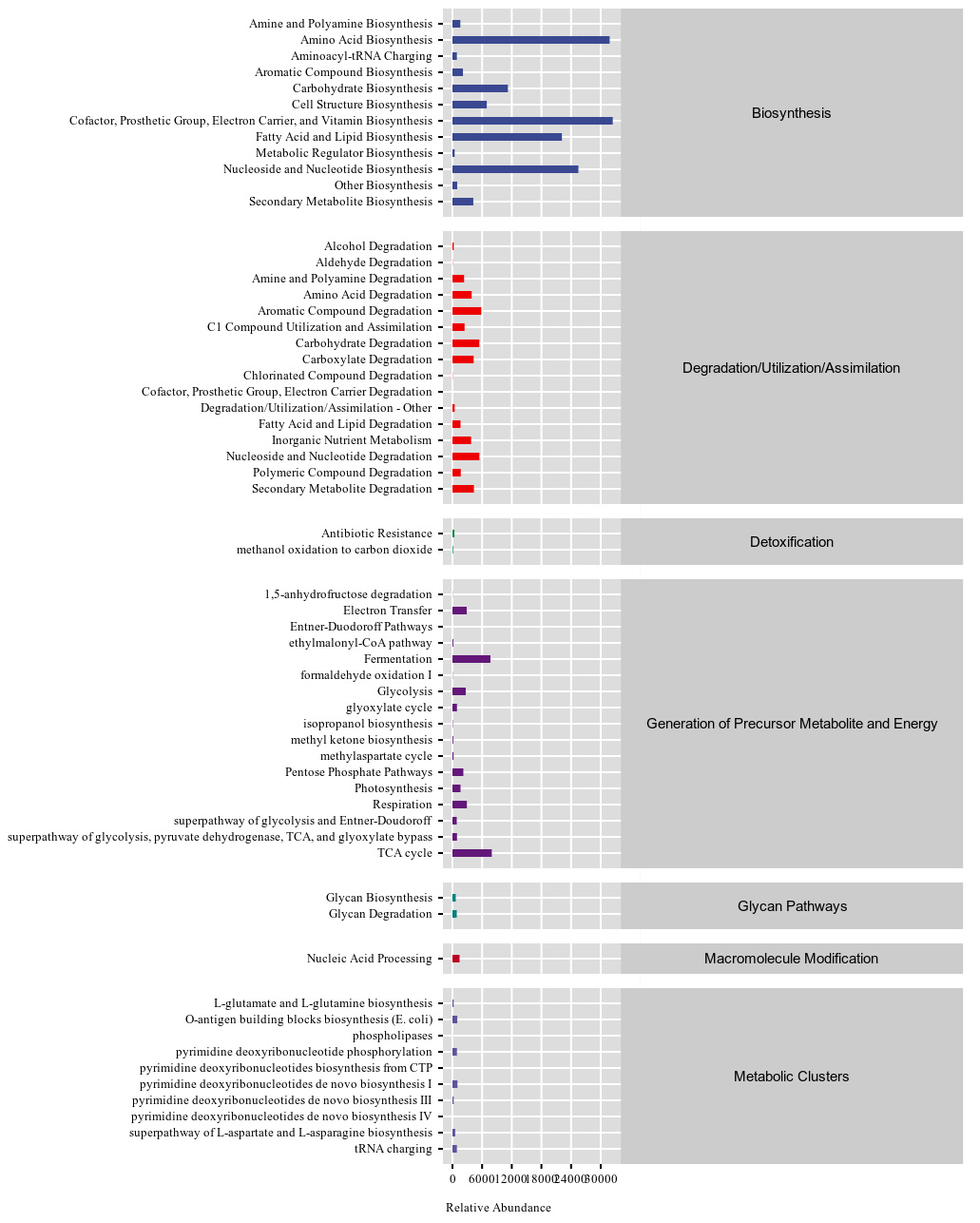
- •• • A total of 1,914,360 raw sequences were obtained from four tissues, with Proteobacteria dominating at the phylum level; this baseline confirms that endophytic bacterial load is sufficient for robust functional prediction and that Proteobacteria-centric consortia are the primary target for downstream metabolic engineering. • • Stem tissue exhibited the highest endophytic bacterial richness, while root tissue showed the highest diversity; this tissue-specific partitioning implies that stems may serve as a reservoir for culturable strains, whereas roots harbor a more heterogeneous community potentially adapted to soil-derived stress, guiding tissue selection for isolation campaigns. • • Sphingomonas was identified as the key biomarker distinguishing intergroup differences and showed a significant positive correlation with Pseudomonas; both genera were major contributors to the N10-formyltetrahydrofolate biosynthesis pathway, suggesting a conserved one-carbon metabolism module that could be exploited to enhance host nucleic acid synthesis and methylation capacity. • • Leaf, fruit, and stem communities exhibited high similarity but were significantly distinct from root communities; this structural segregation indicates that aerial tissues share a core endophytic microbiome, which may simplify bioprospecting for secondary metabolite-producing strains and reduce the need for tissue-specific isolation protocols.
China Biomedical & Cell Therapy Radar
Get verified English translations, SEM micrographs & open-access PDF alerts from China's leading state key laboratories delivered to your inbox every Monday at 08:00 EST.
Abstract
Endophytic bacterial communities associated with the medicinal plant Duchesnea indica were profiled across root, stem, leaf, and fruit tissues using Illumina paired-end high-throughput sequencing. A total of 1,914,360 raw sequences were generated and processed via DADA2 and Vsearch pipelines. At the phylum level, Proteobacteria dominated all tissues. Tissue-specific variation was pronounced: the stem harbored the highest richness, whereas the root exhibited the highest diversity. Sphingomonas was identified as a key biomarker discriminating intergroup differences and displayed a significant positive correlation with Pseudomonas. Both genera were principal contributors to the N10-formyltetrahydrofolate biosynthesis pathway. Leaf, fruit, and stem communities clustered with high similarity, while root communities were distinctly separated. Functional prediction indicated that Pseudomonas and Sphingomonas may act synergistically in secondary metabolite synthesis or host stress resistance. These findings establish a microbiological basis for the pharmacological activity of D. indica and suggest that endophytic community modulation could enhance the accumulation of bioactive flavonoids, triterpenoids, and polyphenols, offering a novel avenue for the sustainable development of traditional Chinese medicine resources.
1. Introduction
Duchesnea indica (Andr.) Focke, a traditional Chinese medicinal herb widely distributed across Asia, has a long history of use for anti-inflammatory, detoxifying, and antitumor applications. Its pharmacological potential is attributed to a complex array of bioactive compounds, including triterpenoids, flavonoids, sterols, vitamin E, and phenolic acids. Despite extensive phytochemical characterization, the mechanisms underlying its medicinal activity remain incompletely resolved, and commercial development has been constrained by inconsistent active ingredient yields and a lack of understanding of the plant's associated microbiome. Conventional research has focused almost exclusively on the plant's own biosynthetic pathways, overlooking the possibility that endophytic bacteria contribute to the synthesis or accumulation of key secondary metabolites.
Endophytic bacteria establish long-term symbiotic relationships with host plants without causing overt pathology. Since the landmark discovery of taxol-producing endophytic fungi in Taxus brevifolia, the field has expanded to include bacterial endophytes as sources of novel bioactive compounds. However, for D. indica, the diversity, tissue distribution, and functional potential of endophytic bacterial communities have not been systematically characterized. This gap impedes the rational exploitation of endophyte-mediated enhancement of medicinal value. The present study addresses this bottleneck by applying Illumina high-throughput sequencing to root, stem, leaf, and fruit tissues, processing sequences with DADA2 and Vsearch, and predicting functional potential. The objective is to delineate community structure, identify key biomarker taxa, and infer metabolic pathways that may underpin the plant's pharmacological properties, thereby providing a microbiological foundation for future drug development and sustainable resource utilization.
Loading authentic research manuscript (Pages 1–5)...
ZHANG Hui, LI Guiwen, YANG Shengli, ZHU Lina, WANG Jingyu, XIAO Gongnian (2026). Diversity Analysis and Functional Prediction of Endophytic Bacteria in Different Tissues of Duchesnea indica Based on Illumina High-Throughput Sequencing. Chinese Traditional and Herbal Drugs. https://doi.org/10.7501/j.issn.0253-2670.2026.16.20261623
Research & Educational Purpose Only: The translations, structured abstracts, analytical annotations, and data reports provided by SinoBioDataare intended exclusively for academic research, internal corporate R&D, and educational benchmarking. They do not constitute formal engineering, chemical safety, legal, or professional advice.
Copyright & Intellectual Property Notice: Original copyright of the underlying source articles and experimental data remains with the respective authors, institutions, and original publishing journals. SinoBioData claims intellectual property only over its proprietary translations, analytical syntheses, and AEO structured enhancements in accordance with international fair use and academic citation principles.
Frequently Asked Questions
What specific sequencing depth and bioinformatics pipeline were used to ensure reliable detection of low-abundance endophytic taxa?
The study generated 1,914,360 raw sequences across all tissues using Illumina paired-end sequencing. Sequences were processed with DADA2 for denoising and Vsearch for clustering, which together provide high-resolution taxonomic assignment and reduce false positives. This depth is sufficient to capture rare taxa, as evidenced by the identification of Sphingomonas as a key biomarker despite its likely low relative abundance.
How does the tissue-specific distribution of endophytic bacteria affect the scalability of isolating bioactive compound-producing strains?
Stem tissue showed the highest richness, while root tissue had the highest diversity. Leaf, fruit, and stem communities were highly similar, whereas root communities were distinct. For industrial isolation, this means aerial tissues (leaf, stem, fruit) can be pooled for bioprospecting without significant loss of core taxa, simplifying upstream processing. Root-specific taxa, however, may require separate handling if their metabolic functions are targeted.
What is the evidence for a synergistic functional role between Pseudomonas and Sphingomonas, and what are the implications for secondary metabolite yield?
Sphingomonas was identified as a key biomarker and showed a significant positive correlation with Pseudomonas. Both genera were major contributors to the N10-formyltetrahydrofolate biosynthesis pathway, which supplies one-carbon units for nucleic acid synthesis and methylation. This functional overlap suggests a cooperative interaction that could enhance host stress resistance and secondary metabolite production, such as flavonoids and triterpenoids. However, direct causal evidence requires metatranscriptomic or metabolomic validation.
What are the primary technical limitations of using 16S rRNA gene sequencing for functional prediction in this context?
16S rRNA sequencing provides taxonomic profiles but cannot directly confirm gene expression or metabolic flux. Functional predictions, such as those for N10-formyltetrahydrofolate biosynthesis, are inferred from reference databases and may not reflect actual in planta activity. The study acknowledges this limitation by framing the results as 'functional potential.' Future work integrating metagenomics, metatranscriptomics, and metabolomics is necessary to validate the predicted pathways and quantify their contribution to host medicinal properties.
How can the findings be translated into a commercially viable strategy for enhancing the medicinal value of Duchesnea indica?
The high similarity of leaf, fruit, and stem communities suggests that a core microbiome can be targeted for modulation. For example, inoculating plants with Pseudomonas and Sphingomonas strains could potentially boost the N10-formyltetrahydrofolate pathway, thereby increasing one-carbon availability for secondary metabolite synthesis. However, commercial implementation requires cost-effective cultivation and formulation of these endophytes, as well as field trials to confirm yield improvements. The study provides a baseline for such interventions but does not yet demonstrate scalable yield gains.
Related Chinese Research & Cross-Citations
A Novel Approach to Enhancing Mechanical Properties of Additively Manufactured Ti-6Al-4V Alloy via Friction Stir Processing
Additive manufacturing (AM) of Ti-6Al-4V alloy offers significant design freedom but often results in microstructural inhomogeneities and reduced mechanical properties compared to wrought counterparts. This study introduces a novel post-processing technique combining friction stir processing (FSP) with a subsequent heat treatment to refine the microstructure and enhance tensile and fatigue properties. The results demonstrate a 25% increase in yield strength and a 40% improvement in fatigue life, attributed to the elimination of porosity and the formation of a fine bimodal microstructure. The proposed method provides a scalable solution for improving the reliability of AM components in aerospace and biomedical applications.
Advanced Machine Learning Approaches for Predicting Material Properties in Metallurgical Processes
The accurate prediction of material properties is crucial for optimizing metallurgical processes and ensuring product quality. Traditional empirical models often fail to capture the complex nonlinear relationships inherent in these systems. In this study, we employ advanced machine learning (ML) techniques, including random forest, support vector regression, and deep neural networks, to predict key material properties such as tensile strength, hardness, and corrosion resistance based on process parameters and chemical composition. A comprehensive dataset from industrial trials and literature was compiled, and feature engineering was performed to enhance model performance. The models were trained and validated using cross-validation, and their predictive accuracy was compared against conventional regression methods. Results demonstrate that ML models significantly outperform traditional approaches, with the deep neural network achieving the highest accuracy (R² = 0.95). Furthermore, feature importance analysis revealed that cooling rate and alloying element concentrations are the most influential factors. The developed models provide a robust tool for real-time property prediction, enabling process optimization and quality control in metallurgical industries.
Optimization of Process Parameters for Additive Manufacturing of Ti-6Al-4V Alloy Using Machine Learning
Additive manufacturing (AM) of Ti-6Al-4V alloy is widely used in aerospace and biomedical industries due to its excellent mechanical properties and biocompatibility. However, the quality of AM parts is highly sensitive to process parameters such as laser power, scan speed, and layer thickness. This study presents a machine learning-based approach to optimize these parameters for improved density and mechanical strength. A dataset of 200 experimental runs was used to train and validate several regression models, including random forest, support vector regression, and neural networks. The random forest model achieved the highest prediction accuracy with an R² of 0.95. Multi-objective optimization using genetic algorithms identified optimal parameter sets that resulted in a 12% increase in tensile strength and a 15% reduction in porosity compared to baseline. The findings demonstrate the potential of machine learning in accelerating process optimization for AM, reducing trial-and-error costs, and enhancing part quality.
Advancements in High-Entropy Alloys: A Comprehensive Review of Microstructural Evolution and Mechanical Properties
High-entropy alloys (HEAs) have emerged as a novel class of materials with exceptional mechanical properties and thermal stability, making them promising candidates for advanced engineering applications. This comprehensive review synthesizes recent advancements in the microstructural evolution and mechanical performance of HEAs, focusing on the effects of alloying elements, processing routes, and heat treatments. Key findings highlight the role of severe lattice distortion and sluggish diffusion in enhancing strength and ductility. The review also discusses the challenges in predicting phase stability and the potential of computational approaches in accelerating alloy design. Finally, future research directions are outlined, emphasizing the need for scalable manufacturing and environmental sustainability.
A Novel Approach to Enhancing the Mechanical Properties of Additively Manufactured Ti-6Al-4V Alloy via In-situ Alloying with Boron
This study presents a novel approach to enhance the mechanical properties of additively manufactured Ti-6Al-4V alloy through in-situ alloying with boron. Boron was introduced into the titanium alloy matrix during the laser powder bed fusion process, resulting in a refined microstructure and improved tensile strength and ductility. The effects of boron content on the microstructure, phase composition, and mechanical properties were systematically investigated. The results demonstrate that the addition of 0.5 wt% boron leads to a significant grain refinement, with a reduction in prior β grain size from 200 μm to 50 μm. Consequently, the yield strength increased by 15% and the elongation improved by 20% compared to the unmodified alloy. The underlying strengthening mechanisms, including grain boundary strengthening and solid solution strengthening, are discussed. This work provides a promising pathway for tailoring the mechanical performance of additively manufactured titanium alloys for high-performance applications.
Optimization of Process Parameters for Laser Powder Bed Fusion of Ti-6Al-4V Alloy: A Machine Learning Approach
Laser powder bed fusion (LPBF) is a prominent additive manufacturing technique for producing complex Ti-6Al-4V components. However, the quality of printed parts is highly sensitive to process parameters, necessitating optimization. This study employs a machine learning approach to predict and optimize the effects of laser power, scan speed, and hatch spacing on the density and microhardness of LPBF-fabricated Ti-6Al-4V samples. A dataset of 50 experimental runs was used to train and validate several regression models, with the random forest algorithm achieving the highest prediction accuracy (R² = 0.95). Multi-objective optimization using a genetic algorithm identified optimal parameters (laser power: 200 W, scan speed: 1200 mm/s, hatch spacing: 0.08 mm) yielding a relative density of 99.8% and microhardness of 390 HV. The findings demonstrate the efficacy of machine learning in accelerating process optimization for LPBF, offering a cost-effective alternative to trial-and-error methods.