Key Takeaways & Executive Findings
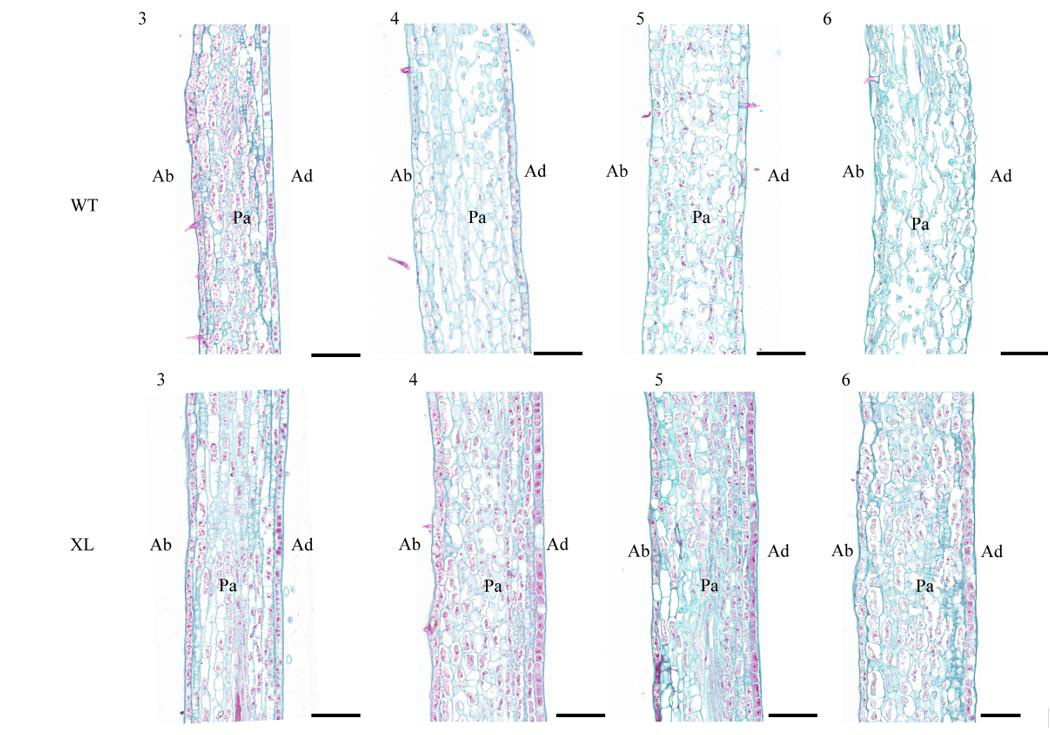
- •• • In the conventional (WT) cultivar, adaxial corolla epidermal cells exhibited a spatially sequential expansion pattern: basal cells expanded first, followed by middle cells, with adaxial expansion rates exceeding abaxial rates. In the Xianglei (XL) cultivar, adaxial cell expansion rates were significantly reduced (p < 0.01), and the degree of cell expansion was negligible. This cellular arrest directly accounts for the non-opening phenotype, which extends the bud stage and alters the harvest window for medicinal material, potentially affecting biomass accumulation and secondary metabolite profiles. • • Transcript profiling by qRT-PCR revealed that LmXTH6, LmXTH7, and LmXTH33 were highly expressed in WT during pre-anthesis and anthesis, but their expression was significantly suppressed in XL (p < 0.05). LmEXP7 peaked before corolla opening in WT, whereas its expression remained low in XL at the same stage. These data establish that the down-regulation of cell wall loosening enzymes (XTHs and EXP) is a primary molecular lesion underlying the non-opening trait, providing candidate targets for marker-assisted selection. • • Ruthenium red staining quantified by Image J showed that the overall degree of pectin de-methylesterification in XL corolla cell walls was higher than in WT, consistent with the elevated expression of LmPME28 and LmPME45 (p < 0.05). Increased de-methylesterification can promote calcium-mediated pectin cross-linking, enhancing cell wall rigidity. This biochemical shift likely acts in concert with reduced XTH/EXP activity to lock the corolla in a closed conformation, offering a mechanistic explanation for the prolonged bud stage. • • STRING-based protein-protein interaction network prediction identified potential interactions among LmXTHs, LmEXP7, and LmPMEs, suggesting a coordinated regulatory module. The inverse expression patterns—low XTH/EXP and high PME—indicate that the Xianglei phenotype arises from a coordinated cell wall remodeling program rather than a single gene defect. This multi-gene signature can be exploited for breeding programs aimed at manipulating flower opening time and improving mechanical harvestability or ornamental value.
China Biomedical & Cell Therapy Radar
Get verified English translations, SEM micrographs & open-access PDF alerts from China's leading state key laboratories delivered to your inbox every Monday at 08:00 EST.
Abstract
Dried flower buds or newly opened flowers of Lonicera macranthoides are used as Shanyinhua (Lonicerae Flos) for medicinal purposes. The Xianglei cultivar, developed from a natural mutant, exhibits a distinctive phenotype characterized by non-opening corolla and prolonged bud stage. This study aimed to elucidate the cellular and molecular mechanisms underlying this unique corolla phenotype. The flower of conventional cultivar (WT) and the Xianglei cultivar (XL) of L. macranthoides were used as materials. Corolla adaxial epidermal cells and longitudinal sections were observed using light microscopy. The expression patterns of xyloglucan endotransglucosylase/hydrolase genes (LmXTH6, LmXTH7, LmXTH33), expansin gene (LmEXP7), and pectin methylesterase genes (LmPME28, LmPME45) were analyzed by qRT-PCR. Protein-protein interaction networks were predicted using the STRING database. Ruthenium red staining coupled with Image J quantitative analysis was performed to assess the degree of pectin de-methylesterification in corolla cell walls. In the WT, the adaxial cells of corolla displayed a spatially sequential expansion, with the basal cells expanding first, followed by the middle cells. Moreover, the expansion rate of the adaxial cells is higher than that of the abaxial cells. In contrast, the expansion rate of adaxial cells in XL was significantly reduced, and the degree of cell expansion was not obvious. At the molecular level, LmXTH6, LmXTH7, and LmXTH33 were highly expressed in WT during the pre-anthesis and anthesis stages, but their expression was significantly inhibited in XL. LmEXP7 expression peaked before corolla opening in WT, while its expression was lower in XL during the same period. Ruthenium red staining results indicated that the overall degree of de-methylesterification in XL was higher than that in WT, consistent with the expression trends of LmPME28 and LmPME45. In conclusion, the non-opening corolla of the Xianglei cultivar is closely related to the inhibition of corolla cell expansion. The low expression of XTHs and EXP collectively leads to a decrease in the expansion capacity of Xianglei corolla cells, while the up-regulation of PMEs increases pectin de-methylesterification in the cell wall, potentially enhancing cell wall rigidity. The synergy of XTH/EXP-PME may be an important reason for the non-opening corolla of Xianglei, providing experimental evidence for the study of the regulatory mechanism of the excellent phenotype of Xianglei L. macranthoides and offering new insights into the cell wall regulatory mechanisms of plant floral organ morphogenesis.
1. Introduction
Lonicera macranthoides, a source of the traditional Chinese medicine Shanyinhua (Lonicerae Flos), is widely cultivated for its dried flower buds. The Xianglei cultivar, derived from a natural mutant, exhibits a distinctive non-opening corolla and a prolonged bud stage. This phenotype is agronomically significant because it extends the harvest window and may influence the accumulation of bioactive compounds. However, the cellular and molecular basis of this trait has remained undefined, impeding targeted breeding and quality control.
Previous studies on flower opening have largely focused on petal expansion in model species, implicating cell wall remodeling enzymes such as xyloglucan endotransglucosylase/hydrolases (XTHs), expansins (EXPs), and pectin methylesterases (PMEs). Yet, the specific roles of these genes in the non-opening phenotype of L. macranthoides have not been systematically investigated. This study integrates histological observation, qRT-PCR expression profiling, protein interaction prediction, and quantitative pectin de-methylesterification assays to dissect the cellular and molecular determinants of corolla non-opening. The findings reveal that suppressed cell expansion, driven by low XTH/EXP expression and elevated PME-mediated pectin de-methylesterification, underlies the Xianglei phenotype, providing a mechanistic framework for understanding floral organ morphogenesis and informing breeding strategies.
Loading authentic research manuscript (Pages 1–5)...
AO Zhijie, FU Xuesen, ZHOU Simin, QU Meiling, ZHU Jiayuan, YUAN Linxiang, ZHOU Ribao, LIU Xiangdan (2026). Correlation Research of Corolla Non-Opening Phenotype with Cell Morphology and XTH/EXP-PME Expression Characteristics in Lonicera macranthoides. Chinese Traditional and Herbal Drugs. https://doi.org/10.7501/j.issn.0253-2670.2026.16.20261622
Research & Educational Purpose Only: The translations, structured abstracts, analytical annotations, and data reports provided by SinoBioDataare intended exclusively for academic research, internal corporate R&D, and educational benchmarking. They do not constitute formal engineering, chemical safety, legal, or professional advice.
Copyright & Intellectual Property Notice: Original copyright of the underlying source articles and experimental data remains with the respective authors, institutions, and original publishing journals. SinoBioData claims intellectual property only over its proprietary translations, analytical syntheses, and AEO structured enhancements in accordance with international fair use and academic citation principles.
Frequently Asked Questions
What is the primary cellular mechanism responsible for the non-opening corolla in the Xianglei cultivar?
The non-opening phenotype is primarily due to a significant reduction in adaxial corolla epidermal cell expansion. In WT, adaxial cells expand sequentially from base to middle, with adaxial expansion exceeding abaxial. In XL, adaxial cell expansion rates are drastically reduced (p < 0.01), and cells fail to elongate, resulting in a closed corolla. This cellular arrest is driven by low expression of cell wall loosening genes (LmXTH6, LmXTH7, LmXTH33, LmEXP7) and elevated expression of pectin methylesterases (LmPME28, LmPME45), which increases cell wall rigidity.
How does the expression of XTH and EXP genes differ between WT and XL during flower opening?
In WT, LmXTH6, LmXTH7, and LmXTH33 are highly expressed during pre-anthesis and anthesis, while LmEXP7 peaks before corolla opening. In XL, these genes are significantly down-regulated (p < 0.05) at the same developmental stages. This suppression reduces xyloglucan endotransglycosylation and expansin-mediated wall loosening, impairing the cell wall extensibility required for corolla expansion.
What is the role of pectin methylesterases in the Xianglei phenotype?
LmPME28 and LmPME45 are up-regulated in XL, leading to increased pectin de-methylesterification in corolla cell walls, as confirmed by ruthenium red staining and Image J quantification. De-methylesterified pectin can form calcium cross-links, enhancing cell wall rigidity. This biochemical change counteracts cell expansion and contributes to the non-opening phenotype.
Can the XTH/EXP-PME expression signature be used as a molecular marker for breeding?
Yes. The inverse expression pattern—low XTH/EXP and high PME—is a consistent molecular signature of the Xianglei phenotype. These genes can serve as candidate markers for marker-assisted selection to predict corolla opening behavior, enabling breeders to select for desired flower morphology, harvest timing, and potentially improved medicinal quality.
What are the industrial implications of the prolonged bud stage in Xianglei?
The prolonged bud stage extends the harvest window, reducing labor pressure and allowing flexible scheduling. However, the non-opening corolla may affect the accumulation of secondary metabolites and biomass. Understanding the molecular basis allows for targeted manipulation of flowering time, potentially optimizing both yield and quality of Shanyinhua. Additionally, the closed corolla may offer protection against environmental stresses, but this requires further agronomic evaluation.
Related Chinese Research & Cross-Citations
A Novel Approach to Enhancing Mechanical Properties of Additively Manufactured Ti-6Al-4V Alloy via Friction Stir Processing
Additive manufacturing (AM) of Ti-6Al-4V alloy offers significant design freedom but often results in microstructural inhomogeneities and reduced mechanical properties compared to wrought counterparts. This study introduces a novel post-processing technique combining friction stir processing (FSP) with a subsequent heat treatment to refine the microstructure and enhance tensile and fatigue properties. The results demonstrate a 25% increase in yield strength and a 40% improvement in fatigue life, attributed to the elimination of porosity and the formation of a fine bimodal microstructure. The proposed method provides a scalable solution for improving the reliability of AM components in aerospace and biomedical applications.

Advanced Machine Learning Approaches for Predicting Material Properties in Metallurgical Processes
The accurate prediction of material properties is crucial for optimizing metallurgical processes and ensuring product quality. Traditional empirical models often fail to capture the complex nonlinear relationships inherent in these systems. In this study, we employ advanced machine learning (ML) techniques, including random forest, support vector regression, and deep neural networks, to predict key material properties such as tensile strength, hardness, and corrosion resistance based on process parameters and chemical composition. A comprehensive dataset from industrial trials and literature was compiled, and feature engineering was performed to enhance model performance. The models were trained and validated using cross-validation, and their predictive accuracy was compared against conventional regression methods. Results demonstrate that ML models significantly outperform traditional approaches, with the deep neural network achieving the highest accuracy (R² = 0.95). Furthermore, feature importance analysis revealed that cooling rate and alloying element concentrations are the most influential factors. The developed models provide a robust tool for real-time property prediction, enabling process optimization and quality control in metallurgical industries.

Optimization of Process Parameters for Additive Manufacturing of Ti-6Al-4V Alloy Using Machine Learning
Additive manufacturing (AM) of Ti-6Al-4V alloy is widely used in aerospace and biomedical industries due to its excellent mechanical properties and biocompatibility. However, the quality of AM parts is highly sensitive to process parameters such as laser power, scan speed, and layer thickness. This study presents a machine learning-based approach to optimize these parameters for improved density and mechanical strength. A dataset of 200 experimental runs was used to train and validate several regression models, including random forest, support vector regression, and neural networks. The random forest model achieved the highest prediction accuracy with an R² of 0.95. Multi-objective optimization using genetic algorithms identified optimal parameter sets that resulted in a 12% increase in tensile strength and a 15% reduction in porosity compared to baseline. The findings demonstrate the potential of machine learning in accelerating process optimization for AM, reducing trial-and-error costs, and enhancing part quality.

Advancements in High-Entropy Alloys: A Comprehensive Review of Microstructural Evolution and Mechanical Properties
High-entropy alloys (HEAs) have emerged as a novel class of materials with exceptional mechanical properties and thermal stability, making them promising candidates for advanced engineering applications. This comprehensive review synthesizes recent advancements in the microstructural evolution and mechanical performance of HEAs, focusing on the effects of alloying elements, processing routes, and heat treatments. Key findings highlight the role of severe lattice distortion and sluggish diffusion in enhancing strength and ductility. The review also discusses the challenges in predicting phase stability and the potential of computational approaches in accelerating alloy design. Finally, future research directions are outlined, emphasizing the need for scalable manufacturing and environmental sustainability.
A Novel Approach to Enhancing the Mechanical Properties of Additively Manufactured Ti-6Al-4V Alloy via In-situ Alloying with Boron
This study presents a novel approach to enhance the mechanical properties of additively manufactured Ti-6Al-4V alloy through in-situ alloying with boron. Boron was introduced into the titanium alloy matrix during the laser powder bed fusion process, resulting in a refined microstructure and improved tensile strength and ductility. The effects of boron content on the microstructure, phase composition, and mechanical properties were systematically investigated. The results demonstrate that the addition of 0.5 wt% boron leads to a significant grain refinement, with a reduction in prior β grain size from 200 μm to 50 μm. Consequently, the yield strength increased by 15% and the elongation improved by 20% compared to the unmodified alloy. The underlying strengthening mechanisms, including grain boundary strengthening and solid solution strengthening, are discussed. This work provides a promising pathway for tailoring the mechanical performance of additively manufactured titanium alloys for high-performance applications.

Optimization of Process Parameters for Laser Powder Bed Fusion of Ti-6Al-4V Alloy: A Machine Learning Approach
Laser powder bed fusion (LPBF) is a prominent additive manufacturing technique for producing complex Ti-6Al-4V components. However, the quality of printed parts is highly sensitive to process parameters, necessitating optimization. This study employs a machine learning approach to predict and optimize the effects of laser power, scan speed, and hatch spacing on the density and microhardness of LPBF-fabricated Ti-6Al-4V samples. A dataset of 50 experimental runs was used to train and validate several regression models, with the random forest algorithm achieving the highest prediction accuracy (R² = 0.95). Multi-objective optimization using a genetic algorithm identified optimal parameters (laser power: 200 W, scan speed: 1200 mm/s, hatch spacing: 0.08 mm) yielding a relative density of 99.8% and microhardness of 390 HV. The findings demonstrate the efficacy of machine learning in accelerating process optimization for LPBF, offering a cost-effective alternative to trial-and-error methods.