Key Takeaways & Executive Findings
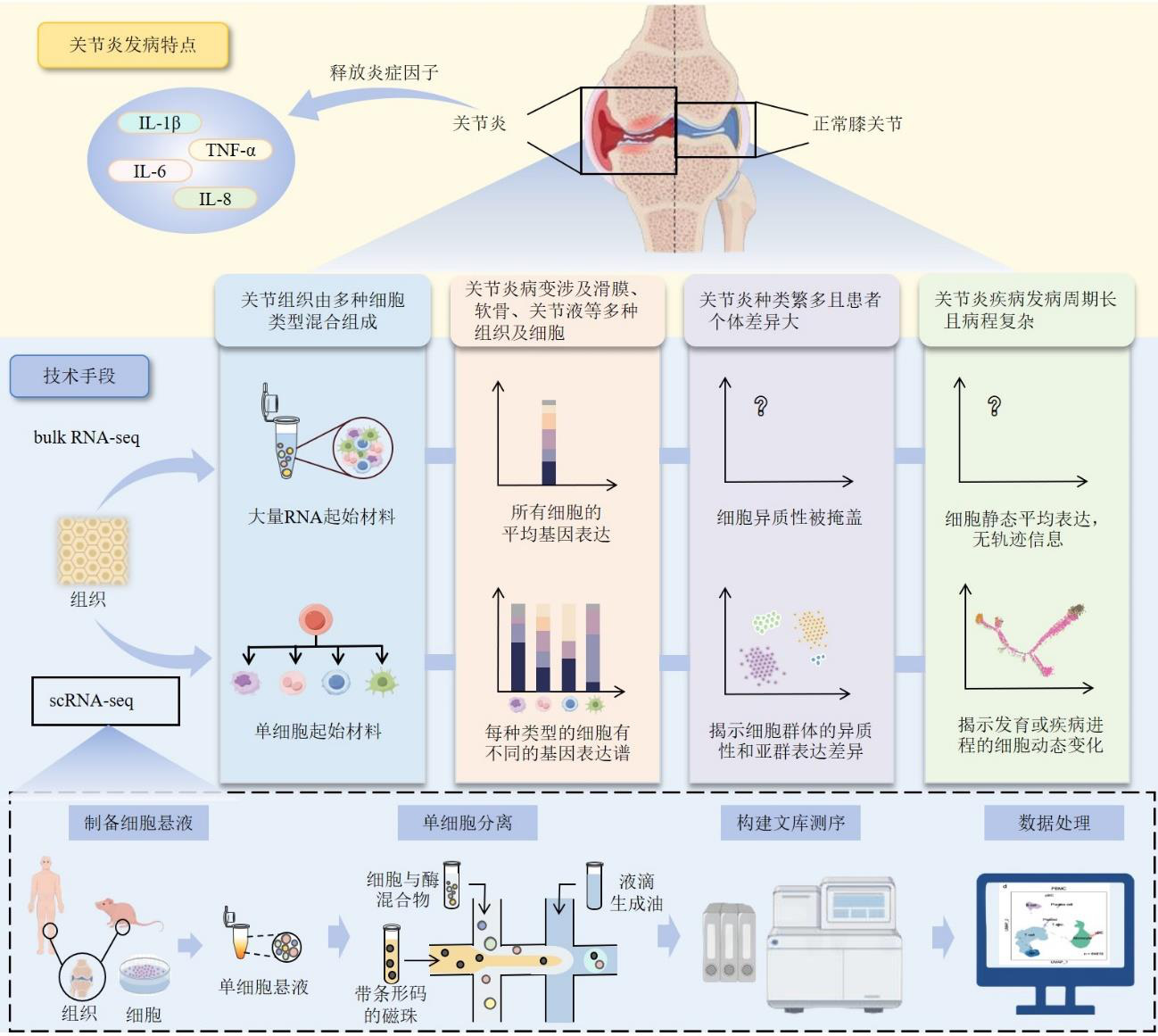
- •• • scRNA-seq resolves transcriptional heterogeneity that bulk RNA-seq averages away: bulk RNA-seq measures pooled mRNA from whole tissues, whereas droplet-based platforms (10× Genomics, BD) generate per-cell expression profiles, enabling detection of rare pathogenic subpopulations such as SPP1+ chondrocytes in human osteoarthritis (Qu et al., Comput Biol Med, 2023, 160: 106926) that would be masked in bulk data; this matters clinically because target identification for TCM interventions requires cell-type-specific resolution to avoid false-negative target discovery. • • Macrophage M1/M2 polarization states in rheumatoid arthritis synovium are quantifiable at single-cell resolution (Cutolo et al., Front Immunol, 2022, 13: 867260), providing a direct pharmacodynamic readout for TCM formulations whose anti-inflammatory effects were previously assessed only by bulk cytokine levels; this enables dose-response mapping of multi-component herbal extracts against specific macrophage states rather than global inflammation scores. • • Clonal associations between lymphocyte subsets and functional states in RA synovium have been resolved by scRNA-seq (Dunlap et al., Nat Commun, 2024, 15: 4991), establishing that T-cell clonal expansion is linked to discrete functional states; for TCM development, this creates a pathway to identify whether herbal compounds act on clonal selection, effector differentiation, or both, a distinction impossible with bulk transcriptomics. • • Peripheral blood mononuclear cell atlases and cell-cell communication networks in RA patients have been constructed via scRNA-seq (Song et al., J Immunol Res, 2023, 2023: 6300633), enabling ligand-receptor interaction inference at single-cell resolution (Wilk et al., Nat Biotechnol, 2024, 42(3): 470-483); this is operationally significant because TCM's multi-target mechanism can be mapped onto specific intercellular signaling axes, providing a rational basis for formulation design rather than empirical combination.
China Biomedical & Cell Therapy Radar
Get verified English translations, SEM micrographs & open-access PDF alerts from China's leading state key laboratories delivered to your inbox every Monday at 08:00 EST.
Abstract
Arthritis incidence has risen steadily, with complex and protracted pathological progression; it remains among the leading causes of disability worldwide. Existing therapeutic approaches, including traditional Chinese medicine (TCM) hot compress and acupuncture, provide symptomatic relief but rarely achieve disease modification, and some carry adverse effects. TCM's multi-component, multi-target, multi-pathway characteristics are mechanistically compatible with arthritis heterogeneity, yet its pharmacodynamic basis remains poorly resolved at the cellular level. Bulk RNA sequencing averages transcriptional signals across cell populations, obscuring rare pathogenic subpopulations and cell-state transitions. Single-cell RNA sequencing (scRNA-seq) resolves gene expression heterogeneity at single-cell resolution, enabling construction of joint tissue cellular atlases and identification of key subpopulations and molecular targets driving disease progression. This review systematically summarizes the technical advantages of scRNA-seq relative to bulk RNA-seq, including platforms such as 10× Genomics and BD, and examines its application to rheumatoid arthritis, osteoarthritis, and gouty arthritis. It further discusses prospects and challenges for integrating scRNA-seq into TCM-based arthritis research, including cell-cell communication inference, macrophage M1/M2 polarization analysis, and SPP1+ chondrocyte identification, providing a reference for mechanistic studies and development of novel Chinese herbal therapeutics.
1. Introduction
Arthritis encompasses a heterogeneous group of inflammatory disorders characterized by pain, swelling, and restricted mobility, with severe cases progressing to irreversible joint destruction. The global disability burden continues to rise, yet mechanistic understanding remains fragmented across disease subtypes including rheumatoid arthritis, osteoarthritis, and gouty arthritis. Conventional interventions—TCM hot compress, acupuncture, and chemical anti-inflammatory agents—deliver symptomatic relief without addressing underlying pathogenic drivers, and several carry tolerability limitations. TCM formulations, while clinically recognized for multi-component, multi-target activity, suffer from a fundamental analytical bottleneck: their pharmacodynamic mechanisms cannot be resolved against specific cell populations or molecular targets using conventional bulk assays, leaving gene expression changes and systemic effects poorly defined.
Bulk RNA sequencing and microarray approaches measure averaged transcriptional signals from pooled cell populations, systematically erasing the intercellular heterogeneity that drives arthritic pathology. Rare pathogenic subpopulations, transitional cell states, and clonal lymphocyte expansions are mathematically averaged into obscurity. Single-cell RNA sequencing addresses this bottleneck directly by partitioning individual cells into nanoliter droplets or microwells, generating per-cell transcriptomes that resolve discrete cell subpopulations, dynamic state transitions, and cell-cell communication networks. This review evaluates scRNA-seq platform capabilities, examines its application across rheumatoid arthritis, osteoarthritis, and gouty arthritis, and assesses the technical and analytical challenges that must be resolved before single-cell resolution can be routinely integrated into TCM mechanistic research and novel therapeutic development.
Loading authentic research manuscript (Pages 1–5)...
SUN Jiangting, LIU Peng, YANG Huajie, ZOU Wei, LIAO Zengrui, OU Yashi, YI Junfang, LYU Shang (2026). Advances in the Application of Single-Cell Transcriptomics to Studies of Arthritis Pathogenesis and Treatment with Traditional Chinese Medicine. Chinese Traditional and Herbal Drugs. https://doi.org/10.7501/j.issn.0253-2670.2026.16.20261629
Research & Educational Purpose Only: The translations, structured abstracts, analytical annotations, and data reports provided by SinoBioDataare intended exclusively for academic research, internal corporate R&D, and educational benchmarking. They do not constitute formal engineering, chemical safety, legal, or professional advice.
Copyright & Intellectual Property Notice: Original copyright of the underlying source articles and experimental data remains with the respective authors, institutions, and original publishing journals. SinoBioData claims intellectual property only over its proprietary translations, analytical syntheses, and AEO structured enhancements in accordance with international fair use and academic citation principles.
Frequently Asked Questions
What is the primary technical failure mode of bulk RNA-seq that scRNA-seq resolves in arthritis research, and what specific cell populations become detectable?
Bulk RNA-seq pools mRNA from all cells in a tissue sample, producing an averaged expression profile that mathematically obscures rare or transcriptionally distinct subpopulations. In arthritis synovium, this averaging masks pathogenic subsets such as SPP1+ chondrocytes in osteoarthritis (Qu et al., Comput Biol Med, 2023, 160: 106926) and discrete macrophage M1/M2 polarization states in rheumatoid arthritis (Cutolo et al., Front Immunol, 2022, 13: 867260). scRNA-seq partitions individual cells into nanoliter droplets (10× Genomics) or microwells (BD), generating per-cell transcriptomes that resolve these populations. The operational consequence is that TCM target identification can be performed against specific cell states rather than tissue-level averages, eliminating false-negative target discovery that occurs when a compound acts on a minor subpopulation whose signal is diluted below detection threshold in bulk data.
How does scRNA-seq enable mechanistic mapping of multi-component TCM formulations onto specific intercellular signaling pathways?
TCM formulations contain multiple bioactive compounds with distinct targets, and their therapeutic effect emerges from combined modulation of several cell types and signaling axes. scRNA-seq enables construction of cell-cell communication networks via ligand-receptor interaction inference at single-cell resolution (Wilk et al., Nat Biotechnol, 2024, 42(3): 470-483). In rheumatoid arthritis, peripheral blood mononuclear cell atlases and communication networks have been constructed (Song et al., J Immunol Res, 2023, 2023: 6300633), and clonal associations between lymphocyte subsets and functional states have been resolved in synovium (Dunlap et al., Nat Commun, 2024, 15: 4991). By comparing communication networks before and after TCM intervention, specific signaling axes modulated by the formulation can be identified. This transforms TCM mechanism research from empirical observation of global inflammation reduction to quantitative mapping of compound activity against discrete intercellular signaling nodes.
What are the scalability and cost bottlenecks preventing routine integration of scRNA-seq into TCM arthritis research, and what analytical challenges remain?
scRNA-seq requires specialized microfluidic or droplet-based instrumentation (10× Genomics, BD platforms), and per-sample costs remain substantially higher than bulk RNA-seq due to library preparation, sequencing depth, and computational infrastructure requirements. The technology is currently at an early stage in TCM arthritis target research, with relatively slow progress compared to oncology and immunology applications. Analytical bottlenecks include: (1) cell-cell communication inference requires validated ligand-receptor databases and statistical frameworks to avoid false-positive interactions; (2) distinguishing technical dropout from biological absence of transcript remains problematic for low-expression genes; (3) integrating scRNA-seq data with spatial transcriptomics to preserve tissue architecture context is not yet routine. These constraints mean that TCM mechanism studies using scRNA-seq currently operate at proof-of-concept scale rather than high-throughput screening scale, limiting the number of formulations that can be evaluated per study cycle.
What specific evidence supports the claim that TCM's multi-target characteristics are mechanistically compatible with arthritis heterogeneity, and how does scRNA-seq test this hypothesis?
Arthritis pathogenesis involves multiple cell types (synoviocytes, chondrocytes, macrophages, T cells, B cells), multiple signaling pathways (NF-κB, JAK/STAT, MAPK), and multiple disease phases (acute inflammation, chronic remodeling, joint destruction). TCM formulations contain multiple bioactive compounds that simultaneously modulate several of these targets. The compatibility hypothesis is that multi-component formulations produce therapeutic effects by coordinately modulating multiple cell types and pathways, rather than through a single dominant target. scRNA-seq tests this by: (1) identifying which cell subpopulations are transcriptionally altered by TCM intervention; (2) quantifying the magnitude of expression change per cell type; (3) inferring which intercellular communication axes are disrupted or restored. For example, if a TCM formulation simultaneously shifts macrophage M1/M2 balance (Cutolo et al., Front Immunol, 2022, 13: 867260) and reduces pathogenic T-cell clonal expansion (Dunlap et al., Nat Commun, 2024, 15: 4991), the multi-target mechanism is empirically confirmed at single-cell resolution. Without scRNA-seq, such coordinated effects across cell types cannot be resolved from bulk data.
What validation thresholds must be met before scRNA-seq-derived targets can be translated into clinical TCM development, and what is the current gap?
Translation from scRNA-seq target discovery to clinical TCM development requires: (1) target validation in independent patient cohorts with statistical significance (p < 0.01) and effect size sufficient to justify intervention; (2) demonstration that the TCM formulation modulates the identified target in vivo at achievable plasma concentrations; (3) evidence that target modulation correlates with clinical outcome in a controlled trial. The current gap is that most scRNA-seq studies in arthritis remain descriptive—they catalog cell subpopulations and expression states but do not perform the functional validation required for target qualification. The technology is at an early stage in TCM arthritis research, with progress relatively slow compared to oncology applications. Bridging this gap requires integrating scRNA-seq with functional assays (e.g., CRISPR screens, pharmacologic perturbation) and with spatial transcriptomics to confirm that identified targets are expressed in the correct tissue context. Until these validation layers are routinely applied, scRNA-seq-derived targets remain hypothesis-generating rather than clinically actionable.
Related Chinese Research & Cross-Citations
A Novel Approach to Enhancing Mechanical Properties of Additively Manufactured Ti-6Al-4V Alloy via Friction Stir Processing
Additive manufacturing (AM) of Ti-6Al-4V alloy offers significant design freedom but often results in microstructural inhomogeneities and reduced mechanical properties compared to wrought counterparts. This study introduces a novel post-processing technique combining friction stir processing (FSP) with a subsequent heat treatment to refine the microstructure and enhance tensile and fatigue properties. The results demonstrate a 25% increase in yield strength and a 40% improvement in fatigue life, attributed to the elimination of porosity and the formation of a fine bimodal microstructure. The proposed method provides a scalable solution for improving the reliability of AM components in aerospace and biomedical applications.
Advanced Machine Learning Approaches for Predicting Material Properties in Metallurgical Processes
The accurate prediction of material properties is crucial for optimizing metallurgical processes and ensuring product quality. Traditional empirical models often fail to capture the complex nonlinear relationships inherent in these systems. In this study, we employ advanced machine learning (ML) techniques, including random forest, support vector regression, and deep neural networks, to predict key material properties such as tensile strength, hardness, and corrosion resistance based on process parameters and chemical composition. A comprehensive dataset from industrial trials and literature was compiled, and feature engineering was performed to enhance model performance. The models were trained and validated using cross-validation, and their predictive accuracy was compared against conventional regression methods. Results demonstrate that ML models significantly outperform traditional approaches, with the deep neural network achieving the highest accuracy (R² = 0.95). Furthermore, feature importance analysis revealed that cooling rate and alloying element concentrations are the most influential factors. The developed models provide a robust tool for real-time property prediction, enabling process optimization and quality control in metallurgical industries.
Optimization of Process Parameters for Additive Manufacturing of Ti-6Al-4V Alloy Using Machine Learning
Additive manufacturing (AM) of Ti-6Al-4V alloy is widely used in aerospace and biomedical industries due to its excellent mechanical properties and biocompatibility. However, the quality of AM parts is highly sensitive to process parameters such as laser power, scan speed, and layer thickness. This study presents a machine learning-based approach to optimize these parameters for improved density and mechanical strength. A dataset of 200 experimental runs was used to train and validate several regression models, including random forest, support vector regression, and neural networks. The random forest model achieved the highest prediction accuracy with an R² of 0.95. Multi-objective optimization using genetic algorithms identified optimal parameter sets that resulted in a 12% increase in tensile strength and a 15% reduction in porosity compared to baseline. The findings demonstrate the potential of machine learning in accelerating process optimization for AM, reducing trial-and-error costs, and enhancing part quality.

Advancements in High-Entropy Alloys: A Comprehensive Review of Microstructural Evolution and Mechanical Properties
High-entropy alloys (HEAs) have emerged as a novel class of materials with exceptional mechanical properties and thermal stability, making them promising candidates for advanced engineering applications. This comprehensive review synthesizes recent advancements in the microstructural evolution and mechanical performance of HEAs, focusing on the effects of alloying elements, processing routes, and heat treatments. Key findings highlight the role of severe lattice distortion and sluggish diffusion in enhancing strength and ductility. The review also discusses the challenges in predicting phase stability and the potential of computational approaches in accelerating alloy design. Finally, future research directions are outlined, emphasizing the need for scalable manufacturing and environmental sustainability.
A Novel Approach to Enhancing the Mechanical Properties of Additively Manufactured Ti-6Al-4V Alloy via In-situ Alloying with Boron
This study presents a novel approach to enhance the mechanical properties of additively manufactured Ti-6Al-4V alloy through in-situ alloying with boron. Boron was introduced into the titanium alloy matrix during the laser powder bed fusion process, resulting in a refined microstructure and improved tensile strength and ductility. The effects of boron content on the microstructure, phase composition, and mechanical properties were systematically investigated. The results demonstrate that the addition of 0.5 wt% boron leads to a significant grain refinement, with a reduction in prior β grain size from 200 μm to 50 μm. Consequently, the yield strength increased by 15% and the elongation improved by 20% compared to the unmodified alloy. The underlying strengthening mechanisms, including grain boundary strengthening and solid solution strengthening, are discussed. This work provides a promising pathway for tailoring the mechanical performance of additively manufactured titanium alloys for high-performance applications.
Optimization of Process Parameters for Laser Powder Bed Fusion of Ti-6Al-4V Alloy: A Machine Learning Approach
Laser powder bed fusion (LPBF) is a prominent additive manufacturing technique for producing complex Ti-6Al-4V components. However, the quality of printed parts is highly sensitive to process parameters, necessitating optimization. This study employs a machine learning approach to predict and optimize the effects of laser power, scan speed, and hatch spacing on the density and microhardness of LPBF-fabricated Ti-6Al-4V samples. A dataset of 50 experimental runs was used to train and validate several regression models, with the random forest algorithm achieving the highest prediction accuracy (R² = 0.95). Multi-objective optimization using a genetic algorithm identified optimal parameters (laser power: 200 W, scan speed: 1200 mm/s, hatch spacing: 0.08 mm) yielding a relative density of 99.8% and microhardness of 390 HV. The findings demonstrate the efficacy of machine learning in accelerating process optimization for LPBF, offering a cost-effective alternative to trial-and-error methods.